
Reviewed · WINE TOURS
Wine, food and olive oil by PhD student
Four tastes in three hours in Dubrovnik. This small-group Old Town walking experience mixes food education with real city context, with Dom-style storytelling plus an olive oil expert guiding the tasting steps.
I love the focused extra-virgin olive oil lesson that teaches you how to spot quality fast, and I love that you get multiple Croatian wine pairings with real local dishes, then finish with dessert instead of stopping early.
One heads-up: the tour runs on a set flow, so if you want to steer the focus completely toward your own interests, this may feel more structured than chatty.
In This Review
- Key highlights worth planning for
- Why this Dubrovnik wine-and-olive-oil tour feels different
- Getting oriented: from Onofrio’s Large Fountain to Rector’s Palace
- Olive oil tasting: learning to recognize extra virgin quality
- Four wines and four dishes: fish, seafood, and Dubrovnik meat traditions
- Course 1: fish with a white wine
- Course 2: seafood with a white wine
- Course 3: meat with white wine from a very old recipe
- Course 4: meat with red wine from the oldest protected zone near Dubrovnik
- Alcohol note that matters
- Dessert and why the city story fits the plates
- Old Town history, engineering, and political politics between stops
- What the 12-person limit changes for your experience
- Price and value: what $205.59 covers in Dubrovnik
- Practical tips for a 4:00 pm start in the Old Town
- Who should book this Dubrovnik wine, food, and olive oil walk
- Should you book this tour?
- FAQ
- How long is the Dubrovnik wine, food, and olive oil tour?
- What’s the group size?
- Where does the tour start and end?
- Is the tour offered in English?
- What food and drinks are included?
- What’s the olive oil part of the tour?
- What happens if the weather is poor?
Key highlights worth planning for
- Olive oil tasting that feels practical: a short, guided evaluation focused on recognizing extra virgin characteristics
- Four wine-and-food pairings in a row: fish, seafood, and two meat courses paired with different local wines
- Dubrovnik history woven between bites: Republic engineering and politics show up right in the walk
- A route that hits big landmarks and side streets: forts, fountains, stairs, and a 16th-century granary museum stop
- Max 12 people, English friendly: easier conversation, and the tasting parts don’t feel rushed
- Food and drinks are built in: you’re not hunting for meals after the tour
A few more Dubrovnik trips to round out the shortlist
- Dubrovnik Food and Drink Walking Tour with a Local Guide★ 5.0 · 654 reviews
- Dubrovnik Old Town Food Tour: Small-Group Experience★ 5.0 · 419 reviews
- Dubrovnik Gastronomy: 3-Hour Food and Wine Tour★ 4.9 · 249 reviews
- Ston and Korcula Island Day Trip from Dubrovnik with Wine Tasting★ 4.0 · 130 reviews
Why this Dubrovnik wine-and-olive-oil tour feels different
Dubrovnik can be pure sightseeing overload. This tour fixes that by turning the Old Town walk into a food-and-drink lesson, with real attention paid to how the flavors are made and why they fit the place.
What makes it work is the mix of practical tasting and strong local context. You’re not only sampling olive oil and wine—you’re also hearing how Dubrovnik’s Republic mindset shaped trade, culture, and the everyday table. And the small group size (up to 12) helps the guide keep it personal.
If you’re coming on a first afternoon, it’s an efficient way to get your bearings fast: you’ll pass major sights while learning how food and local products connect to the city’s story.
Getting oriented: from Onofrio’s Large Fountain to Rector’s Palace
The experience starts near Onofrio’s Large Fountain, a natural “arrival point” for the Old Town. From there, you move through the historic core on foot and the guide uses the route like a living map.
Along the way, you pass major highlights such as Revelin Fortress, Ploče Gate, Lazareti, the Franciscan monastery, and Onofrio’s Fountain again as part of the choreography of stops. You also get views toward the Farmers Market area and Jesuit’s Stairs, finishing at Rector’s Palace.
I like this structure because it avoids the typical problem where a food tour skips the city geography. Here, the walking route does double duty: you eat, but you also clock where the major landmarks actually sit in relation to each other.
A small consideration: Dubrovnik’s Old Town is still an Old Town—so expect walking on uneven surfaces. Comfortable shoes matter more than anything you bring.
Olive oil tasting: learning to recognize extra virgin quality
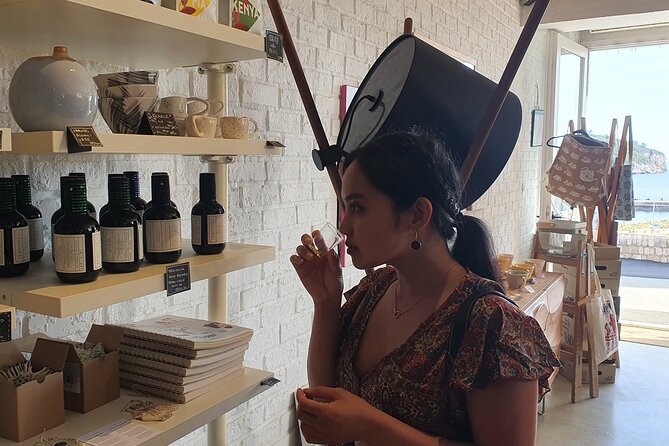
The first real “lesson” is an olive oil evaluation at a family-run stop. You’ll spend around 15 minutes learning how to recognize the main characteristics of extra virgin olive oil, guided by a licensed Olive Oil Sommelier.
This is one of the most valuable parts of the whole experience because it changes how you shop later. Instead of tasting something and only thinking, that’s good, you learn to notice traits tied to extra virgin quality. The goal is quick recognition—so you can tell what you’re buying and why.
You also get two oil samples right at the start, which helps you calibrate your palate before the rest of the meal begins. If you care about olive oil beyond souvenirs, this is the part to pay attention to.
Four wines and four dishes: fish, seafood, and Dubrovnik meat traditions
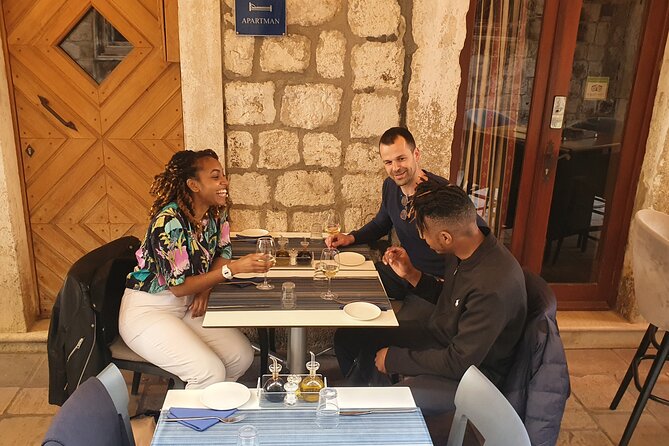
After the olive oil introduction, the tour shifts to food and wine pairing. Two restaurant stops cover four wines paired with four dishes. In other words, you’re not just sampling wine—you’re tasting how wine choices match different types of food.
The pacing is designed to keep you moving without losing the “why” behind each pairing.
Here’s what you can expect from the sample menu pattern:
A few more Dubrovnik trips to round out the shortlist
- Dubrovnik: Old Town Food Tour
★ 4.8 · 119 reviews - Wine, food and olive oil by PhD student
★ 5.0 · 111 reviews - Half-Day Wine and Food Tasting from Dubrovnik
★ 4.5 · 106 reviews - Island Hopping & City Walls Cruise with Food and Open Bar
★ 5.0 · 102 reviews - Pelješac Full-Day Wine and Food Tour from Dubrovnik
★ 5.0 · 72 reviews
Course 1: fish with a white wine
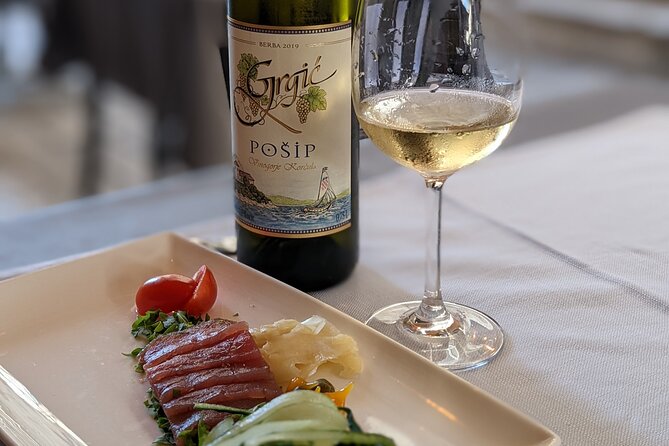
You’ll try a fish dish served with a Croatian white varietal described as recognized by Decanter in 2021.
If you’re used to bland seafood pairings, this one is a reminder that wine pairing isn’t just about matching white with fish. The whole point of this kind of pairing is balance: acidity and texture matter, and local varietals tend to play naturally with local cooking styles.
Course 2: seafood with a white wine
Next comes another white-wine pairing: a seafood dish served with a Croatian white varietal also described as recognized by Decanter in 2021.
Two similar categories back-to-back (fish then seafood) can still be educational because you taste how flavors shift with cooking method and the type of seafood, not just the “white wine box.” You start to notice what changes on your palate.
Course 3: meat with white wine from a very old recipe
Then you’ll get meat paired with a white wine described as a locally produced varietal recognized by Decanter in 2017. This dish is prepared using a recipe dating back to the 16th century.
This is where the tour gets extra interesting for food lovers: it’s not only about what’s popular now. You’re tasting a tradition that survived because it fit local ingredients and local tastes.
Course 4: meat with red wine from the oldest protected zone near Dubrovnik
Finally, a meat dish paired with Croatia’s key red variety from the oldest protected winegrowing zone near Dubrovnik.
This last red course gives you a stronger “anchoring” taste of the region. If you want one or two bottles to remember after the tour, this kind of pairing often makes it easier to identify what you liked and why.
Alcohol note that matters
Wine tasting is for 18+ only. The tour is still a complete experience for adults who want the food focus, but if you’re traveling with mixed-age groups, plan accordingly.
Dessert and why the city story fits the plates
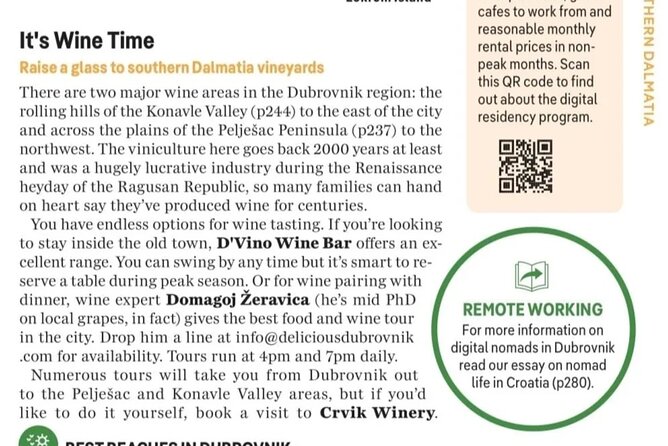
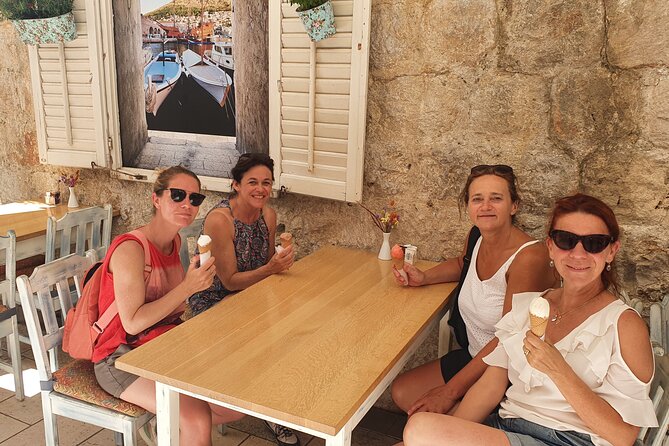
The tasting wraps up at a final family-run place with dessert. It’s a practical close: you’ve already gone through olive oil, four paired dishes, and wine, so the dessert stop feels like a finish line rather than a random add-on.
What I like here is that the dessert doesn’t feel separate from the food theme. The guide keeps the conversation connected to how Dubrovnik’s food culture fits the wider historical-cultural context—so you understand what you ate in a bigger picture, without turning it into a lecture.
Old Town history, engineering, and political politics between stops
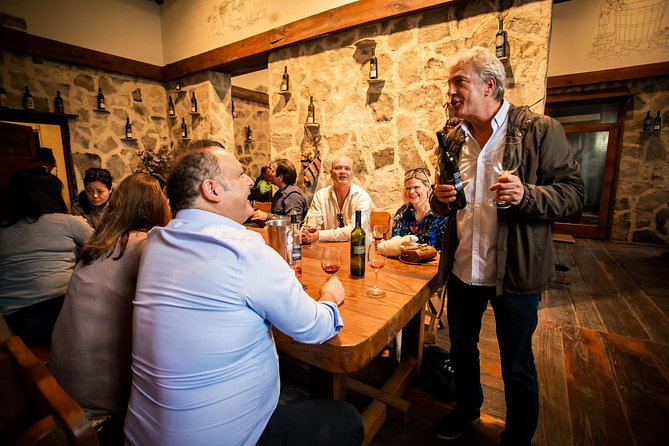
This is not a “hands-on food tour” that ignores the city. In between tastings, you hear about Dubrovnik’s past through the places you’re walking past.
A stop by Large Onofrio’s Fountain becomes a springboard to talk about the peak time of the Dubrovnik Republic and its big engineering projects. That matters because Dubrovnik’s wealth and influence weren’t just about sea views—they were about systems, planning, and building.
Later, when you walk through quieter parts of the Old City and get rooftop views, you pass the 16th-century granary. It’s a strong reminder that food systems and trade storage were major parts of the city’s power.
And then the guide shifts into the Republic’s political success: why it worked, and the kinds of tactics used by the aristocracy to navigate threats from stronger opponents. Even if politics isn’t your thing, hearing it tied to the way the city functioned makes the story easier to remember.
What the 12-person limit changes for your experience

A small group changes the vibe. With a cap of 12, you’re more likely to get real interaction rather than just listening while you hold a tasting cup.
It also helps with the flow of the meal stops. You don’t feel like you’re waiting forever for your turn, and the guide can adjust explanations if you ask something.
From the same friendly, informed approach, I’d say this is a tour where your questions get space—especially if you’re curious about local wines and olive oil terms.
If you want a more hands-off, wander-on-your-own kind of afternoon, this tour may feel too guided. If you want guidance with a clear structure and good conversation, it fits nicely.
Price and value: what $205.59 covers in Dubrovnik
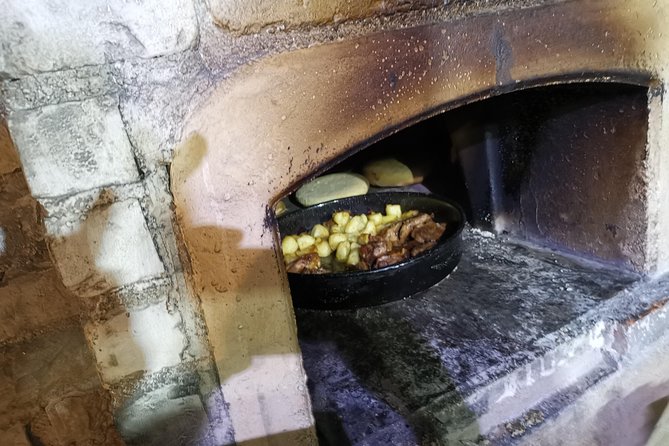
At $205.59 per person for about 3 hours, the price isn’t “cheap,” but it’s not out of line for an Old Town walking tour that includes real tastings.
Here’s why it can be good value:
- You get a licensed-led olive oil evaluation
- You get four wine-and-dish pairings plus dessert
- Alcoholic beverages are included via award-linked wines from the Dubrovnik region
- You get a bilingual-style experience focus (the tour is offered in English) plus guide education (an enologist with a master’s degree and a PhD student in Wine)
So you’re paying for education and multiple stops, not just a single restaurant meal. If you’ve ever spent money in Dubrovnik and still ended up with a generic plate and a random glass of wine, this gives you a more intentional outcome.
The best-case scenario is that you finish the tour understanding what you liked and how to order it again later—or how to spot it when you’re reading labels.
Practical tips for a 4:00 pm start in the Old Town
The start time is 4:00 pm and the tour ends at Rector’s Palace. That timing can be great because the light in the Old Town often helps with photos, and you’re not stuck in the hottest part of the day.
You should also know this tour depends on good weather. If weather is bad, it can be rescheduled or refunded, so watch the forecast.
A few common-sense planning notes that will make your afternoon smoother:
- Wear shoes you trust on older stone surfaces.
- Have a charged phone for the mobile ticket.
- Plan for walking rather than expecting long indoor breaks.
- If you drink wine, remember the 18+ tasting rule.
Service animals are allowed, and the route is near public transportation, so meeting up tends to be manageable.
Who should book this Dubrovnik wine, food, and olive oil walk
I’d point this toward you if:
- You want a structured food-and-wine experience without having to research every restaurant.
- You care about local products, especially extra virgin olive oil and regional wines.
- You’re traveling with food-focused friends who enjoy pairing explanations.
- You want Old Town context that actually connects to what’s on the table.
I’d think twice if:
- You hate walking and prefer a strictly seated activity.
- You want total control over pacing and topics.
- You’re only looking for a quick drink stop with minimal food.
Should you book this tour?
Book it if you want an Old Town afternoon that feeds you well and teaches you something you can use again—especially if olive oil is a priority.
Pass if you’re chasing free-form wandering and would rather pick a restaurant on your own. The tour works best when you’re happy with a set flow: olive oil first, then four paired courses, then dessert, with the Dubrovnik Republic story threaded through the route.
If you’re booking early in your Dubrovnik stay, it’s a strong candidate because it helps you understand the city through food, not just stone walls and viewpoints.
FAQ
How long is the Dubrovnik wine, food, and olive oil tour?
It’s approximately 3 hours.
What’s the group size?
The tour has a maximum of 12 people.
Where does the tour start and end?
It starts at Onofrio’s Large Fountain (Poljana Paska Miličevića 2000) and ends at Rector’s Palace (Ul. Pred Dvorom 3).
Is the tour offered in English?
Yes, it’s offered in English.
What food and drinks are included?
You get two samples of extra virgin olive oil, four dishes paired with four Dubrovnik-region wines, and dessert. Alcoholic beverages are included, and wine tasting is for customers 18 and above only.
What’s the olive oil part of the tour?
You’ll have a guided evaluation of extra virgin olive oil led by a licensed Olive Oil Sommelier, focused on recognizing key characteristics of extra virgin.
What happens if the weather is poor?
This experience requires good weather. If it’s canceled due to poor weather, you’ll be offered a different date or a full refund.
More Food in Dubrovnik
More Food & Drink in Dubrovnik

More Tour Reviews in Dubrovnik
Fresh on the Dubrovnik shortlist


Wine Tours, compared.
 ★ 5.0Sunset Sea Kayaking and Wine DubrovnikFrom $54949 reviews
 ★ 4.9Sunset Zip Line Experience Followed by WineFrom $70921 reviews
 ★ 5.0Sunset Kayaking & Snorkeling with water &wineFrom $48599 reviews
 ★ 4.9Guided Sunset Sea Kayaking Tour with WineFrom $47333 reviews
 ★ 4.9Dubrovnik Gastronomy: 3-Hour Food and Wine TourFrom $170249 reviews
 ★ 5.0Wine Lover’s Tour of Peljesac PeninsulaFrom $181150 reviews
 ★ 4.0Ston and Korcula Island Day Trip from Dubrovnik with Wine TastingFrom $82130 reviews
 ★ 5.0Sunset and Wine / Dubrovnik Sunset Tour and Premium Wine TastingFrom $59113 reviews
Browse the lists this tour appears in