
Reviewed · CITY WALLS & OLD TOWN
Dubrovnik: Private History Walk Through the Old Town
Dubrovnik looks perfect. This tour tells you why it worked. You get a private, 90-minute walk built around your interests and pace, not a rigid script, and I love how the guide turns landmarks into explanations. You’ll hear how diplomacy, strict laws, and everyday routines helped a small republic survive among bigger powers, with expert stories that make the stone streets feel usable. One thing to consider: it moves at a walking-tour speed, so if you want long wall time or deep museum stops, you’ll still need other time in town.
I also like that it’s not just postcard basics. You’ll hit the headline sites like Stradun, Onofrio’s Fountain, the Franciscan Monastery area, Rector’s Palace, Orlando’s Column, Sponza Palace, Revelin, and the Cathedral—then you’ll get the “how the city actually ran” context that most people miss. If you’re short on energy or you hate hills and crowds, plan your day well because this is built for continuous exploring around the Old Town core.
In This Review
- Why this Dubrovnik private history walk works so well
- How a 90-minute private walk stays flexible (and still hits the must-sees)
- Brsalje ul. 10: finding your guide under the Hilton on Pile
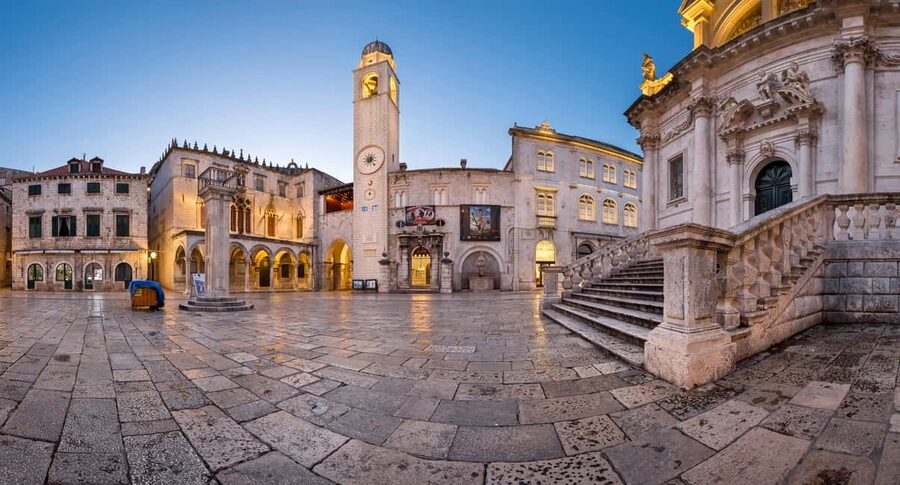
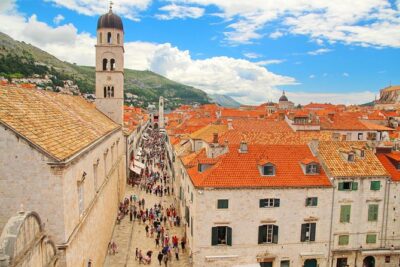
- Stradun: the spine of trade, politics, religion, and daily life
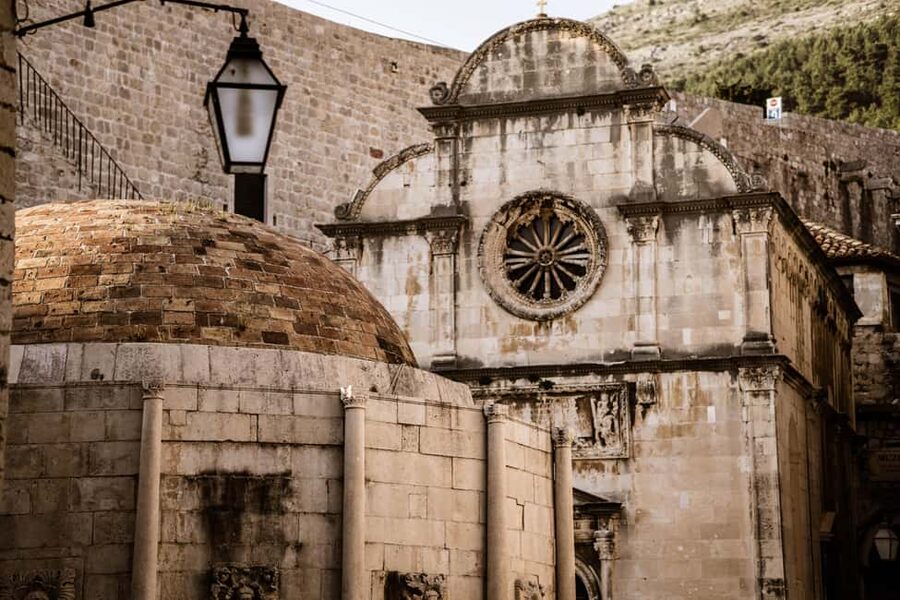
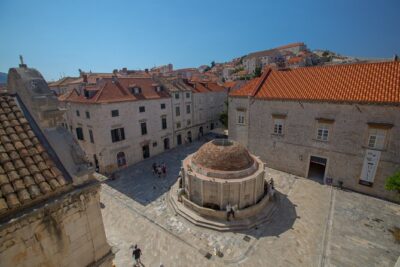
- Onofrio’s Fountain: why fresh water was survival
- Franciscan Monastery and church area: religion as part of civic structure
- The Rector’s Palace: government you can almost feel in the stone
- Saint Blaise and Orlando’s Column: order, justice, and visible authority
- Sponza Palace and the Old Town economy: trade and power in walking distance
- Side streets, Marin Držić’s house, and the small symbols you’ll start noticing
- Revelin and the fort mindset: scenic pauses with a purpose
- Dubrovnik Cathedral: where religion and civic identity overlap
- The harbor finish: seeing where wealth sailed out
- Price and value: what $47 buys in a private 90-minute format
- Who should book this tour (and who should skip it)
- Should you book this Dubrovnik private history walk?
- FAQ
- How long is the Dubrovnik private history walk?
- Where do I meet the guide?
- Is the tour private?
- What languages are available?
- Do I need to pay entrance tickets during the tour?
- Is it wheelchair accessible?
- Is water included?
Why this Dubrovnik private history walk works so well
- Personal pace in a tight 90 minutes, so you can ask questions or keep it relaxed
- Edi the guide’s stories connect Game of Thrones vibes to real politics and daily rules
- More than big sights: side streets and small carved details explain how power and order worked
- Photo stops with built-in pauses, including a break near Orlando’s Column and scenic pauses toward Revelin
- No entrance ticket add-ons during the tour, so your budget stays predictable
- Wheelchair accessible and suitable for everyone, with a licensed guide leading the show
More time up on the ramparts and inside the Old Town
- Dubrovnik: Old Town Walking Tour★ 4.8 · 5,174 reviews
- Dubrovnik Discovery Old Town Walking Tour★ 5.0 · 4,458 reviews
- Dubrovnik Old Town History Walking Tour★ 5.0 · 1,684 reviews
- Dubrovnik: City Walls Early Morning or Sunset Walking Tour★ 4.8 · 1,523 reviews
How a 90-minute private walk stays flexible (and still hits the must-sees)
This is a private walking tour with a clear time frame—90 minutes—but it doesn’t feel like a rush job. The guide adapts to your questions and your speed, which matters in Dubrovnik because the Old Town is compact and easy to overpack with plans. If you’re into politics, you’ll get more of the city-as-a-republic story. If you’re more curious about daily life, you’ll hear how rules shaped behavior: justice, health, religion, and social roles.
It also helps that the tour is built around quick guided moments at each stop (often around five minutes), plus short stretches to regroup and take photos. That rhythm is good for first-timers who want orientation fast, and it’s helpful if you’re traveling with kids or mixed ages. You’ll also get practical local tips during or after the walk, which is a real value-add when you’re trying to avoid tourist traps without turning your day into research.
Brsalje ul. 10: finding your guide under the Hilton on Pile
Your meeting point is Brsalje ul. 10, right by the Old Town. It’s on Pile (the square), located between the Hilton Hotel and Restaurant Silk—directly under the Hilton and above the street. This is one of those useful details that saves you time, because Pile is also where lots of people are headed, and Dubrovnik loves traffic and confusion.
If you like having a backup, the provided coordinates are 42.6423414, 18.105186. Arriving a few minutes early is smart, especially in summer, since you’ll likely pass through busy streets before you find the exact spot. Once you meet up, you’re already in the right pocket of town to start walking through the historic center instead of spending your first time stuck in transit.
Stradun: the spine of trade, politics, religion, and daily life
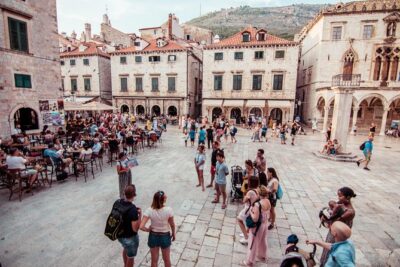
The tour begins with the idea that Dubrovnik is more than walls and beauty. It starts at Stradun, the main spine of the Old Town, where different parts of city life used to collide. You’ll learn why this street mattered for trade and politics, not just sightseeing, and how the city’s position demanded smarter choices than brute force.
A big theme you’ll hear is why Dubrovnik relied on diplomacy instead of war. That helps you connect what you see—streets, prominent public buildings, and civic spaces—with the deeper reason the city could keep functioning. The guide also explains how strict laws shaped daily behavior, including social expectations and how the city organized order through systems tied to justice, health, and religion.
This is the kind of start that helps you walk the rest of the Old Town with better “map sense.” You stop thinking in terms of random monuments and start seeing a functioning place where rules mattered as much as views.
Onofrio’s Fountain: why fresh water was survival
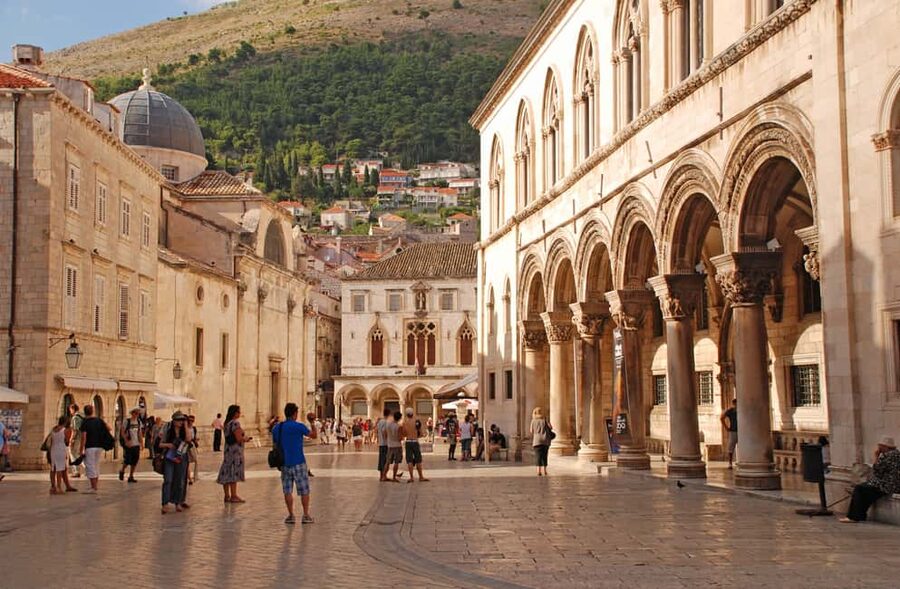
Onofrio’s Fountain is one of those spots you might photograph and move past fast—until a guide gives you the context. Here, you’ll hear why fresh water was a matter of survival, not just convenience. Dubrovnik is a coastal city, but “coastal” doesn’t automatically mean easy water. The fountain’s role ties into why the city planned so carefully and why certain features show up in the public areas you walk past.
The stop is short and photo-friendly, but the takeaway is bigger: when you understand water as infrastructure, you start noticing how the city’s layout supports daily life. It’s also a quick reset for your eyes. You’ve been staring at stone and streets; a fountain gives you something functional to focus on, even if all you catch is the sound of people talking and the movement of tourists around you.
Dubrovnik on foot, a few more ways
- Dubrovnik: Old Town Walking Tour
★ 4.8 · 5,174 reviews - Dubrovnik Discovery Old Town Walking Tour
★ 5.0 · 4,458 reviews - Dubrovnik: Game of Thrones Walking Tour
★ 5.0 · 1,732 reviews - Dubrovnik Old Town History Walking Tour
★ 5.0 · 1,684 reviews - Dubrovnik: City Walls Early Morning or Sunset Walking Tour
★ 4.8 · 1,523 reviews
Franciscan Monastery and church area: religion as part of civic structure
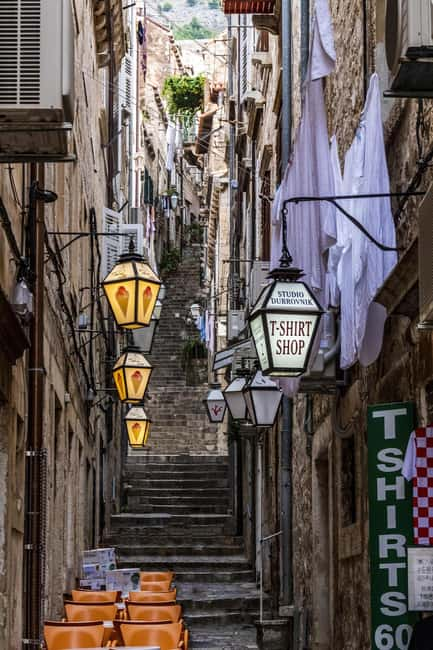
The Franciscan church and monastery area is more than a religious landmark in this tour. You’ll connect it to how the city organized religion alongside other systems, including health and justice. In other words, religion isn’t presented as a separate topic; it’s one thread in how Dubrovnik kept order.
This is also where the “city logic” approach really pays off. Once you’ve heard how laws structured daily behavior, the monastery space makes more sense in the way it sits within public life. You’re not just looking at architecture; you’re learning how institutions shaped routines for different groups.
Expect a guided look with quick commentary. It’s the kind of stop where you might notice small details you normally miss, especially when the guide points out symbols or carved marks that connect to rules and identity. If you enjoy the feeling of being guided through cause-and-effect, this section will land well.
The Rector’s Palace: government you can almost feel in the stone
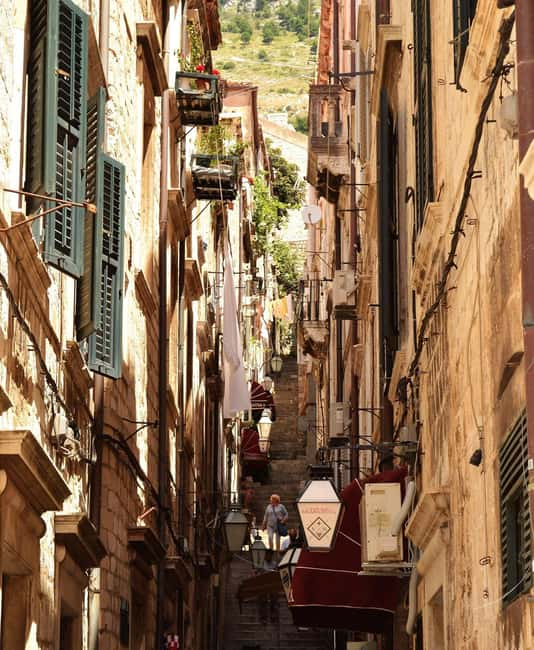
Rector’s Palace is a highlight for anyone who likes government, power, and how cities keep control. You’ll spend time here learning how the republic’s leadership worked and how the system affected real people—nobles, sailors, women, and orphans are all brought into the story.
This matters because Dubrovnik can look like a uniform postcard, especially after years of wall photos. The tour counters that by explaining how justice, administration, and civic life were tied to specific spaces. When you stand in front of the palace, you can picture how decisions weren’t abstract. They had a place. They had rules. And they shaped everyday behavior.
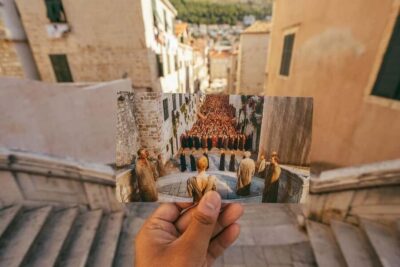
The guide also helps you understand why the city looked and planned the way it did. That’s a common “why didn’t I see this earlier” moment, especially if you’ve watched Dubrovnik through the lens of media like Game of Thrones and assumed the setting was just drama sets and scenery.
Saint Blaise and Orlando’s Column: order, justice, and visible authority
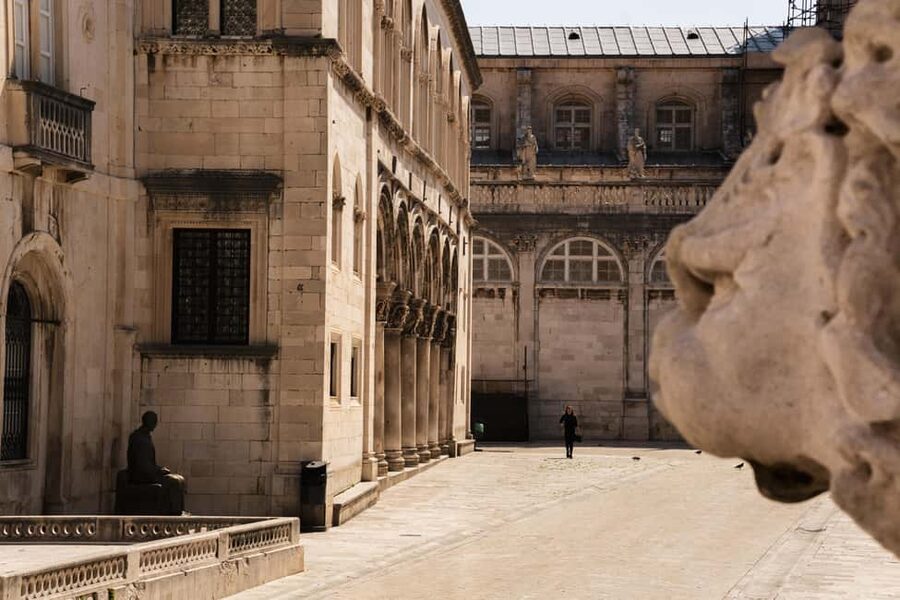
Church of Saint Blaise is another anchor point where civic identity and religion meet. You’ll get guidance that frames it as part of Dubrovnik’s public life, not just a photo backdrop. It’s a stop that works well even if you’re not a “church person,” because you’ll hear it connected to broader city organization.
Then comes Orlando’s Column, and this is where the tour takes a practical turn. You’ll get a break time, photo stop, and guided commentary focused on how justice and strict laws played out in public. A column might sound like a simple monument until you’re told what it represented in daily order.
The bonus is that the story makes you pay attention to how Dubrovnik communicated rules. It’s not only what people did; it’s how the city taught behavior through visible authority. If you want a sense of how a republic controlled life without needing constant war, this is a strong stop.
Sponza Palace and the Old Town economy: trade and power in walking distance
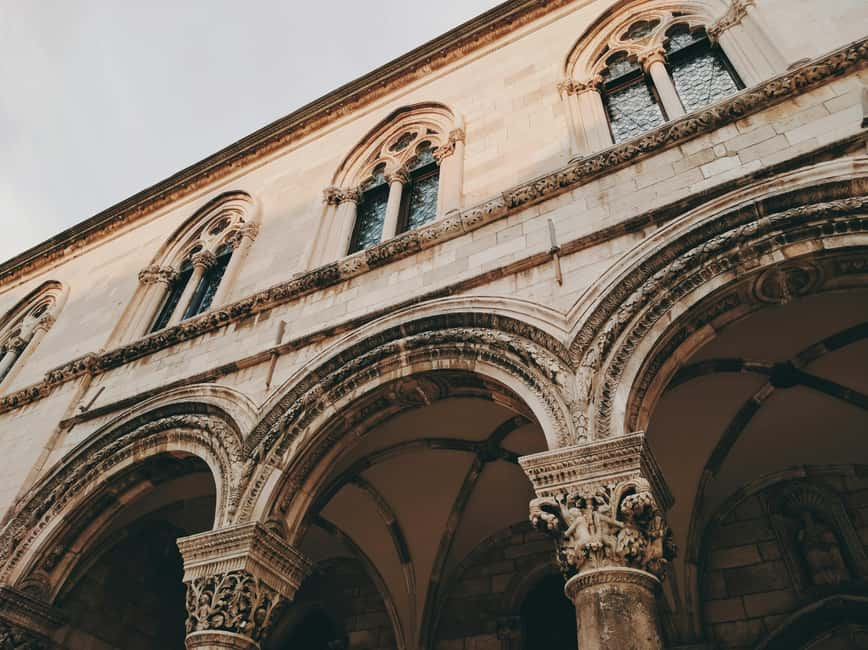
Sponza Palace is one of those buildings people recognize but often don’t understand. Here, it connects directly to trade, organized life, and the city’s economic power in the Mediterranean world. Dubrovnik’s wealth didn’t happen by accident, and the tour keeps bringing you back to the idea that the republic succeeded by planning and diplomacy as much as by location.
What I like about this section is how it ties economic activity to rules. You might hear about order around trade and power, and you’ll get context for why certain public spaces matter for commerce and governance. The guide also references those side streets most visitors rush past, where smaller details can hint at what life was like for ordinary groups, not only the ruling class.
This is also an area where your photos will improve. With context in your head, you’ll frame shots differently: not just “pretty stone,” but “public life happening here.”
Side streets, Marin Držić’s house, and the small symbols you’ll start noticing
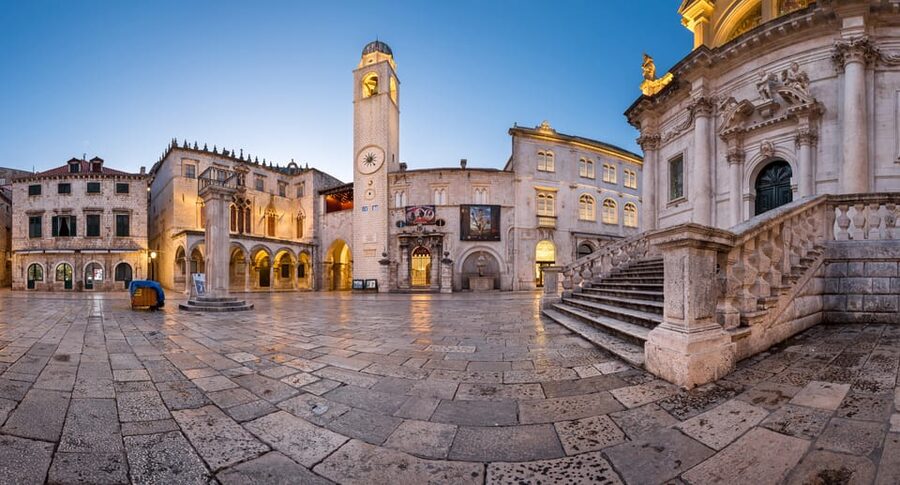
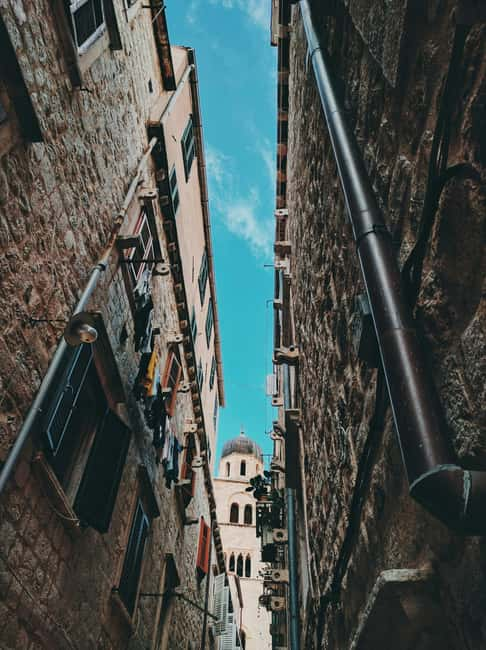
A tour like this earns its value in the moments between the famous sites. You’ll move through narrow side streets where small details carry big stories. The tour highlights forgotten symbols carved in stone and rules linked to silence, trade, and power.
That’s not random trivia. It teaches you to read the city. Once you learn to look for those cues, Dubrovnik stops being a sequence of monuments and becomes a place with memory—written into surfaces you’d otherwise ignore.
Along the way, you’ll also stop at the House of Marin Držić. That gives you a cultural thread too, not only political and institutional topics. If you’re curious about why Old Town buildings reflect more than defense and commerce, this is a helpful addition. It keeps the walk from feeling like pure lecture while still staying grounded in how the city operated.
Revelin and the fort mindset: scenic pauses with a purpose
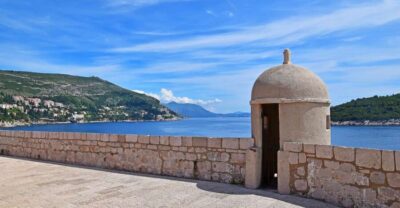
Revelin is built for short scenic breaks and viewpoints, and the tour treats it that way. You’ll get a break time, a photo stop, and sightseeing on the way, plus scenic views as you move through the approach. This is a good time to recharge if you’ve been walking steadily through tight streets.
The fort mindset fits the tour’s larger theme: Dubrovnik’s strength wasn’t only in stone walls; it was also in how the city managed risk and defended its way of life. Even if you’re not focused on military details, you’ll understand why certain spaces dominate the view and why defensive planning mattered to a small republic trying to survive.
If you’re traveling in warmer months, these pauses are a practical gift. You can step back, look out, and let the city’s layout sink in.
Dubrovnik Cathedral: where religion and civic identity overlap
Dubrovnik Cathedral is another landmark where the tour keeps the tone practical. You’ll get a guided stop and sightseeing, with the emphasis on how religion was organized as part of the city’s structure.
Cathedrals can become “just another big church” if you’re not given context, but here it ties back to the earlier themes: strict laws, organized public systems, and the way institutions reinforced social order. That makes the visit feel connected rather than scattered.
Also, ending your “institution” loop here helps. You’ve already learned about government spaces and justice. Now you get the religious civic center of gravity, so when you move toward harbor areas later, the full picture feels more coherent: the city held power on multiple fronts.
The harbor finish: seeing where wealth sailed out
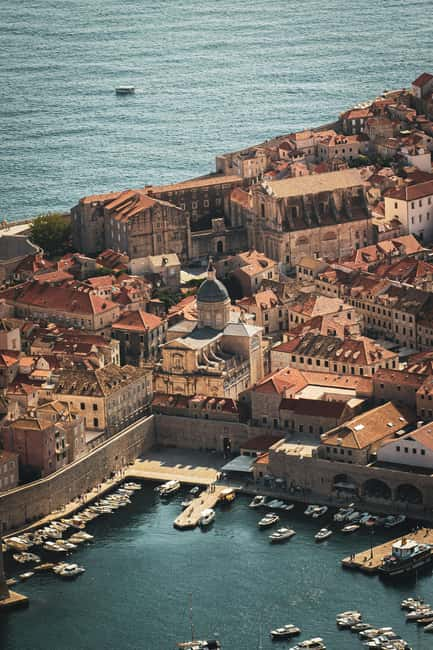
The tour ends near the Old Harbour area, tying Dubrovnik’s historic wealth to the Mediterranean beyond the walls. You’ll take in photo opportunities and a guided wrap-up that explains how the city mattered because of what it sent out and how it connected to wider trade networks.
This final segment is important because it brings you back to the city’s core survival strategy. If the earlier stops taught you that Dubrovnik relied on diplomacy and laws, the harbor connects that to the reason the republic had something worth protecting in the first place: wealth and maritime connections.
By the end, you should understand not only what you’re seeing, but why Dubrovnik’s streets and institutions were arranged the way they were to support that life.
Price and value: what $47 buys in a private 90-minute format
At $47 per person for a 90-minute private walking tour, the value comes from the combination of guide quality, flexibility, and no extra ticket costs. The tour includes an expert licensed guide, historical insights, interactive time for questions, scenic view moments, and photo stops at major points. It also includes customer support and guidance from the provider, which matters when you’re meeting near busy tourist areas.
What’s not included is simple: water or a drink, plus any personal expenses. That’s easy to fix—bring your own bottle or plan to buy something right after the tour.
Compared with a group tour, paying privately often means you get more of the time you’d otherwise spend standing in line for explanations. Here, the tight schedule stays productive because the guide focuses on the context that makes the Old Town click.
If you’re a budget traveler, this is the kind of expense worth doing early in your Old Town day. You get orientation and meaning up front, which makes the rest of your wandering more satisfying.
Who should book this tour (and who should skip it)
Book this if you want Dubrovnik to make sense. It’s ideal for history-minded travelers, architecture watchers, and anyone who likes stories about how cities work. If you’re a Game of Thrones fan, this is also a great pairing because the guide connects the TV-era feel to the real politics and challenges that shaped the city long before cameras.
It’s also a strong choice for families and mixed groups. The tour is listed as suitable for everyone, and the guide experience includes caring for adults and children while keeping the pace workable.
Skip it if you mainly want slow, independent wall time or a long museum-style visit. This is a smart walk with stops and breaks, but it’s not designed to replace a full-day plan.
Should you book this Dubrovnik private history walk?
Yes, if you want a guide who can turn “pretty streets” into a working story of the republic. This tour is built for people who like context: why Stradun mattered, why water infrastructure was survival, how justice showed up in public, and why the city relied on diplomacy. It’s also a good call if you’d rather ask questions than guess.
I’d only hesitate if you’re the type who wants maximum freedom to wander on your own for the whole Old Town loop. In that case, you might prefer a self-guided walk and just pick a couple of highlights.
If you’re on the fence, my advice is simple: schedule this early. Then you can explore the rest of Dubrovnik with better instincts for what you’re looking at.
FAQ
How long is the Dubrovnik private history walk?
The tour lasts 90 minutes.
Where do I meet the guide?
The meeting point is Brsalje ul. 10, 20 000 Dubrovnik, between the Hilton Hotel and Restaurant Silk, directly under the Hilton and above the street on Pile (square).
Is the tour private?
Yes. It’s a private group tour.
What languages are available?
The live guide speaks English and Croatian.
Do I need to pay entrance tickets during the tour?
No. The tour description says there are no entrance tickets or additional costs associated with the experience.
Is it wheelchair accessible?
Yes, the tour is wheelchair accessible.
Is water included?
Water or a refreshing drink is not included, so you may want to bring your own or plan to buy one before or after.
More Walking Tours in Dubrovnik


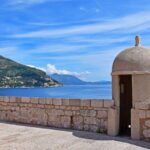
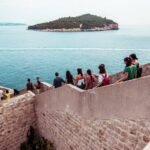
The Walls & Old Town, More Ways In
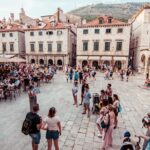
More Tour Reviews in Dubrovnik

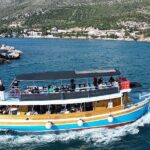

Fresh on the Dubrovnik shortlist


City Walls & Old Town, compared.
 ★ 4.8Old Town Walking TourFrom $235,174 reviews
 ★ 5.0Dubrovnik Discovery Old Town Walking TourFrom $244,458 reviews
 ★ 5.0Dubrovnik Old Town History Walking TourFrom $241,684 reviews
 ★ 4.8City Walls Early Morning or Sunset Walking TourFrom $291,523 reviews
 ★ 5.0Ancient City Walls & Wars Walking TourFrom $301,270 reviews
 ★ 5.0Dubrovnik Combo: Old Town & Ancient City WallsFrom $521,019 reviews
 ★ 4.9City Walls, Old Town Walking Tour & Adriatic ViewFrom $27982 reviews
 ★ 4.9Blue Cave Tour with Panoramic Old Town ViewFrom $73884 reviews
Browse the lists this tour appears in