
Reviewed · CITY WALLS & OLD TOWN
Dubrovnik Combo: Old Town & Ancient City Walls
Two walks, one smart Dubrovnik day. You start with Old Town highlights and finish on the city walls circuit, with audio headsets that keep the guide clear even in crowds; just plan for the extra walls ticket and the stair-heavy walking.
I like how the guides bring the streets to life, mixing medieval details with real stories from Croatia’s 20th-century past. Names like Mara, Goran, Antun, Lana, and Davar pop up in guides’ praise, and the common thread is clear, organized guiding that keeps you moving on schedule.
This combo is a strong time-saver if you want the big sights without coordinating routes yourself. The trade-off is physical effort, plus Dubrovnik can get hot and windy, so good shoes and a flexible attitude help.
In This Review
- Key things to know before you go
- Why Dubrovnik’s Old Town plus the Walls is such a good combo
- Meeting near Pile Gate: how the day actually begins
- Old Town walk: Pile Gate to Stradun’s signature monuments
- Pile Gate and the Franciscan Monastery stop
- Orlando’s Column, Onofrio’s Fountain, and the water story
- Sponza Palace, Rector’s Palace, and the Cathedral after 1667
- Luza Square: where multiple symbols cluster
- The short break that helps you pace the walls later
- City Walls circuit: what you’ll see on the nearly 2-km route
- Minceta Tower and the Fort Revelin area
- Views over Old Town and the Adriatic
- Fort Lovrijenac: included with the walls ticket
- Price and value: what you’re paying for, and the extra €40 reality
- Guide style and listening comfort: audio headsets matter
- Getting the most out of the walls: steps, weather, and heat
- Who this combo fits best (and who should reconsider)
- Should you book Dubrovnik Combo: Old Town & Ancient City Walls?
- FAQ
- How long is the Dubrovnik Combo tour?
- What is included in the price of $52 per person?
- Do I need to pay extra for the city walls?
- Where do I meet the guide?
- Is the tour mostly walking, and is it difficult?
- Is audio provided, and will I be able to hear the guide?
- What happens if the weather is bad?
Key things to know before you go
- Audio headsets help you hear the guide clearly in groups
- Old Town and walls in one block so you save planning time
- Old Town landmarks are targeted: Onofrio’s Fountain, Franciscan Monastery, Stradun, Sponza Palace
- City walls are a workout (thousands of stone steps are part of the deal)
- Walls entry is separate and paid on-site, with Fort Lovrijenac included via the walls ticket
- Easy to find meeting point: Dubrovnik Walks Orange umbrella near Brsalje ul. 8
More time up on the ramparts and inside the Old Town
- Dubrovnik: Old Town Walking Tour★ 4.8 · 5,174 reviews
- Dubrovnik Discovery Old Town Walking Tour★ 5.0 · 4,458 reviews
- Dubrovnik Old Town History Walking Tour★ 5.0 · 1,684 reviews
- Dubrovnik: City Walls Early Morning or Sunset Walking Tour★ 4.8 · 1,523 reviews
Why Dubrovnik’s Old Town plus the Walls is such a good combo
Dubrovnik is one of those places where it’s easy to feel busy without actually learning much. This combo solves that problem with a simple formula: you get a guided walk through the street-level story first, then you shift to the walls for the strategic big-picture view.
What I like most is the pacing. You’re not stuck in one long continuous hike without context. You start in the Old Town core, hit the key monuments along the main thoroughfare, then later climb out for the panorama from above. If you only have a short window in Dubrovnik, this is a very efficient way to get the “why this city matters” explanation.
There’s also an honesty built into the plan: the Old Town portion is mostly flat walking on stone streets, while the walls portion is the real physical commitment. You get warned before you’re halfway exhausted, and the guide’s job is to keep you oriented as the view changes from street to sea to fortifications.
Meeting near Pile Gate: how the day actually begins

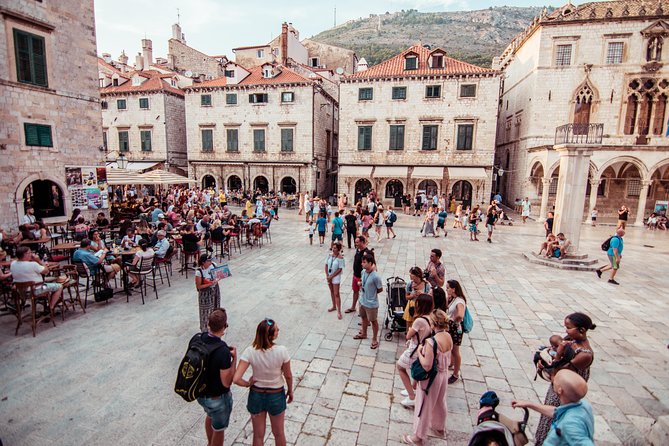
Your Old Town portion starts around the Pile area, with the meeting point near Pile Gate and an identifiable orange umbrella for Dubrovnik Walks. That detail matters more than it sounds. Dubrovnik’s lanes are narrow and signage can be confusing, so an obvious meet-up point helps you avoid that frantic “are we late?” start.
From there, the group heads into the historic core. You’ll walk the stone-paved streets while the guide sets up the city’s timeline—how Dubrovnik grew from a major port into a fortified republic—and how later events shaped what you see today. The combination format is designed so you don’t waste time piecing together the city by yourself.
One small break is built into the flow too. There’s a brief pause in Brsalje square for orientation—no museum entry, just a quick reset so everyone is aligned on what’s next.
Old Town walk: Pile Gate to Stradun’s signature monuments
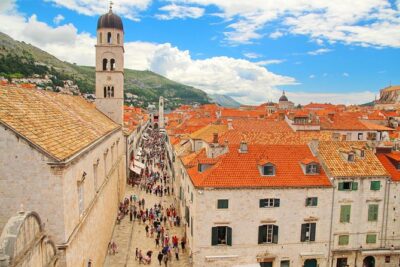
The Old Town portion is about 1.5 hours of guided walking that focuses on the most recognizable landmarks and the stories behind them. You begin at the main western entrance area near Pile Gate and move through the center on the walk’s main spine: the Stradun (the city’s central thoroughfare).
Here’s what you’ll actually notice as you go:
Pile Gate and the Franciscan Monastery stop
Pile Gate is the “front door” energy you expect in a walled city—functional, dramatic, and built for defense. Right after, the guide typically steers you toward the Franciscan Monastery area. This is where you’ll see the Pieta sculpture and also one of Europe’s oldest still-operating pharmacies. That pharmacy detail is surprisingly compelling because it links the religious and civic life of the city across centuries.
If you care about continuity—how people kept living in the same place even as history got rough—this stop does the job.
A few more Dubrovnik trips to round out the shortlist
- Dubrovnik: Ancient City Walls & Wars Walking Tour
★ 5.0 · 1,270 reviews - Dubrovnik Combo: Old Town & Ancient City Walls
★ 5.0 · 1,019 reviews - Dubrovnik: City Walls, Old Town Walking Tour & Adriatic View
★ 4.9 · 982 reviews - Dubrovnik: Old Town & City Walls Guided Tours Combo
★ 4.8 · 697 reviews - Dubrovnik Cable Car Ride, Old Town Walking Tour plus City Walls
★ 4.5 · 685 reviews
Orlando’s Column, Onofrio’s Fountain, and the water story
As you reach the Stradun, Orlando’s Column comes into view. It’s tied to the city’s long-standing idea of freedom and sovereignty, which gives the monument more meaning than a quick photo.
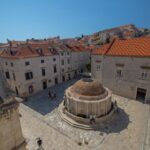
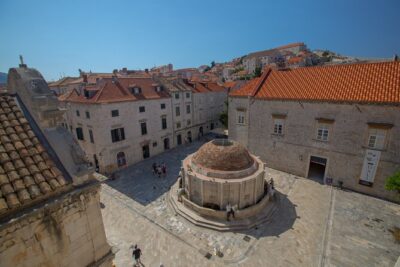
Then comes Onofrio’s Fountain. You’re not just seeing a landmark—you’re learning the practical engineering reason Dubrovnik had reliable water. The fountain dates to 1438, built at the end of an 8-mile (12-km) aqueduct that supplied the city.
That kind of detail is exactly why a guide helps. Stand alone, these are great sights. With context, they turn into a coherent picture of how Dubrovnik worked.
Sponza Palace, Rector’s Palace, and the Cathedral after 1667
The walk continues past civic and governmental architecture. You’ll see Sponza Palace and the Rector’s Palace—both tied to Dubrovnik’s role as a powerful port city. The style you see isn’t just pretty; it’s tied to what a wealthy trading city could afford and what it wanted to project.
You’ll also pass the Cathedral of the Assumption, a baroque church rebuilt after the devastating earthquake of 1667. This is a key moment because it shows the city’s capacity to recover, reshape, and keep its identity.
Luza Square: where multiple symbols cluster
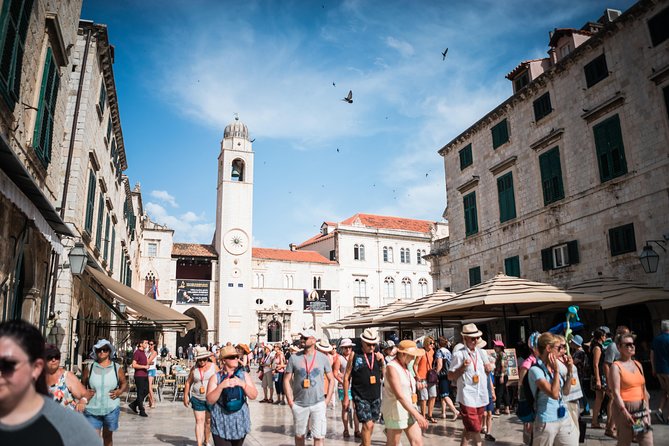
Near the end of the Old Town walk, you’ll reach Luza Square, the old town’s main plaza. It’s a compact concentration of major points—St. Blaise’s church, Orlando’s Column, Sponza Palace, Small Onofrio’s Fountain, and the bell tower area.
This stop is useful because it gives you a “map in your head” of the main monuments, so later, when you wander on your own, you’re not guessing.
The short break that helps you pace the walls later

Between Old Town and the walls portion, you get that built-in gap that keeps you from feeling like you’re doing a nonstop endurance event. Even a short break matters, because the next phase includes steps and open air views.
I’d treat that time as your chance to reset: water, a quick restroom check, and a moment to mentally switch gears from street-level history to fortification design. You’ll appreciate that switch once you start climbing.
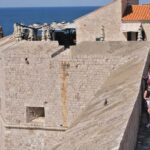
City Walls circuit: what you’ll see on the nearly 2-km route
The city walls portion runs about 2 hours, but the time flies differently here. It’s not “walk and listen” like Old Town. It’s “look, climb, pause, listen, repeat.”
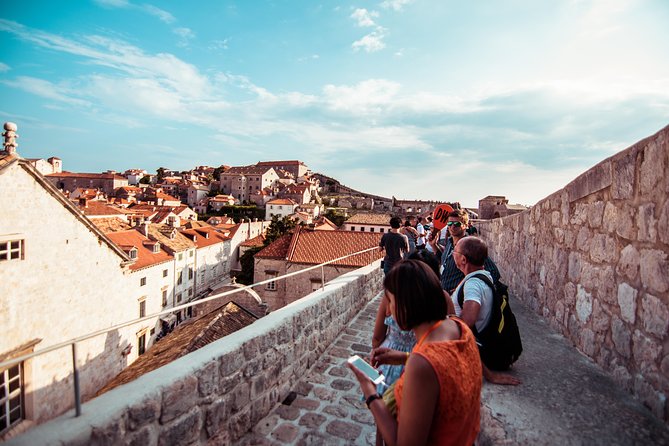
You’ll walk the circuit on fortified walls that date back to the city’s early defensive development (the present enclosure traces back to the period when the sea channel separating the city from the mainland was covered). The overall circuit is described as about 2 km (roughly 1.2 miles), with a mix of terrain and viewpoints.
Along the way, the guide points out the defensive structures that make Dubrovnik’s walls feel more like a system than just a wall:
Minceta Tower and the Fort Revelin area
Minceta Tower is one of the signature points you’ll see. It helps explain the city’s defensive thinking: don’t just build height, build control of angles and approaches.
Fort Revelin is another major defensive structure on the route. This part of the walls is where you start to understand how the forts created layered protection, rather than relying on one line of defense.
Views over Old Town and the Adriatic
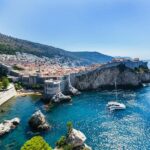
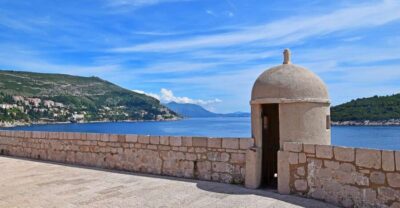
The walls are famous for views, but the value is in how the guide frames them. From above, you can see how the walled city sits against the Adriatic and how the port shaped both prosperity and risk.
This is where Dubrovnik shifts from “photogenic” to “understandable.” You grasp why these fortifications mattered after repeated invasions and why the city had to stay alert, diplomatic, and organized to survive.
Fort Lovrijenac: included with the walls ticket
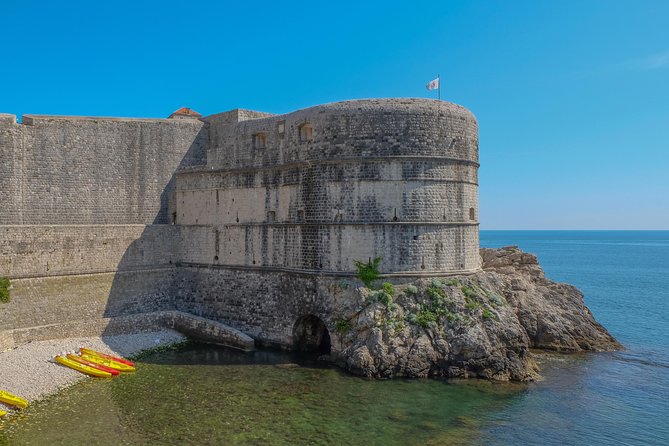
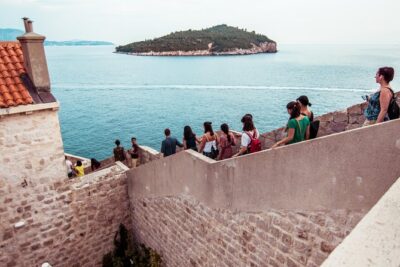
Your city-walls tour ends near Fort Lovrijenac, and Fort Lovrijenac is included with the city walls ticket. Even if you don’t have time to visit it during the walking portion, the walls ticket gives you access afterward.
Price and value: what you’re paying for, and the extra €40 reality
The combo price is $52 per person, and that’s for the paired guided experiences, including a licensed English-speaking guide and audio headsets (in groups of 4+). The smart value piece here is that you’re not paying twice for guide time and you’re not spending your limited hours figuring out connections between Old Town and the walls.
But there’s an important catch: the city walls entrance fee is not included in the $52. The walls ticket is listed at €40 per person. That means your true cost is closer to the cost of the walls ticket plus the guided value of both walking parts.
How I’d think about it:
- If you were going to do the walls anyway, this combo is a practical way to make that time more meaningful, because you get guided context on both street life and the defensive system.
- If you’re unsure about the walls, do the math. You might be paying for structure you don’t fully use.
Also, a quick honesty note: Dubrovnik can be expensive overall. This combo won’t fix that, but it does help you buy the experience in a more organized way than piecing it together on your own.
Guide style and listening comfort: audio headsets matter
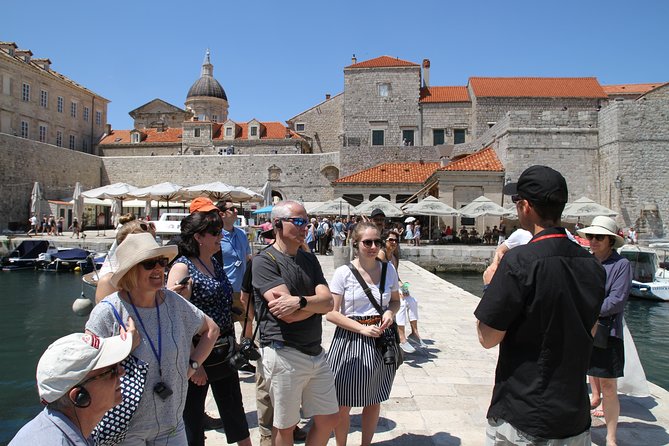
One of the most consistently praised aspects is the guide experience. Guides such as Goran and Mara earn standout notes for being engaging, humorous, and strong on clear explanations. Another frequent theme is that the guide’s storytelling connects ancient facts to more recent history—so you’re not only getting medieval dates and names.
The other practical win is the audio headset setup for groups of 4+. If you’ve toured in busy old towns before, you already know how easily sound gets lost. Here, the headsets are built into the experience, which makes the guide’s commentary easier to follow—especially when you’re walking and the group is moving.
The downside to listen-through storytelling is that it’s still possible for a guide to lean very heavy on history or long stories. That’s not a deal-breaker, but if you want lots of short observations and quick “look here” moments, you might prefer a more visual style.
Getting the most out of the walls: steps, weather, and heat

The walls are the challenge part. Expect a lot of stone steps. Reviews mention over 1,000 steps and a nearly two-mile hike feeling. Even if you’re used to walking, you’ll want comfortable shoes with grip.
Weather matters too. The experience description says it requires good weather. When conditions are rough—wind, rain, cold—outdoor walking becomes less fun fast. You might get ponchos in those cases, but the key point for your planning is simple: choose a day when Dubrovnik feels calm.
Heat is another factor. In warmer months, Old Town can get steamy and walls are more exposed. One practical tip that showed up in the feedback: starting earlier can help you avoid some of the hottest crowd moments. If you have flexibility, choose the earlier departure time for better comfort.
Who this combo fits best (and who should reconsider)
This Dubrovnik Combo is best for you if:
- you want an organized way to see Old Town and the city walls without assembling tickets and routes yourself
- you like walking tours that explain context, not just point and photograph
- you’re okay with steps and moderate effort
- you’re traveling with a schedule that doesn’t allow a full day of slow wandering
You might reconsider if:
- you’re not interested in the city walls themselves (because the €40 fee adds up fast)
- stairs feel like too much for your body on vacation
- you’re extremely sensitive to weather and exposed outdoor walking
If you can handle a workout and you want the city’s story from both street and fortification angles, this is a very efficient plan.
Should you book Dubrovnik Combo: Old Town & Ancient City Walls?
Yes, if you’re doing Dubrovnik for the highlights and you want a guide to turn them into something you actually understand. The combo format saves time, the meeting point is easy to spot, and the audio headsets help you keep up.
I’d book it when you know you’ll visit the walls anyway. If you’re debating whether the walls are worth it, price the full reality first: the €40 walls entrance fee comes on top of the $52 guide combo. If that extra cost feels too steep for your budget, you might choose a guided Old Town walk alone and spend the savings elsewhere.
FAQ
How long is the Dubrovnik Combo tour?
The combined experience is about 3 hours 30 minutes total, with the Old Town walking portion around 1.5 hours and the city walls portion around 2 hours.
What is included in the price of $52 per person?
The price includes a local English-speaking licensed guide and audio headsets in groups of 4+ (where applicable). The tour language is English.
Do I need to pay extra for the city walls?
Yes. The Dubrovnik City Walls entrance fee is not included in the $52 price and is listed as €40 per person. Fort Lovrijenac is included with the city walls ticket.
Where do I meet the guide?
The meeting point is Dubrovnik Walks Orange umbrella at Brsalje ul. 8, 20000 Dubrovnik. The tours end near the old town port, and the map shows the meeting point.
Is the tour mostly walking, and is it difficult?
It’s a walking tour with moderate physical fitness required. The Old Town part is generally manageable, but the walls walk includes many steps and a nearly two-mile hike.
Is audio provided, and will I be able to hear the guide?
Audio headsets are provided for groups of 4+ and the tour is guided in English, so you should hear the commentary clearly.
What happens if the weather is bad?
The experience requires good weather. If it’s canceled due to poor weather, you’ll be offered a different date or a full refund.
More City Tours in Dubrovnik


The Walls & Old Town, More Ways In


More Tour Reviews in Dubrovnik




Fresh on the Dubrovnik shortlist






City Walls & Old Town, compared.
 ★ 4.8Old Town Walking TourFrom $235,174 reviews
 ★ 5.0Dubrovnik Discovery Old Town Walking TourFrom $244,458 reviews
 ★ 5.0Dubrovnik Old Town History Walking TourFrom $241,684 reviews
 ★ 4.8City Walls Early Morning or Sunset Walking TourFrom $291,523 reviews
 ★ 5.0Ancient City Walls & Wars Walking TourFrom $301,270 reviews
 ★ 4.9City Walls, Old Town Walking Tour & Adriatic ViewFrom $27982 reviews
 ★ 4.9Blue Cave Tour with Panoramic Old Town ViewFrom $73884 reviews
★ 4.9Old Town Walking TourFrom $23792 reviews
★ 4.9Blue Cave Tour with Panoramic Old Town ViewFrom $73884 reviews
★ 4.9Old Town Walking TourFrom $23792 reviews
Browse the lists this tour appears in