

Reviewed · CITY WALLS & OLD TOWN
Dubrovnik Old Town Walking Tour
Dubrovnik’s Old Town makes instant sense. This 1.5-hour guided walk turns a maze of stone lanes into a clear story, starting at Pile Gate and sweeping you through the sights people usually only snap from the street.
I loved two things right away: the tight focus on big landmarks (Onofrio’s Fountain, the Franciscan cloister, Sponza Palace, and the Cathedral), and the way guides like Elvis, Toni, and Natalia add real texture with local details as you walk. You also get a small group—up to 16—so questions don’t vanish into the crowd.
One possible drawback: it can get hot and noisy, especially in open squares, and if your guide is harder to hear (a couple reviews mention that issue), you’ll want to stand close and near the guide.
In This Review
- Key highlights I’d plan around
- Entering Dubrovnik through Pile Gate (why the route starts here)
- Onofrio’s Fountain and the city’s aqueduct roots
- Franciscan Monastery cloister: Gothic calm and a working pharmacy
- Stradun: the limestone main street you’ll keep hearing about
- Sponza Palace and the State Archives: Renaissance administration in stone
- Orlando Column, the bell tower area, and St. Blaise’s symbolism
- Dubrovnik Cathedral of the Assumption: the Baroque rebuild story
- How much value you’re getting for $31.46
- What to wear and how to pace yourself on the morning walk
- Who should book this Dubrovnik Old Town walk
- Should you book the Dubrovnik Old Town Walking Tour?
- FAQ
- How long is the Dubrovnik Old Town walking tour?
- What time does the tour start?
- Where do I meet the guide?
- Is the tour offered in English?
- How big is the group?
- What’s included in the price?
- Are museum or attraction admissions included?
- What’s not included?
- Do I need a printed ticket?
- What happens if the weather is bad?
Key highlights I’d plan around
- Pile Gate orientation: a smart start point so you understand the Old Town layout fast.
- Onofrio’s Fountain water story: aqueduct history tied to daily life for centuries.
- Franciscan Monastery cloister: a rare mix of Gothic architecture and a still-working pharmacy.
- Orlando Column details: Arabic and Latin numerals, plus that five-minute time behavior.
- Stradun + Sponza Palace: the main pedestrian spine and the Renaissance State Archives building.
- Cathedral of the Assumption: the Baroque rebuild story after an earthquake.
More time up on the ramparts and inside the Old Town
- Dubrovnik: Old Town Walking Tour★ 4.8 · 5,174 reviews
- Dubrovnik Discovery Old Town Walking Tour★ 5.0 · 4,458 reviews
- Dubrovnik Old Town History Walking Tour★ 5.0 · 1,684 reviews
- Dubrovnik: City Walls Early Morning or Sunset Walking Tour★ 4.8 · 1,523 reviews
Entering Dubrovnik through Pile Gate (why the route starts here)

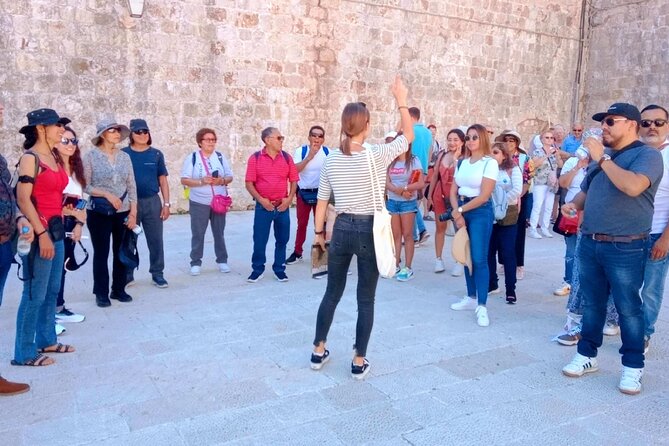
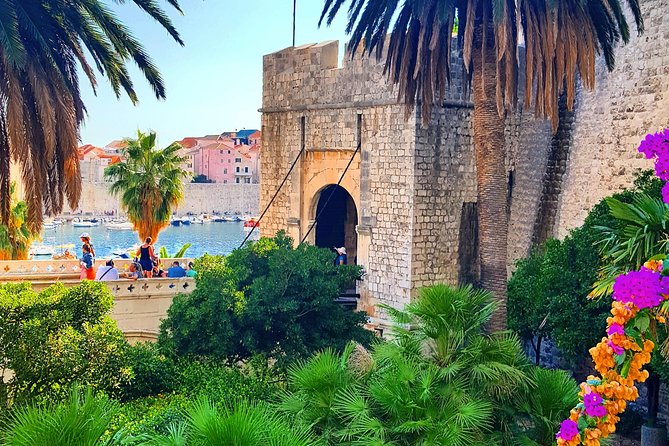
If you’re arriving in Dubrovnik’s Old Town and feel like you’re wandering, this tour is built to fix that. You meet at Elite Travel Walking Tours in Brsalje, and you start at Pile Gate, the western entrance into Stari Grad. That matters, because once you’ve walked in here, you can place everything you see later along the wall and through the streets.
The pace is friendly for a walking tour—about 1 hour 30 minutes—and the route is designed to hit recognizable icons without turning your whole morning into a stair workout. Guides also use the first stretch to set the tone: what Dubrovnik was, how it grew, and why the city’s walls and institutions mattered.
This is also where you feel the value of having a live guide. Dubrovnik looks postcard-perfect from afar, but up close you start noticing the “why” behind the shapes, locations, and building types.
Onofrio’s Fountain and the city’s aqueduct roots
Very early in the walk, you stop at Onofrio’s Fountain, the circular multi-faucet drinking fountain tied to an aqueduct. The key detail here is the distance: water came from a spring about 7.5 miles (12 km) away. That’s not just trivia—it’s how a city survives. When you hear the water story, the fountain stops being decorative and starts feeling practical and clever.
You’ll also get context for how Dubrovnik functioned before modern plumbing. The fountain becomes a snapshot of municipal planning: feeding daily needs, managing public access, and relying on long-distance infrastructure.
One reason I like this stop for first-time visitors: you get a break from the “big building” sightseeing. You learn something that’s easy to spot on your own later, which means the tour keeps paying off after it ends.
Franciscan Monastery cloister: Gothic calm and a working pharmacy
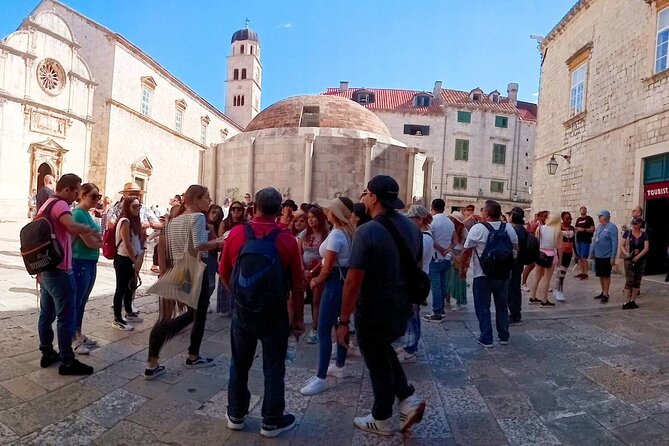
Next comes the Franciscan Church and Monastery area, where the tour focuses on the cloister and what’s inside it. You’ll walk through the 14th-century Gothic cloister, and you’ll also get pointed attention on art—plus the restored Pieta sculpture mentioned in the tour description.
There’s another angle here that I really appreciate: this isn’t just a museum stop. The monastery is home to one of the oldest still-functioning pharmacies in Europe, which gives the building a living feel. You’re not just looking at old stone; you’re seeing continuity.
In a city where many sites get crowded fast, this cloister moment often feels like a small reset. Even if you’re not a “church person,” you’ll likely enjoy it because it’s quiet, architectural, and easy to frame with a guide’s explanation.
Stradun: the limestone main street you’ll keep hearing about
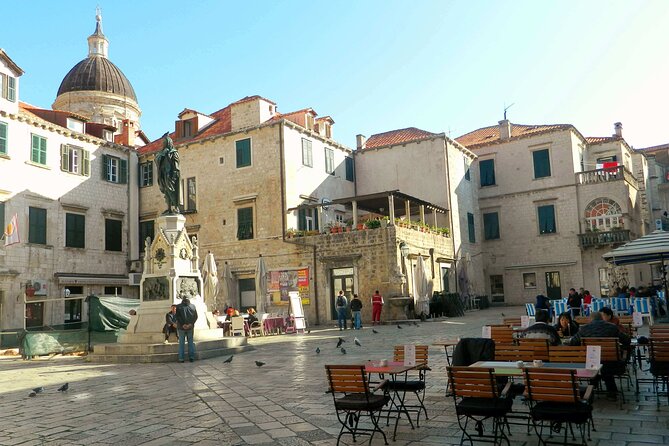
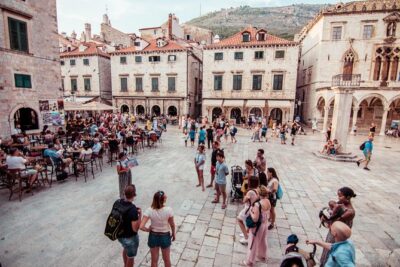
After the cloister, you head down Stradun, Dubrovnik’s limestone-covered main pedestrian street. It’s the kind of place where, without context, you might just think: shops, crowds, photos. With a guide, you start seeing it as the city’s central axis—where official life, tourism, and day-to-day movement all overlap.
Stradun is also a helpful mental anchor. Once you know where it runs and what it connects to, your self-guided exploring becomes less stressful. You can come back to it as a “home base” when side streets start looking identical.
The tour uses this main street as a lead-in to the Renaissance-era power buildings, so you don’t just pass them—you understand why they’re positioned where they are.
Dubrovnik on foot, a few more routes off the Stradun
- Dubrovnik: Game of Thrones Walking Tour
★ 5.0 · 1,732 reviews - Dubrovnik: Ancient City Walls & Wars Walking Tour
★ 5.0 · 1,270 reviews - Dubrovnik: City Walls, Old Town Walking Tour & Adriatic View
★ 4.9 · 982 reviews - Dubrovnik: Game of Thrones Walking Tour
★ 4.9 · 981 reviews - ‘Game of Thrones’ Walking Tour in Dubrovnik
★ 4.5 · 945 reviews
Sponza Palace and the State Archives: Renaissance administration in stone
On Stradun, you’ll reach Sponza Palace, a major Renaissance highlight now housing the State Archives. This is one of those stops that feels dry until someone explains what it meant to run a city like Dubrovnik. The palace isn’t only pretty; it’s connected to governance, record-keeping, and civic life.
Your guide’s commentary helps you read the building rather than treat it as a background detail. You’ll also get help spotting how official buildings sit in relation to the main street and nearby landmarks, so the Old Town feels organized instead of chaotic.
If you like architecture with purpose, this is a strong stop. If you prefer stories over details, it still works because the palace becomes a launching pad for the wider Dubrovnik narrative.
Orlando Column, the bell tower area, and St. Blaise’s symbolism
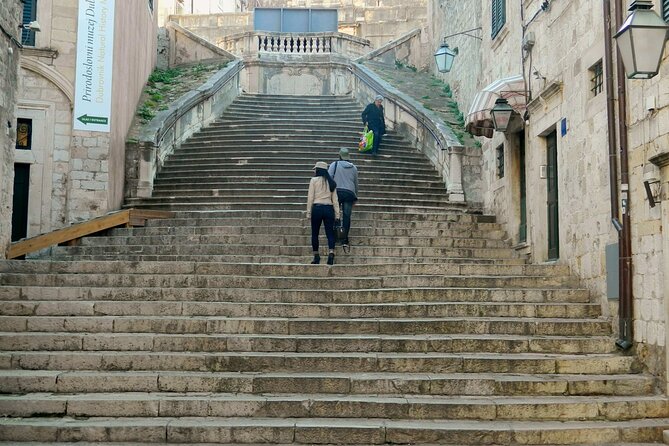
As you move along, the tour points out Orlando Column, also called the clock column. This is a fun “how did they do that?” stop: it shows the time in Arabic and Latin numerals, and the display only changes every five minutes. That’s the kind of detail you’ll miss if you’re just walking past for photos.
You’ll also spend time around the civic complex feeling, with stops in the area of the Rector’s Palace and the Church of St. Blaise, Dubrovnik’s patron saint. These places tie religion, civic authority, and city identity together. Dubrovnik didn’t grow by accident—it organized itself around key institutions.
One practical note: these are busy zones. If you’re the type who dislikes tight listening circles, position yourself early so you can hear clearly. A couple reviews mention hearing challenges with certain accents, so standing close is your best fix.
Dubrovnik Cathedral of the Assumption: the Baroque rebuild story

The tour finishes by visiting the Cathedral of the Assumption. This cathedral is Baroque, built in the 18th century after an earthquake destroyed the original structure. That rebuild story matters because Dubrovnik’s identity isn’t only about what it built—it’s also about what it replaced and protected afterward.
Depending on what’s open and how the timing works that day, you’ll also spend time in the Cathedral area, including the Cathedral Treasury stop that’s listed on the route, plus the bell tower reference point. Even if you’re not going deep into every interior, the guide helps you connect the exterior architecture to the city’s survival and recovery.
I like ending here because it gives you a clear “big finale” sight that you can point to later when you’re comparing your favorite spots. It also makes the rest of your day easier: you’ll know where you are and why the buildings matter.
How much value you’re getting for $31.46

At $31.46 per person, you’re paying for three things: a live local guide, a smart route through major Old Town landmarks, and time savings. The tour runs about 90 minutes, so it’s not a half-day commitment when Dubrovnik’s streets are already full.
The good news is that the stops on the route are listed as Admission Ticket Free for several key points, which helps keep the total cost controlled. You’re not paying a long chain of entry fees just to get oriented and see the essentials.
You also get value in the “small-group” factor: max 16 travelers means more chances for the guide to answer your questions. In a place like Dubrovnik, that’s not a small luxury; it changes how much you take away from what you’re seeing.
What to wear and how to pace yourself on the morning walk
This tour is straightforward: you’re outdoors in summer-to-early-autumn conditions, plus you’ll be in and out of shade. Wear comfortable shoes for uneven stone and expect some stairs and slight slopes even if the route avoids the steepest climbs. In reviews, people specifically mention preferring the morning to help with energy and the rest of the day.
A simple strategy: bring a hat and water, and if you see a shaded doorway or alcove where the group can pause, take it. Guides often look out for those spots, and it makes the walk more comfortable without breaking the flow.
For photos, plan to shoot during short pauses rather than trying to stop mid-speech. You’ll get better framing and you won’t feel rushed.
Who should book this Dubrovnik Old Town walk
This tour is a great fit if you want to:
- Get your bearings fast in Dubrovnik’s Old Town
- See major sights without planning a route on your first day
- Enjoy guided storytelling as you move from Pile Gate toward Stradun and the Cathedral area
- Travel with a group size that stays small enough for questions
It may be less ideal if you struggle with background noise and long explanations in public squares. If you know you have trouble hearing in crowded areas, stand close early and don’t be shy about repositioning so you can follow along.
Should you book the Dubrovnik Old Town Walking Tour?
Yes, if you want an efficient, high-impact introduction to Dubrovnik’s Old Town. For $31.46 and about 90 minutes, you get a guided run through the places that define the city—Onofrio’s Fountain, the Franciscan cloister, Stradun, Sponza Palace, the civic landmarks around Orlando Column and Rector’s Palace, and the Cathedral of the Assumption with its earthquake rebuild story.
If your goal is simply to collect photos, you could do it on your own. But if you want the street-level “why” behind what you’re seeing, this is one of the best ways to start, especially when you can match your experience to a guide style you like—Elvis, Toni, Natalia, and Sarah are names that show up again and again.
FAQ
How long is the Dubrovnik Old Town walking tour?
It’s about 1 hour 30 minutes. The timing can feel a bit different depending on the group pace and how long you linger at each stop.
What time does the tour start?
The start time listed is 10:30 am.
Where do I meet the guide?
You meet at Elite Travel Walking Tours, Brsalje ul. 1, 20000, Dubrovnik, Croatia.
Is the tour offered in English?
Yes, it’s offered in English.
How big is the group?
The tour has a maximum of 16 travelers.
What’s included in the price?
The tour includes a local guide. Other items like food or transport are not included.
Are museum or attraction admissions included?
Several stops are listed as Admission Ticket Free, but the tour package you book explicitly lists the guide as included and doesn’t list broad museum admissions. Expect at least the listed free-access stops as part of the route.
What’s not included?
Hotel pickup and drop-off are not included, and food and drinks are not included unless specified.
Do I need a printed ticket?
You use a mobile ticket, so you don’t need paper tickets for the tour.
What happens if the weather is bad?
This experience requires good weather. If it’s canceled due to poor weather, you’ll be offered a different date or a full refund.
Keep Walking the Old Town


The Walls & Old Town, More Ways In

More Tour Reviews in Dubrovnik



Fresh on the Dubrovnik shortlist




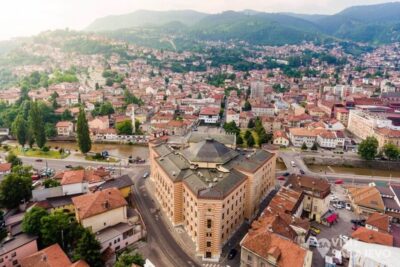
City Walls & Old Town, compared.
 ★ 4.8Old Town Walking TourFrom $235,174 reviews
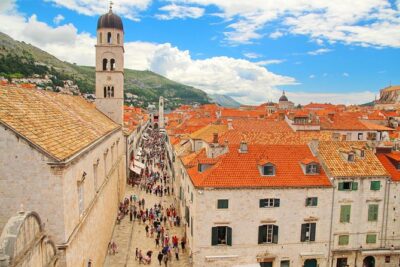 ★ 5.0Dubrovnik Discovery Old Town Walking TourFrom $244,458 reviews
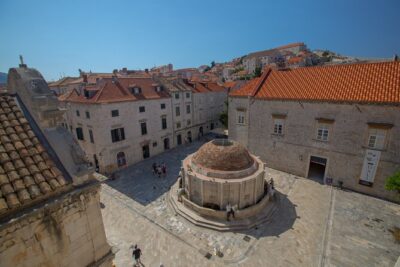 ★ 5.0Dubrovnik Old Town History Walking TourFrom $241,684 reviews
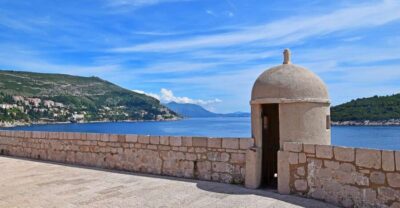 ★ 4.8City Walls Early Morning or Sunset Walking TourFrom $291,523 reviews
 ★ 5.0Ancient City Walls & Wars Walking TourFrom $301,270 reviews
 ★ 5.0Dubrovnik Combo: Old Town & Ancient City WallsFrom $521,019 reviews
 ★ 4.9City Walls, Old Town Walking Tour & Adriatic ViewFrom $27982 reviews
 ★ 4.9Blue Cave Tour with Panoramic Old Town ViewFrom $73884 reviews
Browse the lists this tour appears in