
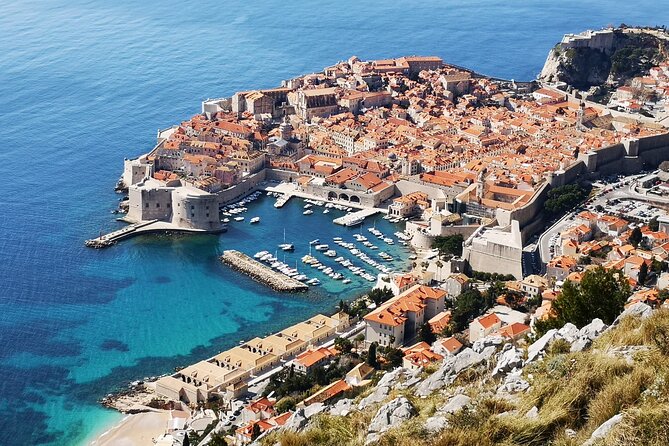
Reviewed · CITY WALLS & OLD TOWN
Dubrovnik Old City Private Tour
Old Dubrovnik goes way deeper than the postcard. This private 2.5-hour walk pairs you with a guide like Vlaho or Antun who connects the walled streets to events that stretch from ancient times to the 1990s. I also like that the pace is adjustable for real people—some guides keep you in the shade and away from the tightest crowd pockets. One catch: you’ll do a lot of walking and stairs, and museum access can swap depending on timing and opening hours.
You also get a tight route that hits the big names plus the useful context: Pile Gate, Stradun, Rector’s Palace, and the harbor fortifications. It usually includes two museum entrance fees, often tied to the Franciscan or Dominican monastery museum and (in many cases) the Cathedral’s treasury, with substitutions if needed. If you want a quick history lesson without getting lost in Old Town, this tour is built for that.
In This Review
- Key highlights you’ll actually feel during the walk
- Why this private Old City walk works (especially the first day)
- Price and what $133.03 per person really buys
- Start at Nautika: get oriented fast before the crowds get loud
- Kolorina Bay and the fortress feel: learning the city’s defensive logic
- Pile Gate and the Minčeta Tower: the wall system in plain view
- Franciscan Church and monastery museum: the old pharmacy and the human stories
- Stradun and Onofrio’s Fountain: where the city’s heartbeat is
- St. Ignatius of Loyola and the side streets: the part most people miss
- Cathedral of the Assumption and the treasury: art, power, and the Republic’s memory
- Rector’s Palace: the city’s government story, made visible
- City Harbor fortifications: where protection met trade and quarantine
- Luža Square finish: Sponza, Clock Tower, and where to go next
- So, should you book this private Old City tour?
- FAQ
- How long is the Dubrovnik Old City Private Tour?
- What does the tour cost?
- Is this a private tour?
- What language is the tour offered in?
- What’s included in the price?
- Are museum entrances always included?
- What’s not included?
- Where does the tour start and end?
- Does the route ever change?
- What if the weather is bad?
- Can I cancel for free?
- Is the tour suitable for most people?
Key highlights you’ll actually feel during the walk
- A true private experience: your group walks with one professional English guide only
- History that runs through the city’s toughest chapters, including stories tied to the 1990s conflict
- Iconic Old Town anchors like Pile Gate, Stradun, Rector’s Palace, and Luža Square
- Museum stops that often include the old pharmacy at the Franciscan complex
- Harbor fortifications and quarantine sites that most casual visits skip
- Guides praised for clear, practical explanations, with names like Vlaho, Tea, Paula, Paolo, and Antun frequently mentioned
More time up on the ramparts and inside the Old Town
- Dubrovnik: Old Town Walking Tour★ 4.8 · 5,174 reviews
- Dubrovnik Discovery Old Town Walking Tour★ 5.0 · 4,458 reviews
- Dubrovnik Old Town History Walking Tour★ 5.0 · 1,684 reviews
- Dubrovnik: City Walls Early Morning or Sunset Walking Tour★ 4.8 · 1,523 reviews
Why this private Old City walk works (especially the first day)
Dubrovnik’s Old City can feel like a highlight reel. But if you only wander on your own, it’s easy to miss how the place actually works: the walls, the gates, the government buildings, the churches, and the defensive harbor were all built to protect a very specific way of life.
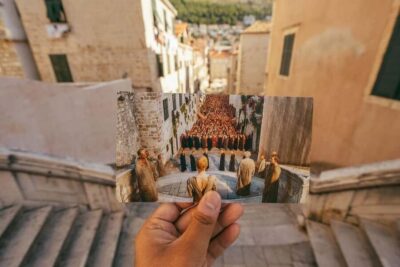
This tour is appealing because it’s private and focused. You’re not squeezed into the loud middle of a group. You can ask questions, and your guide can shift the route a bit if streets are crowded or weather turns uncomfortable. That’s also where the guide style matters. People often mention guides such as Vlaho, Tea, Paula, Paolo, and Antun for making history understandable—and for adding local color (including references to Game of Thrones on the way to the relevant spots).
The other reason I’d call it “smart value” is that it bundles your time. Two and a half hours is enough to cover the core landmarks and still hear the why behind them. You’ll come away with a clearer picture of Dubrovnik’s Republic, its architecture, and why these walls weren’t just decoration.
Price and what $133.03 per person really buys
At $133.03 per person for about 2 hours 30 minutes, you’re paying for two things: a guide who can steer your attention, and (usually) two museum entrance fees folded into the experience.
If you’re the type who likes structure—meeting at a set point, following a logical route, and not having to figure out which church or museum is most worth your time—this price can make sense. The tour also helps you avoid the “wait, where are we going next?” problem that pops up when you’re trying to do Old Town efficiently on your own.
If you’re the type who enjoys drifting freely and already has a strong self-guided plan, the cost might feel high. In that case, you’d need to be confident you’ll get enough out of the route and the history talk to justify a private guide.
Start at Nautika: get oriented fast before the crowds get loud
The tour begins at Nautika (Brsalje ul. 3). This is a good setup because you’re starting at the edge of the action rather than diving straight into the most congested stretches.
From the start, you’re guided through a simple goal: get your bearings, then understand why Dubrovnik’s top landmarks are placed where they are. Early context matters here. When you later stand by Pile Gate or look toward the walls, you’ll already know what you’re looking at and why it mattered.
You also get a welcoming pace. People mention guides keeping the group comfortable—slowing when needed, using shade, and steering you away from the tightest crowd moments when possible. That’s a quiet quality-of-life win, especially in peak season.
Kolorina Bay and the fortress feel: learning the city’s defensive logic
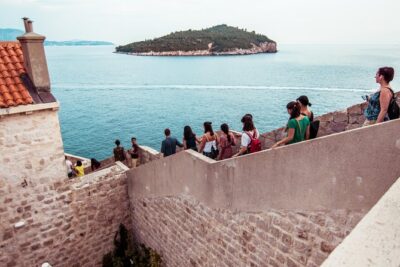
One of the first stops brings you into the atmosphere of the coastline defenses, with a look at U Pilama and the direction of St. Lawrence Fortress and Kolorina Bay.
This is where the city stops being just pretty stone. You start thinking like a defender. Dubrovnik’s Old City isn’t random. It was laid out to control access, watch approaches, and protect the community inside the walls.
For many visitors, this early section is also where photos get easier. You’re not just shooting from street level. You’re getting a sense of the slopes, the sea edge, and the way viewpoints relate to fortifications. If you tend to take fewer photos later because you’re already oriented, this early step helps.
Other days with a guide kept just to yourself
- Private Tour: Montenegro Day Trip from Dubrovnik
★ 4.5 · 495 reviews - Tour The Game of Thrones – Private Walking Tour
★ 5.0 · 464 reviews - Montenegro Private Full Day Tour from Dubrovnik
★ 5.0 · 376 reviews - PRIVATE TOUR: Highlights & Hidden Gems of Dubrovnik With Locals
★ 5.0 · 249 reviews - Dubrovnik: Old Town & City Walls Private Walking Tour
★ 5.0 · 206 reviews
Pile Gate and the Minčeta Tower: the wall system in plain view
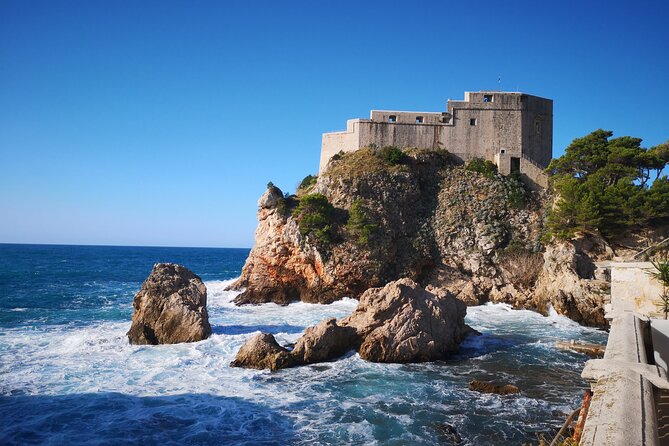
Then you hit Pile Gate, the classic west gateway. You’ll also be pointed toward the old city walls and the Tower of Minčeta.
This part is one of the most important stops on the route. Dubrovnik’s walls can look like one long wall from a distance, but standing near the gate helps you understand the concept of layered defense—gates, towers, and the controlled choke points where people could enter or where an attack could be observed.
Guides often explain the symbolism and the practical purpose: why certain designs were used, how the Republic thought about security, and how the city’s identity formed around being able to stand its ground. And if you’re the sort who notices details, pay attention to how much of the drama is built into the architecture.
Franciscan Church and monastery museum: the old pharmacy and the human stories
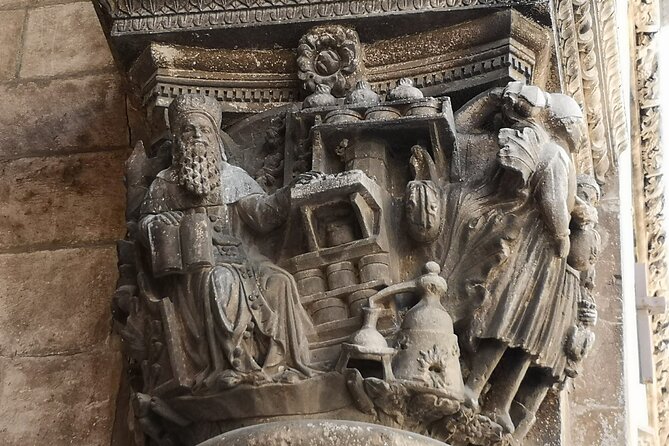
At the Franciscan Church and Monastery, you’re guided through one of the most memorable cultural stops: the monastery complex and its museum, with the old pharmacy often highlighted.
This is a strong “value” moment because it’s more than sightseeing. You’re seeing how the city’s religious life and its community needs intersected, and you’re likely to hear stories that connect Dubrovnik’s long timeline to the more recent conflicts. People mention that some guides include specific siege context tied to the 1990s conflict, which adds weight to what you’re seeing.
One practical note: museum access works a bit differently than the streets. The tour includes two museum entrance fees in general, and the specific sites can change based on time/date/season. That said, the Franciscan and Dominican monastery museums (and the Cathedral treasury) are often part of what you get, with substitutions if schedules don’t cooperate.
If you’re traveling in a shoulder season or on a day with limited hours, this flexibility matters. It’s also why I like this tour’s approach: it’s designed so the experience doesn’t collapse if one museum is unavailable.
Stradun and Onofrio’s Fountain: where the city’s heartbeat is
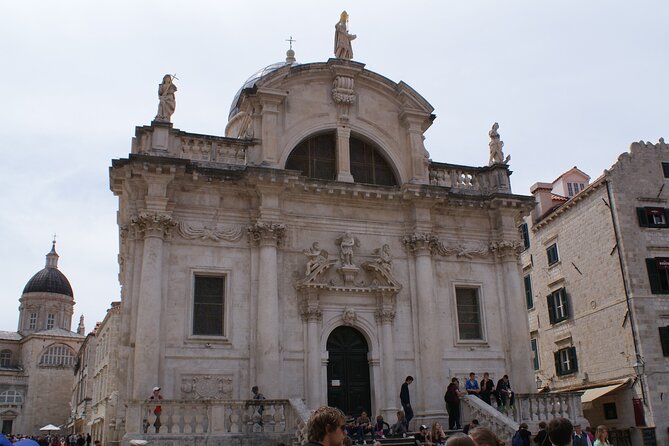
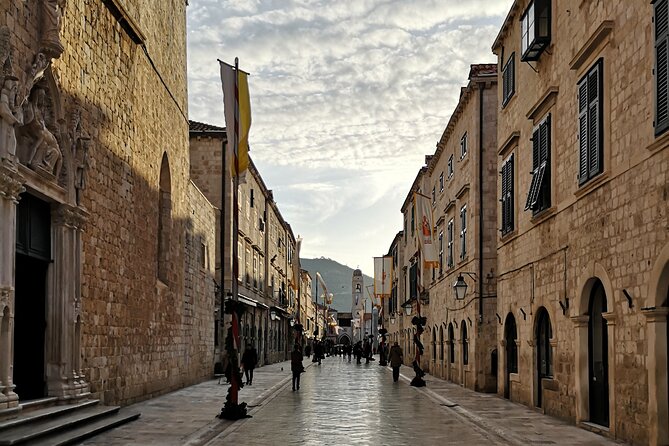
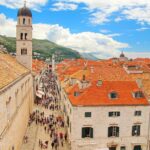
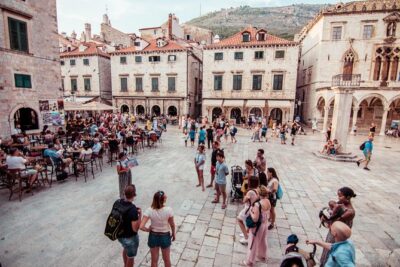
Next comes Stradun, Dubrovnik’s main street—plus Onofrio’s Fountain and the Church of the Holy Saviour.
Stradun is where you feel the city’s scale and its rhythm. It can look like a single “pretty promenade” if you’re only half-paying attention. With a guide, you learn to read it: where power and religion show up, how streets funnel movement, and why certain corners feel like they’re meant for public life.
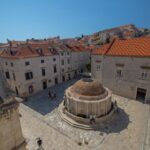
Onofrio’s Fountain is a great teaching moment. It’s one of those features that looks like decoration until you understand why a major landmark like this belongs on a central street. You’ll also get help linking what you see to the broader story—so Stradun becomes a narrative, not just a backdrop.
St. Ignatius of Loyola and the side streets: the part most people miss
Then the tour turns into the older, more tucked-away streets, bringing you to the Church of St. Ignatius of Loyola, including the stairway, the Great Granary, and the Square of Ivan Gundulić.
This section often feels like a breath of fresh air because it’s less postcard-perfect and more lived-in. You see how the city hides complexity behind the main street. The Jesuit presence and the nearby structures add another layer to Dubrovnik’s story—one that complements the walls and the Republic politics you heard earlier.
It’s also a good time for your guide to tailor. If you’re traveling as a family or with teens, guides often keep explanations paced so people don’t tune out. The route also gives you frequent chances to pause and look back at the larger urban layout.
Cathedral of the Assumption and the treasury: art, power, and the Republic’s memory
You’ll reach the Cathedral of the Assumption of the Blessed Virgin Mary, along with the Treasury of the Republic.
This is another stop where the value depends on what’s included and what’s open. In general, the Cathedral treasury is one of the museum elements that’s often part of the included entrance fees, but it can be substituted to fit the tour date and timing. If a museum is closed, you should expect a refund for the ticket portion tied to that closure.
Even if you don’t go into museums, standing at the cathedral complex is worth it. It reinforces the idea that Dubrovnik’s identity wasn’t only military. It was also civic, religious, and deeply tied to how the Republic remembered itself.
Rector’s Palace: the city’s government story, made visible
Then you move to Rector’s Palace, described as the seat of government for the Republic of Dubrovnik.
This stop is where the earlier history talk clicks into place. You’re no longer hearing theories about governance. You’re seeing the physical center of authority. A good guide will connect the palace to the defensive system you saw at Pile Gate and the harbor fortifications you’ll visit next.
Even without museum time inside, the palace area helps you understand the city’s priorities. Dubrovnik was a small republic protecting itself hard—and its leadership buildings show how seriously the city took order and decision-making.
City Harbor fortifications: where protection met trade and quarantine
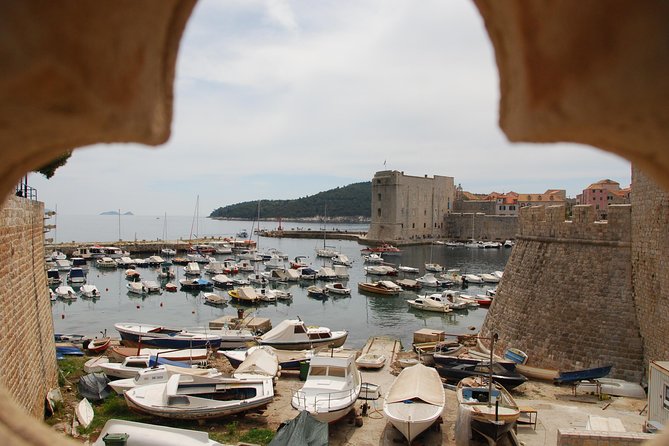
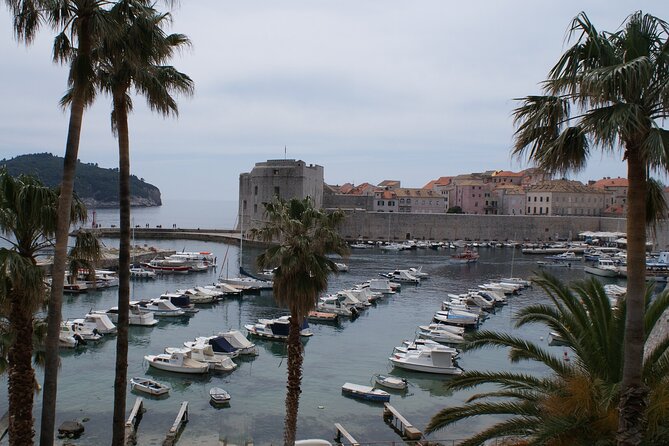
One of the most distinctive parts of this tour is the harbor-focused segment. You’ll pass by the Fortress of St. John, Lazareti Quarantine, fortifications of St. Luke, Revelin Fortress, the East Gate Ploče, and the Dominican Monastery.
This stretch is key because it expands your understanding beyond the walls. Dubrovnik’s survival depended on controlling what came in and out—people, goods, and disease risk. The inclusion of Lazareti Quarantine is a big clue that the city wasn’t only building walls for battles. It was managing daily life and threats that looked different than cannon fire.
If you’re a “history person,” this harbor section can be the most satisfying. It shows how a republic thinks in systems: gatekeeping, protection, and controlled access.
And if you’re not a history person, it still works because the views and the scale hit hard. You’re looking at the logic of fortifications laid out where the sea and movement intersect.
Luža Square finish: Sponza, Clock Tower, and where to go next
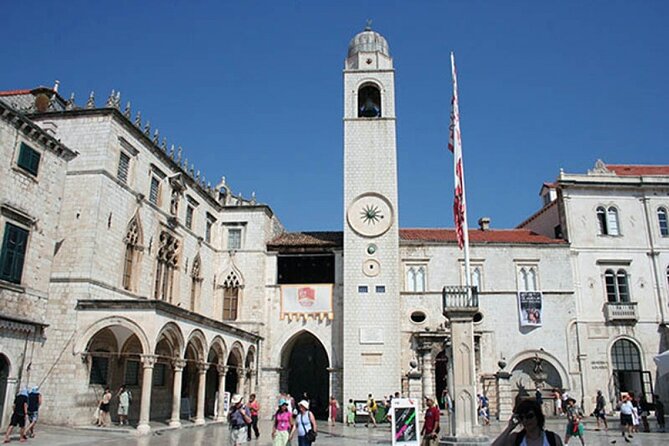
The tour ends in Luza Square, near the Church of St. Blaise on the east end of the main street.
From Luža, you’re positioned perfectly to keep exploring on your own. You’ll see key landmarks around the square area, including Sponza Palace, the Clock Tower, Small Onofrio’s Fountain, and the City Hall.
This finish is practical. You leave the tour with a clear mental map. That means your next steps—whether you want to shop, grab a meal, or revisit a favorite view—are more deliberate.
Also, ending here rather than in the deep maze of side streets usually feels easier, especially if you’re tired from walking.
So, should you book this private Old City tour?
I’d book it if you want three things: clarity, structure, and context. This tour is built for people who want to understand why Dubrovnik looks the way it does—and why it mattered in both distant history and the recent 1990s conflict.
I’d skip it (or at least consider a less guided option) if you’re already set on a self-guided plan and you’re happy doing museum tickets on your own. And if your knees don’t love stairs, be realistic: this is Old Town, and the walking is part of the deal.
If you do book, take the time to ask questions—especially about what you’re seeing at the walls, the palace, and the harbor defenses. That’s where the private guide turns your visit from pretty photos into real understanding.
FAQ
How long is the Dubrovnik Old City Private Tour?
It runs about 2 hours 30 minutes.
What does the tour cost?
The price is listed at $133.03 per person.
Is this a private tour?
Yes. Only your group participates.
What language is the tour offered in?
The tour is offered in English.
What’s included in the price?
You get professional tour guidance and two museum entrance fees (with typical substitutions depending on date/time/season).
Are museum entrances always included?
In general, the Franciscan or Dominican monastery museum and the Cathedral treasury are included, but they may be substituted to fit the tour time/date/period of year. If museums are closed, funds are refunded.
What’s not included?
Food and beverages, personal expenses, and gratuities are not included.
Where does the tour start and end?
It starts at Nautika (Brsalje ul. 3, 20000 Dubrovnik) and ends at Luža Square near the Church of St. Blaise.
Does the route ever change?
Yes. The route may be different due to weather, crowds, events, or other exceptional reasons that could affect the tour quality.
What if the weather is bad?
This experience requires good weather. If it’s canceled due to poor weather, you’ll be offered a different date or a full refund.
Can I cancel for free?
Free cancellation is available up to 24 hours in advance for a full refund.
Is the tour suitable for most people?
Most people can participate, but expect plenty of walking and stairs through the Old City streets.
More Private Days in Dubrovnik

The Walls & Old Town, More Ways In

More Tour Reviews in Dubrovnik

Fresh on the Dubrovnik shortlist



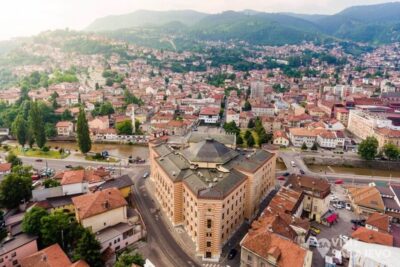
City Walls & Old Town, compared.
 ★ 4.8Old Town Walking TourFrom $235,174 reviews
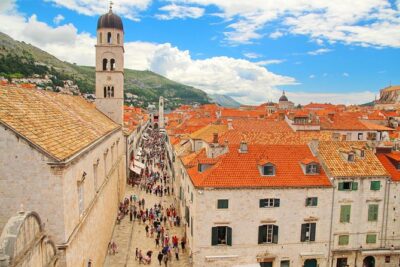 ★ 5.0Dubrovnik Discovery Old Town Walking TourFrom $244,458 reviews
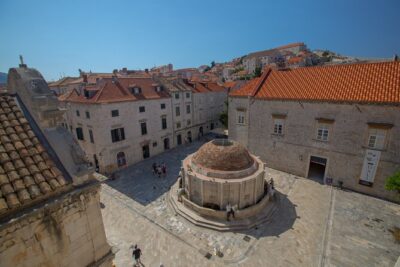 ★ 5.0Dubrovnik Old Town History Walking TourFrom $241,684 reviews
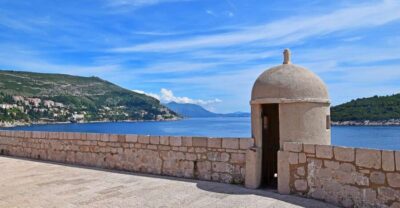 ★ 4.8City Walls Early Morning or Sunset Walking TourFrom $291,523 reviews
 ★ 5.0Ancient City Walls & Wars Walking TourFrom $301,270 reviews
 ★ 5.0Dubrovnik Combo: Old Town & Ancient City WallsFrom $521,019 reviews
 ★ 4.9City Walls, Old Town Walking Tour & Adriatic ViewFrom $27982 reviews
 ★ 4.9Blue Cave Tour with Panoramic Old Town ViewFrom $73884 reviews
Browse the lists this tour appears in