
Reviewed · CITY WALLS & OLD TOWN
Dubrovnik Old City Group Tour
Dubrovnik reveals itself faster with a good guide. This 2-hour Old City walkthrough strings together key landmarks, from meeting at Nautika to ending at Luza Square, so you get the big picture without getting lost. I especially like the local storytellers behind the narration, including guides such as Viktor, Vlaho, and Judas.
You will walk with a small group (max 20), in English, and use a mobile ticket for check-in. The only real catch: entry isn’t included for the Rupe Museum and the Rector’s Palace, so plan on either paying for those or enjoying them from the outside.
In This Review
- Key highlights you will actually feel during the walk
- Entering Dubrovnik at Nautika: a calm start to a crowded city
- Nautika to Kolorina Bay: the seafront hint of how the city works
- Pile Gate and the old walls: the story starts where the city guarded itself
- Stradun: the main street that ties the churches, fountains, and squares together
- The Rupe Museum stop: hidden streets and the option that can cost extra
- St. Ignatius of Loyola and the square stops: where the stories get personal
- The Cathedral stop and Kravat necktie: details you might otherwise miss
- Rector’s Palace: a government centerpiece, but plan for the admission gap
- Luza Square finish: where the old city feels like a real place
- Price and value: $30.77 for a structured Old Town orientation
- Timing, crowd reality, and what to bring
- Which guide style suits you best (Viktor, Vlaho, Judas)
- Who this tour is best for
- Should you book this Dubrovnik Old City Group Tour?
- FAQ
- FAQ
- How long is the Dubrovnik Old City Group Tour?
- What is the meeting point for the tour?
- Where does the tour end?
- What is included in the price?
- Are food or drinks included?
- Is the tour offered in English?
- How many people are in the group?
- Is admission included for every stop?
- Do I need good weather for this tour?
- What is the cancellation policy?
Key highlights you will actually feel during the walk
- Wall-first orientation at Pile Gate, with the Tower of Minčeta and the old fortifications in context
- Stradun at street level, including Franciscan areas, Onofrio’s Fountain, and the main promenade feel
- Hidden-street storytelling during the Rupe Museum segment, even if you skip entry
- Cat and pigeon lore at St. Ignatius and nearby squares that adds personality to the stops
- Cathedral details you can spot (including the connection to the Kravat necktie shop)
- A finish at Luza Square that naturally matches where you’ll want to continue exploring
More time up on the ramparts and inside the Old Town
- Dubrovnik: Old Town Walking Tour★ 4.8 · 5,174 reviews
- Dubrovnik Discovery Old Town Walking Tour★ 5.0 · 4,458 reviews
- Dubrovnik Old Town History Walking Tour★ 5.0 · 1,684 reviews
- Dubrovnik: City Walls Early Morning or Sunset Walking Tour★ 4.8 · 1,523 reviews
Entering Dubrovnik at Nautika: a calm start to a crowded city
The tour begins at Nautika, Brsalje ul. 3 (a simple meeting point that you can find without drama). The first minutes are about getting your bearings. You get a welcome to Dubrovnik, then the guide frames what you are about to see: this is the old walled city, compact enough to walk, but packed with layers—religious sites, government spaces, and seafront defenses.
This is a good “first day” style tour because it helps you organize the Old Town in your head. Without that, Dubrovnik can feel like one long string of stone churches and arches. With the tour flow, you start to notice patterns: where power lived, where trade moved, and why the walls matter.
Also, this is a group experience. With up to 20 people, you are not stuck in a giant cattle-car, but you still move at a pace that works in peak tourist hours.
Nautika to Kolorina Bay: the seafront hint of how the city works
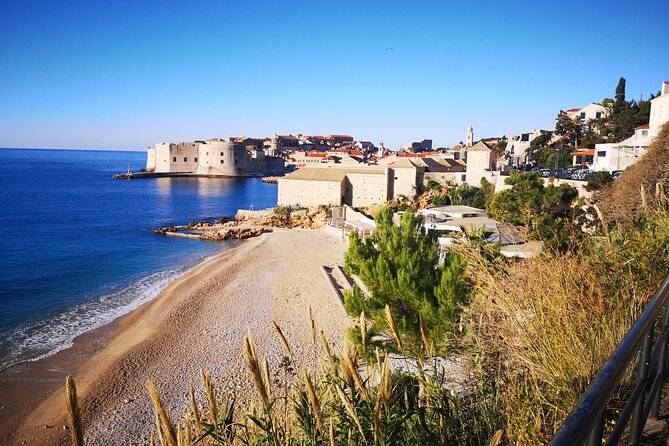
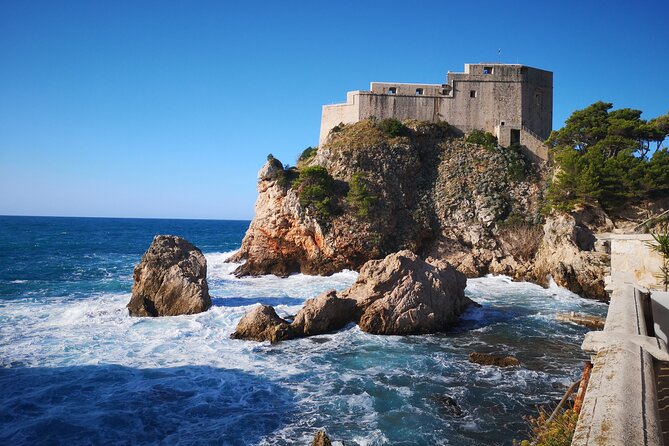
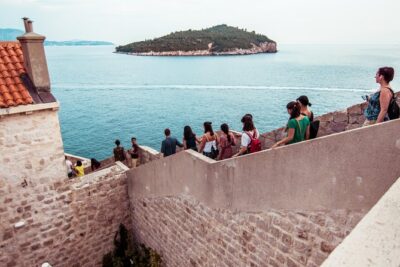
Next you head toward Kolorina Bay in the area of U Pilama and the Bokar and St. Lawrence Fortress viewpoints, plus the Penatur Rocks. Even with only around 10 minutes here, the goal is not a long sit-down. It is the quick “why this matters” moment: Dubrovnik’s old defenses and water access are tied together.
This stop is also useful if you like photography but dislike wasting time guessing angles. A guide can point you toward what to look for—how the bay positions the city’s fortifications and how the coastline shapes the Old Town’s layout. If you are only in Dubrovnik briefly, those directional cues can save you hours later.
Pile Gate and the old walls: the story starts where the city guarded itself
At Pile Gate, you get the heavier history focus, about 20 minutes of it. This is where the tour really earns its place. The guide explains Dubrovnik’s story in the context of the west gate and the city walls, including the Tower of Minčeta.
What I like about doing the walls early is that everything else makes more sense afterward. You stop thinking of Dubrovnik as just a postcard street and start recognizing it as a city built to defend trade routes and the people inside the walls.
Practical note: walls and gates mean you are on stone paths and steps. Wear shoes you trust. If your feet are sore, you’ll feel it more on this stop than on the flatter promenade segments.
Stradun: the main street that ties the churches, fountains, and squares together
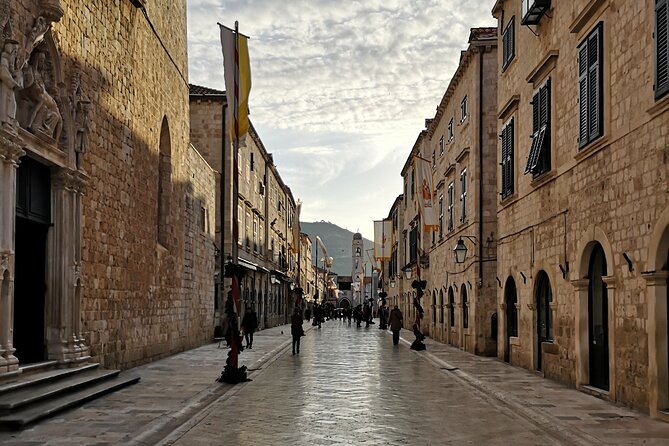
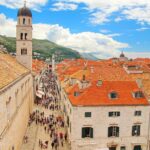
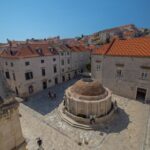
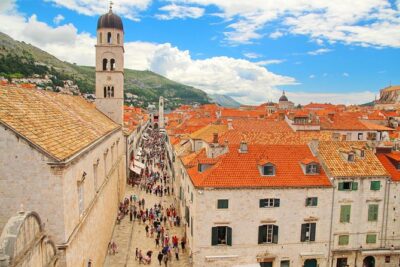
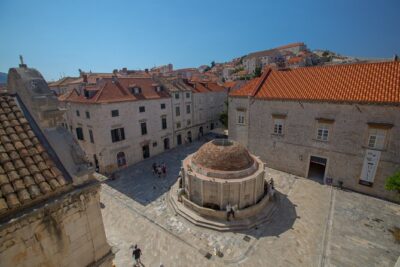
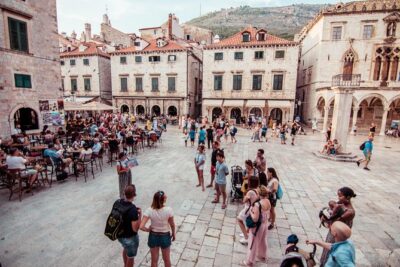
Then comes Stradun, the famous main street—about 10 minutes. This is the part where Dubrovnik feels instantly recognizable. You pass the Franciscan Church and Monastery, walk the spine of Stradun, and get pointed out to Onofrio’s Fountain and the Church of the Holy Saviour.
Stradun is easy to miss if you wander on your own because it looks like just another historic street. On a guided walk, it becomes a route. You start to understand why this street is the city’s backbone: it connects civic life, religious power, and the flow of people.
One practical thing here: Stradun gets crowded. When you do it with a group, you do not have to constantly stop to find where you are in relation to the next landmark. The tour helps you keep moving and still see what matters.
A few more Dubrovnik trips to round out the shortlist
- Dubrovnik: Ancient City Walls & Wars Walking Tour
★ 5.0 · 1,270 reviews - Dubrovnik Combo: Old Town & Ancient City Walls
★ 5.0 · 1,019 reviews - Dubrovnik: City Walls, Old Town Walking Tour & Adriatic View
★ 4.9 · 982 reviews - Dubrovnik: Old Town & City Walls Guided Tours Combo
★ 4.8 · 697 reviews - Dubrovnik Cable Car Ride, Old Town Walking Tour plus City Walls
★ 4.5 · 685 reviews
The Rupe Museum stop: hidden streets and the option that can cost extra
Next is a segment called The Rupe Museum, with around 20 minutes of time. The big point is not only the museum itself—it is the sense of getting off the main drag into smaller lanes: Placeta, the Wide Street, and nearby sites like St. Roko Church and St. Domino Church.
Admission is not included here. So you should think of this as two possible experiences:
- If you pay for entry, you will likely get more of the museum context inside.
- If you skip inside, you can still benefit from the guide’s pointing-out of streets and churches you might otherwise walk past without noticing.
Either way, the real value is how the guide connects the dots: why these streets feel hidden, what kind of city life they represent, and how the Old Town’s scale can trick you. You leave with a better mental map of where the quieter streets sit behind the famous avenue.
St. Ignatius of Loyola and the square stops: where the stories get personal
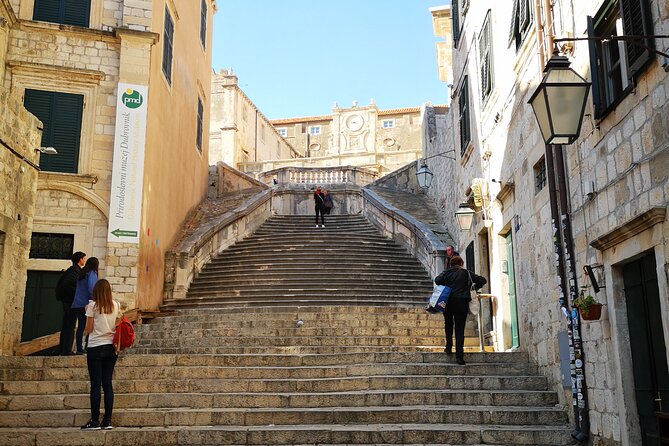
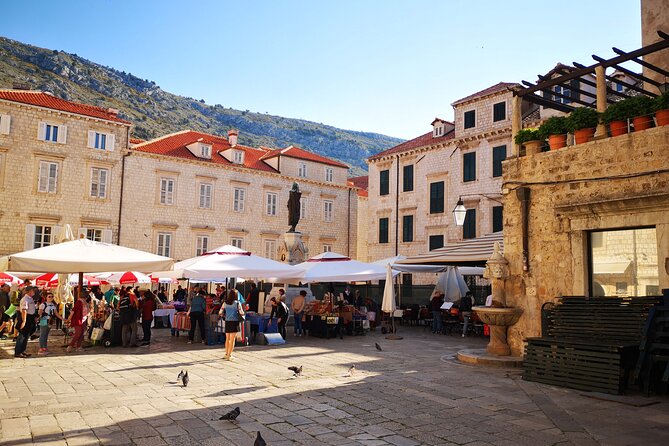
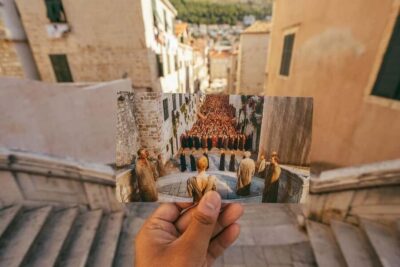
At Church of St. Ignatius of Loyola, you spend about 15 minutes. This stop includes the Jesuit Church, its stairway, the Square of Ivan Gundulić, and the story of the cats and pigeons. You also see Bunić Square.
This is the type of stop that turns a walking tour into something more memorable than a list of buildings. The cat and pigeon story adds local flavor, and the stairway gives you a real sense of Dubrovnik’s height changes and street geometry.
If you are the kind of traveler who likes atmosphere, this is where you’ll feel Dubrovnik’s personality. If you are rushing for photos, the stairway and squares still give you good visuals without needing extra tickets.
The Cathedral stop and Kravat necktie: details you might otherwise miss
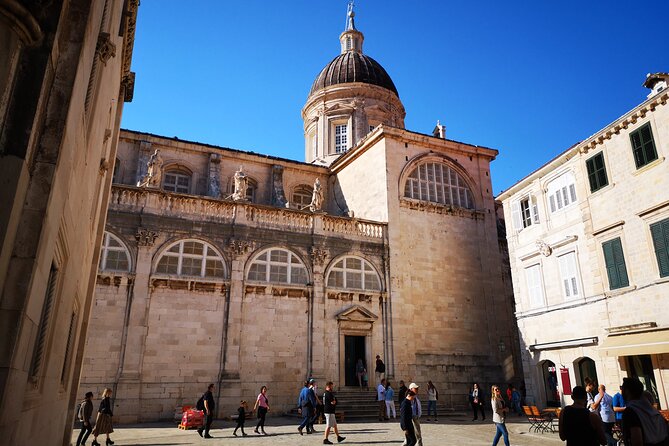
Then it is The Cathedral of the Assumption of the Virgin Mary, with about 10 minutes. You will see the cathedral itself, plus the Bishop’s Palace and the Ponta Seagate area. The guide also points out the shop of the necktie (Kravat).
This is a clever stop because it connects a famous Dubrovnik identity marker (the Kravat/neck-tie tradition) to a place you would otherwise treat like just another cathedral façade. Even if you are not into shopping, the point is cultural: Dubrovnik has a reputation that goes beyond walls and photos, and this is one way to notice that.
You will also get the general flow of why this area matters: bishop power, city symbolism, and how religious space sits in the same walking loop as civic points.
Rector’s Palace: a government centerpiece, but plan for the admission gap
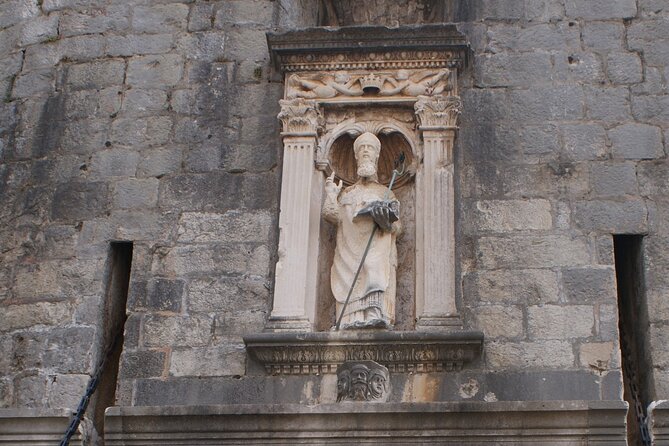
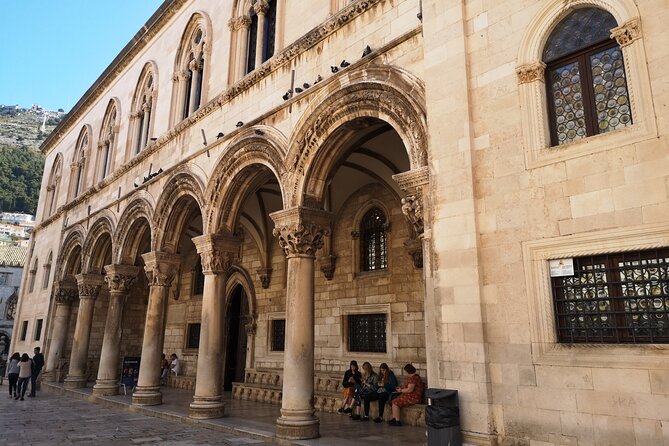
At Rector’s Palace, you get around 10 minutes, and admission is not included. Even without entry, this is still a key “read the city” stop. The guide frames it as the seat of government of the Republic of Dubrovnik.
Here is the practical consideration: if you want to go inside, you will need extra time and extra money that is not part of the basic tour price. If you are short on time, you can treat it as a guided orientation point—absorb the exterior and the meaning, then decide later.
I like having these optional ticketed stops built into a tour like this because you can match your interest level to your schedule. You are not forced into long museum time just because you booked a city walk.
Luza Square finish: where the old city feels like a real place
The tour ends at Luza Square, with about 15 minutes at the finale. This is a strong wrap-up because Luza is the center of gravity for a lot of activity.
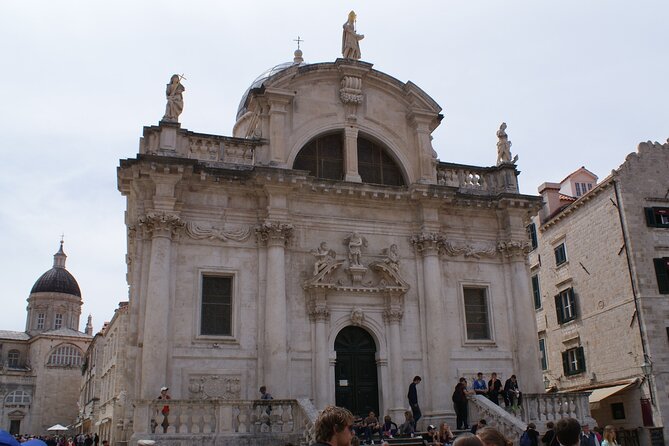
You will see Sponza Palace, the Clock Tower, small Onofrio’s Fountain, plus places like the City Hall and the Church of St. Blaise. And since the tour ends right there—close to the east end of Placa/Stradun—you can roll directly into your next plan: another church stop, a coffee break, or a slow wander back into side streets.
If you’re someone who likes to have control at the end of a tour, this matters. A good finish point keeps you from feeling stranded after the guide leaves.
Price and value: $30.77 for a structured Old Town orientation
At $30.77 per person (about a two-hour walk), the value comes from structure, not from included admissions. You are paying for professional guidance and a logical route that covers major landmarks and “between-the-lines” explanations.
Here is how I’d judge the value for your budget:
- If you want a quick, organized sense of Dubrovnik’s layout and power centers, the price feels fair because it replaces the need for multiple guidebooks, map confusion, and aimless wandering.
- If you plan to visit the ticketed sites inside the Rupe Museum and Rector’s Palace, your total spending will rise. Still, the tour can make those visits more rewarding because you understand why those buildings exist and how they connect to the larger story.
Also, you get a mobile ticket and a small group size (max 20). That usually means less waiting and more chance the guide can answer your questions.
Timing, crowd reality, and what to bring
This tour is about 2 hours (approx.), and the stops are mostly short. That is great for energy—just don’t expect a slow, sit-and-stare experience.
It also depends on weather. The tour requires good weather. If rain or heavy wind shows up, plan for the possibility of changes to dates. Since it’s an outdoor walking route, bring layers you can adjust quickly.
Because food and beverages are not included, you will want to bring a snack or plan a break before or after the tour. Even if you eat later, having something small in your day can keep the walking comfortable.
Which guide style suits you best (Viktor, Vlaho, Judas)
One of the best parts of this tour is how much personality you get from the local guides. You may meet Viktor—a guide known for growing up in Dubrovnik, answering almost all questions, and keeping things entertaining. You might also get Vlaho, with a talent for making Dubrovnik come alive through both present-day context and earlier history leading to today.
There is also Judas—named for empathetic, detailed explanations, even when conditions are tough like crowds during public holidays and busy event periods.
If you like tours where the guide talks like a person, not a script, this is the right kind of experience. If you prefer silence and only want photos, you might find the narration a lot. But most people leave feeling they understand what they saw.
Who this tour is best for
This Dubrovnik Old City Group Tour is a good match if you:
- Want an overview that ties walls, churches, and civic buildings into one storyline
- Prefer guided orientation rather than navigating solo with a map
- Have limited time and want to see key landmarks without over-committing to long museum visits
- Like local details such as the cat-and-pigeon lore and the Kravat necktie connection
If you already know Dubrovnik well and only want deep museum time, you might choose ticketed sites on your own instead. But for first-timers, this tour is built to make the city click quickly.
Should you book this Dubrovnik Old City Group Tour?
Book it if you want a practical, well-paced Old Town orientation with a guide who can explain what you are looking at, from Pile Gate to Luza Square. The price is reasonable for the structure you get, and the stops are chosen to help you build a mental map fast.
Skip or adjust expectations if you are only interested in fully ticketed museum time. Two segments—Rupe Museum and Rector’s Palace—do not include admission, so your total cost and time may increase if you go inside.
FAQ
FAQ
How long is the Dubrovnik Old City Group Tour?
It runs for about 2 hours.
What is the meeting point for the tour?
The tour starts at Nautika, Brsalje ul. 3, Dubrovnik.
Where does the tour end?
It ends at Luza Square, near the church of St. Blaise (east end of the main street Placa/Stradun).
What is included in the price?
Professional tour guidance is included, and you get a mobile ticket.
Are food or drinks included?
No. Food and beverages are not included.
Is the tour offered in English?
Yes, it is offered in English.
How many people are in the group?
The tour has a maximum of 20 travelers.
Is admission included for every stop?
No. Admission is not included for the Rupe Museum and Rector’s Palace, while other listed stops are free.
Do I need good weather for this tour?
Yes. The experience requires good weather.
What is the cancellation policy?
You can cancel for a full refund up to 24 hours in advance of the experience start time. If it is canceled due to poor weather, you are offered a different date or a full refund.
More Tours in Dubrovnik


The Walls & Old Town, More Ways In
More Tour Reviews in Dubrovnik

Fresh on the Dubrovnik shortlist



City Walls & Old Town, compared.
 ★ 4.8Old Town Walking TourFrom $235,174 reviews
 ★ 5.0Dubrovnik Discovery Old Town Walking TourFrom $244,458 reviews
 ★ 5.0Dubrovnik Old Town History Walking TourFrom $241,684 reviews
 ★ 4.8City Walls Early Morning or Sunset Walking TourFrom $291,523 reviews
 ★ 5.0Ancient City Walls & Wars Walking TourFrom $301,270 reviews
 ★ 5.0Dubrovnik Combo: Old Town & Ancient City WallsFrom $521,019 reviews
 ★ 4.9City Walls, Old Town Walking Tour & Adriatic ViewFrom $27982 reviews
 ★ 4.9Blue Cave Tour with Panoramic Old Town ViewFrom $73884 reviews
Browse the lists this tour appears in