

Reviewed · CITY WALLS & OLD TOWN
Dubrovnik: Guided Old City Walking Tour
Old stone with big stories. This guided walk through Dubrovnik’s Old City turns famous landmarks into real context—civic life, disasters, rebuilding, and how power worked behind the walls.
I like that the tour is built around human details, not just photo stops. Two things I especially love are the stop at Sponza Palace (including the memorial room) and the way the guide uses Stradun to connect the dots between everyday life and the city’s “official” side.
One possible drawback: it’s a walking route through a dense historic core. If you hate crowds or need lots of breaks, you’ll want to plan your pace carefully.
In This Review
- Key things to notice on this Dubrovnik Old City walk
- Dubrovnik’s Old City on foot: why Ragusa works as your classroom
- Start at Amerling Fountain in Pile Square (and find the blue umbrella)
- Cathedral stop: how faith and civic pride share the same space
- Sponza Palace memorial room: the day the city’s memory becomes visible
- Stradun main street: learning the city’s rhythm instead of just walking it
- Rector’s Palace: power, paperwork, and the way governance shaped daily life
- Old Port visit: where the city meets the sea story
- Game of Thrones film locations: a fun navigation trick with a purpose
- Earthquake rebuilding and 1991: how the stones carry a two-part shock
- Price and value: what $26 buys you in a UNESCO Old City
- Who this Dubrovnik walking tour is best for
- Should you book this Dubrovnik Old City walking tour?
- FAQ
- What is the price of the Dubrovnik Old City walking tour?
- Where does the tour meet?
- What sites are included in the walk?
- What language is the tour offered in?
- Is the tour guided?
- Where does the tour end?
- Does the tour include Game of Thrones film locations?
- Is it possible to reserve without paying right away?
- What is the cancellation policy?
- What rating does the tour have?
Key things to notice on this Dubrovnik Old City walk
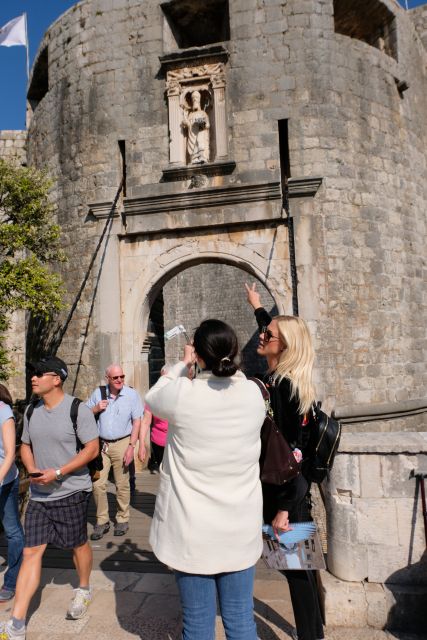
- Licensed guide, English-only: you’ll get a professional explanation as you move.
- Sponza Palace memorial room: a serious stop that adds meaning fast.
- Stradun main street: the city’s spine, explained instead of just admired.
- Rector’s Palace: where Dubrovnik’s governance comes into focus.
- Old Port: history you can almost feel in the atmosphere of shipping and trade.
- Game of Thrones film locations angle: some guides use them as a landmark-hack for navigating and noticing details.
More time up on the ramparts and inside the Old Town
- Dubrovnik: Old Town Walking Tour★ 4.8 · 5,174 reviews
- Dubrovnik Discovery Old Town Walking Tour★ 5.0 · 4,458 reviews
- Dubrovnik Old Town History Walking Tour★ 5.0 · 1,684 reviews
- Dubrovnik: City Walls Early Morning or Sunset Walking Tour★ 4.8 · 1,523 reviews
Dubrovnik’s Old City on foot: why Ragusa works as your classroom
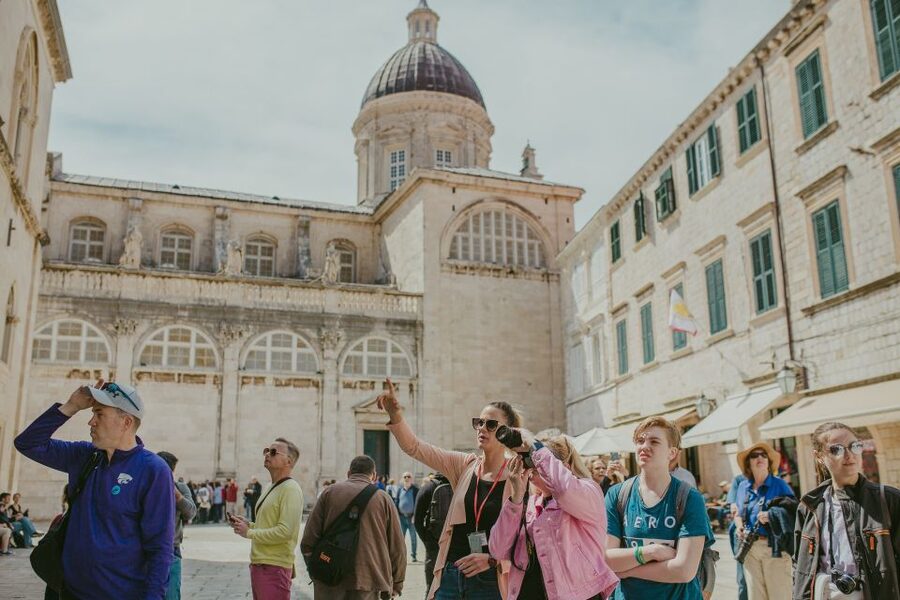
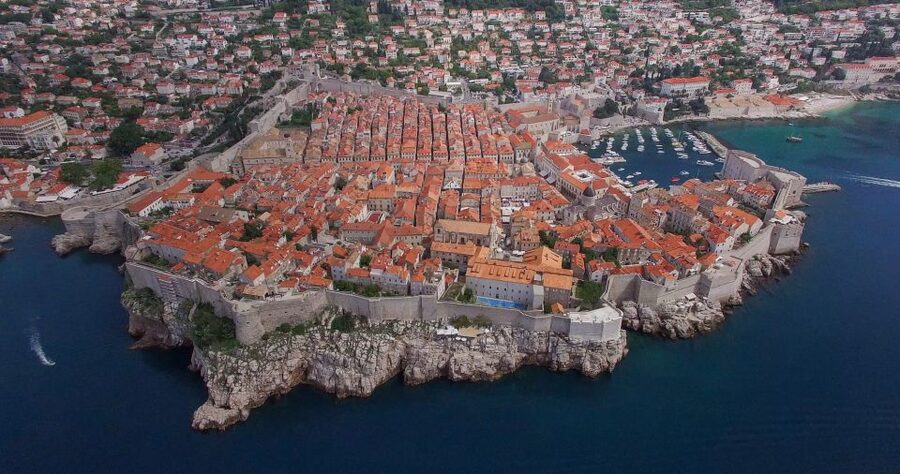
Dubrovnik is often described as dramatic, and sure, the walls are impressive. But what makes this experience worth your time is that you’re walking a place where politics, religion, commerce, and tragedy all leave physical traces. The Old City is a late medieval walled city that has been rebuilt after major destruction, so you’re not just looking at “old buildings.” You’re looking at choices that people made to keep living here.
A good guide matters in a place like this. You can read about Dubrovnik online, but the small story behind a doorway, an inscription, or a room’s purpose is harder to find. This tour is designed to tell those stories out loud—easy-going, professional, and focused on what shaped Dubrovnik into what you see today.
And because it’s walking, you get to feel how the city flows: narrow streets, small squares, quick changes in viewpoint. Those turns can feel random if you’re solo. With a guide, they become a route with meaning.
Start at Amerling Fountain in Pile Square (and find the blue umbrella)
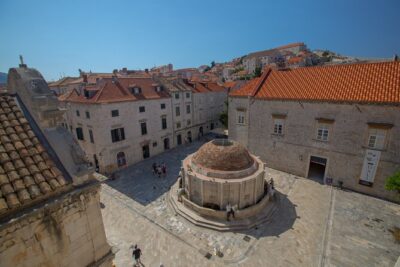
Your tour starts at Amerling Fountain outside the Old Town, in Pile Square next to Restaurant Dubravka. The easiest way to avoid confusion is to look for the blue umbrella with the DUtheTour logo.
This matters more than you might think. The Old City has tight entry points and lots of similar-looking corners. When your meeting spot is clear, you waste less time orbiting the same streets before the walk even begins.
If you want a stress-free start, plan to arrive a few minutes early. You’ll likely get more from the first explanations if you’re settled and ready to move.
Cathedral stop: how faith and civic pride share the same space
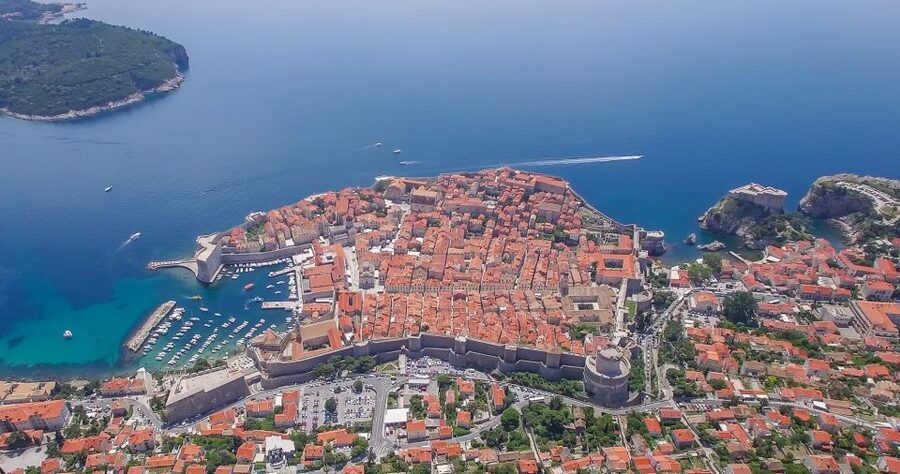
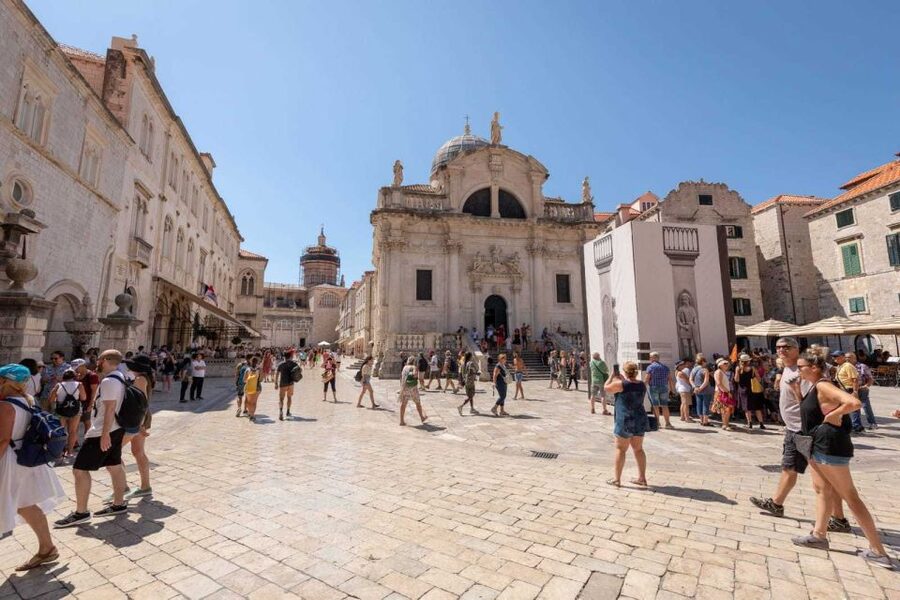
One of the tour highlights is a visit to the cathedral. In Dubrovnik, religious architecture isn’t just about worship—it also signals civic identity. The Cathedral becomes a way to understand how a community organized its values in stone, then maintained those symbols across centuries.
This stop is useful even if you’re not a deep church-history person. A guide can point out what to look for and why it was made that way: the relationship between the sacred and the public. In a city where trade and governance are central themes, religion also functions like a social anchor.
Possible drawback here: religious sites can be the calmest moments of the tour, which means they can also feel like you’re pausing in a busy zone. If you’re sensitive to tight scheduling, treat this as your “slow down” moment and use it to reset.
Sponza Palace memorial room: the day the city’s memory becomes visible
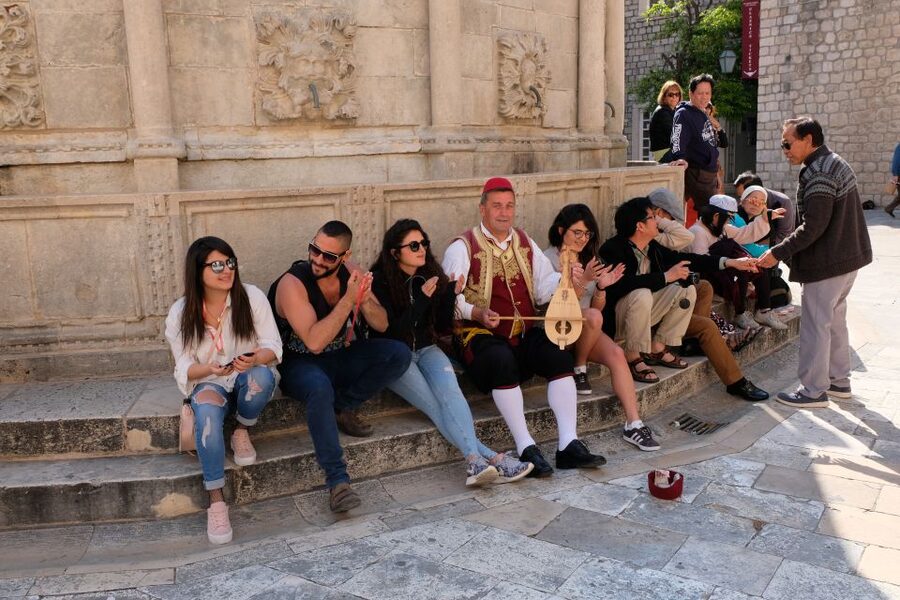
The Sponza Palace stop is one of the most meaningful parts of the whole walk because the tour includes the memorial room. This is where Dubrovnik’s story stops being general and becomes personal and immediate.
From a practical standpoint, it’s also a smart pacing choice. You’ve been moving through streets and landmark exteriors; the memorial room gives you a slower, heavier context inside. You can’t really rush this. A guide helps you frame what you’re seeing so it doesn’t feel like you’re just standing and reading.
The emotional timeline the tour covers is important. Dubrovnik was devastated after a catastrophic earthquake and rebuilt—often described as rising again from ruin. Then history dealt another blow in 1991, when nobody expected the city to face devastation again. In the memorial room, those big events make more sense because the message is housed in a real place, not just in broad historical summaries.
Dubrovnik on foot, a few more routes off the Stradun
- Dubrovnik: Game of Thrones Walking Tour
★ 5.0 · 1,732 reviews - Dubrovnik: Ancient City Walls & Wars Walking Tour
★ 5.0 · 1,270 reviews - Dubrovnik: City Walls, Old Town Walking Tour & Adriatic View
★ 4.9 · 982 reviews - Dubrovnik: Game of Thrones Walking Tour
★ 4.9 · 981 reviews - ‘Game of Thrones’ Walking Tour in Dubrovnik
★ 4.5 · 945 reviews
Stradun main street: learning the city’s rhythm instead of just walking it
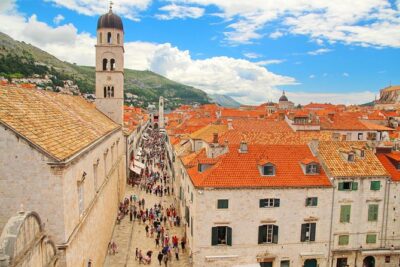
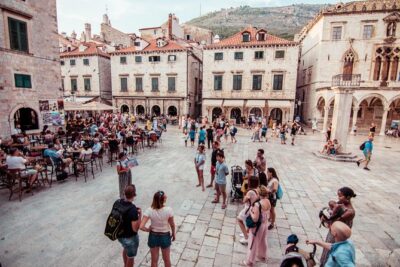
Next comes Stradun, the Old City’s main street. This is the kind of place you’ll see in every postcard, but it’s also where a guide makes the difference between scenery and understanding.
I like Stradun on a guided walk because it’s the spine of the city. Once you know why it’s laid out the way it is and what kinds of life used to gather here, the street stops being a backdrop and starts being a timeline. It’s easier to connect earlier stops (Cathedral, Sponza) to later ones (Rector’s Palace, Old Port) when the central corridor is explained.
Also, Stradun is great for photos because you’re not hunting for angles. Just be ready for the reality of a world-famous spot: it can be crowded in the main stretch. If you’re chasing that calm, reflective vibe, focus on what the guide points out on the edges—side streets, small turns, and the way the view opens and closes as you move.
Rector’s Palace: power, paperwork, and the way governance shaped daily life
The tour’s highlight list includes Rector’s Palace, and this is where Dubrovnik’s “functioning city” story becomes concrete. In late medieval cities, the buildings tied to rule weren’t abstract. They were physical spaces where decisions got made, people got represented, and civic identity was performed.
A guide’s job here is to make you look past the impressive facade. You’ll want to understand how the palace relates to the way Dubrovnik ran itself—what authority looked like in stone and what that meant for residents and trade.
It’s a good stop if you like your sightseeing with context. It’s not just a monument; it’s a clue to how the city kept order and communicated legitimacy.
Old Port visit: where the city meets the sea story

Finally, the walk includes the Old Port. For many people, this is the “aha” moment: Dubrovnik’s walls and palaces make sense more clearly once you think about why ships mattered so much.
The port area helps you connect themes. Trade brings wealth, wealth supports strong governance and major building projects, and geography shapes everything from defense to daily life. A walking route that ends at the port also gives you a satisfying change of atmosphere—the feel of an active edge of the city rather than only the ceremonial center.
Practical tip: keep your camera ready, but don’t let it take over. This is one of those areas where the details matter—how the city faces the water, how the space feels for movement, and how the port connects to the rest of the Old City’s story.
Game of Thrones film locations: a fun navigation trick with a purpose

One guide experience linked to this tour includes Game of Thrones film locations. That doesn’t mean you’re turning the walk into a theme park. Instead, it gives you a second layer of recognition as you move through the streets.
Here’s how that can help you: when you’re learning a maze of historic corners, landmark-based cues stick better than “left at the arch, right at the square.” Film locations act like mental signposts, and your guide can tie them back to real history and real architecture.
If you’re a fan, you’ll likely enjoy the extra connections. If you’re not, no problem—the historical stops are still the backbone. Think of it as an optional lens for noticing the city faster.
Earthquake rebuilding and 1991: how the stones carry a two-part shock

Dubrovnik’s story is often framed as resilient rebuilding. This tour keeps that thread front and center—first after a devastating earthquake (when the city was reduced to rubble and ashes), then again with destruction in 1991. The phoenix comparison fits because the city didn’t just recover. It returned with identity intact.
What makes this part of the tour valuable is the way it’s presented while you’re walking through the city itself. You’re not just hearing dates. You’re seeing the built environment that survived, the spaces shaped by change, and the way memorial meaning is kept alive.
It can be heavy listening at times, especially once you reach the memorial elements. But it’s also part of understanding Dubrovnik as more than a movie-set or a postcard. This is a living city with a memory that still matters.
Price and value: what $26 buys you in a UNESCO Old City
The price is $26 per person, and the key value isn’t only that you’re paying for a guide—it’s that you’re paying for interpretation in a place where interpretation is hard.
A licensed, professional guide saves you from the common trap: spending hours reading and guessing what you’re looking at. Instead, you get focused explanations at each major stop—Cathedral, Sponza Palace memorial room, Stradun, Rector’s Palace, and the Old Port—so the walk feels connected rather than random.
You’re also paying for local context: the stories aim to be the kind you can’t reliably pull from a quick search. That’s the difference between “I saw Dubrovnik” and “I understood Dubrovnik.”
Two things that can affect your personal value:
- If you love history and enjoy walking with context, this is a strong buy.
- If you only want quick scenic views and don’t care about what buildings mean, the tour may feel like more talking than you want. In that case, you could still enjoy the core streets, but you’d lose the best part—the why.
Who this Dubrovnik walking tour is best for
This works well if you’re:
- Visiting Dubrovnik for the first time and want an organized route through the Old City’s top sites
- Curious about how a walled medieval city functioned politically and socially
- Interested in how modern history intersects with older architecture and civic spaces
- A fan of Game of Thrones who likes landmark-based navigation
It’s also a solid choice if you prefer small, walkable “see and understand” travel days. The tour focuses on narrow streets, small squares, and viewpoints that open up as you go, including areas beyond the usual surface-level paths.
The main thing to consider is comfort: it’s a walking experience through a historic maze. Plan for steady walking and bring what you need for basic comfort.
Should you book this Dubrovnik Old City walking tour?
If you want Dubrovnik with context, I’d book it. The guide-led storytelling approach is exactly what makes the Old City click, especially at Sponza Palace’s memorial room and the civic-political stops like Rector’s Palace. At $26, you’re not paying a luxury premium—you’re paying for interpretation in a UNESCO setting that can otherwise feel like a checklist.
Skip it only if you’re mainly after quick sightseeing and minimal narration. You’ll still see major landmarks, but this tour’s value is the connecting thread: how Dubrovnik rebuilds, remembers, and keeps living inside its walls.
If that sounds like your style, go. This is one of the better ways to turn Dubrovnik from scenery into understanding.
FAQ
What is the price of the Dubrovnik Old City walking tour?
The price is $26 per person.
Where does the tour meet?
The meeting point is Amerling Fountain outside the Old Town, in Pile Square next to Restaurant Dubravka. Look for the blue umbrella with the DUtheTour logo.
What sites are included in the walk?
The tour highlights include the cathedral, Sponza Palace memorial room, Stradun main street, Rector’s Palace, and the old port.
What language is the tour offered in?
The tour is offered in English.
Is the tour guided?
Yes. It includes a local, professional, licensed tour guide.
Where does the tour end?
The activity ends back at the meeting point.
Does the tour include Game of Thrones film locations?
One of the guide experiences described includes film locations of Game of Thrones as part of the tour.
Is it possible to reserve without paying right away?
Yes, it offers reserve & pay later, so you can book a spot and pay nothing today.
What is the cancellation policy?
You can cancel up to 24 hours in advance for a full refund.
What rating does the tour have?
The tour has a 4.9 rating based on 18 reviews.
Keep Walking the Old Town


The Walls & Old Town, More Ways In

More Tour Reviews in Dubrovnik



Fresh on the Dubrovnik shortlist



City Walls & Old Town, compared.
 ★ 4.8Old Town Walking TourFrom $235,174 reviews
 ★ 5.0Dubrovnik Discovery Old Town Walking TourFrom $244,458 reviews
 ★ 5.0Dubrovnik Old Town History Walking TourFrom $241,684 reviews
 ★ 4.8City Walls Early Morning or Sunset Walking TourFrom $291,523 reviews
 ★ 5.0Ancient City Walls & Wars Walking TourFrom $301,270 reviews
 ★ 5.0Dubrovnik Combo: Old Town & Ancient City WallsFrom $521,019 reviews
 ★ 4.9City Walls, Old Town Walking Tour & Adriatic ViewFrom $27982 reviews
 ★ 4.9Blue Cave Tour with Panoramic Old Town ViewFrom $73884 reviews
Browse the lists this tour appears in