
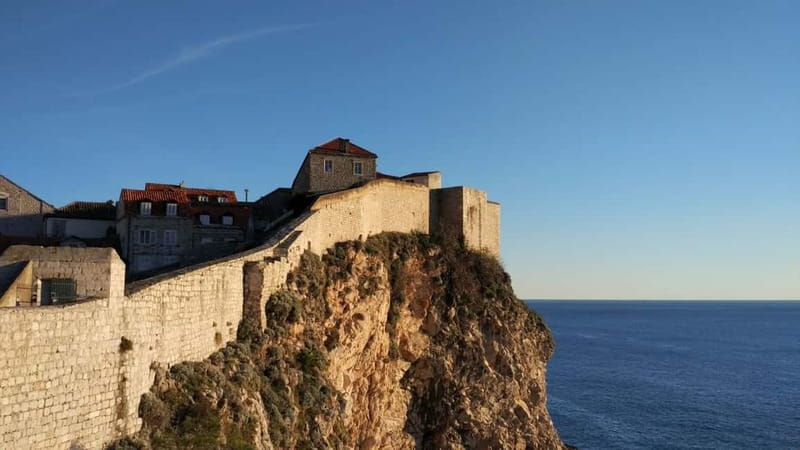
Reviewed · CITY WALLS & OLD TOWN
Dubrovnik City Walls: Small-Group 2-Hour Tour With a Local
Dubrovnik’s walls have a way of making the whole city feel real. This small-group 2-hour wall walk uses a local guide to connect the views to the politics, wars, and survival stories that shaped the Republic. If you like history you can see with your feet on the stone, this works.
What I like most is the guide quality. People rave about Marko and Roco for staying upbeat, answering tough questions, using humor, and keeping the group moving and engaged for the full time. You also get a practical size advantage: up to eight guests per guide, so you’re not just herded along.
One heads-up: you’ll climb a lot. This route includes 700+ stairs, no elevator, and it can feel steep and exposed in spots. If heights bother you or your walking pace is slow, you’ll want to think twice.
In This Review
- Key highlights you’ll actually feel on the walk
- Meeting at Ploče Gate: start with the right bearings
- Ascending the walls: why the views matter (and not just for photos)
- Fort Revelin on the eastern approach: defense you can picture
- The tower stop and Ottoman diplomacy: power without always firing a shot
- Minčeta Fortress: big views plus architecture and cannons
- Stradun photo angle: seeing the city’s main street from above
- Western wall stretches: Forts Lovrijenac and Bokar near Pile Gate
- Oldest and youngest sections: Venice rivalry and shifting eras
- Fort St John and the Old Port finish: where the story lands
- Price and value: paying for a guide when the walls ticket is extra
- Who this is best for (and who should skip)
- Should you book Dubrovnik City Walls with a local?
- FAQ
- How long is the Dubrovnik city walls small-group tour?
- How large is the group?
- Where do we meet the guide?
- Is the city walls entrance ticket included?
- Do I need to speak Croatian?
- How hard is the walk?
- Is this tour suitable for children?
- Is there free cancellation?
Key highlights you’ll actually feel on the walk
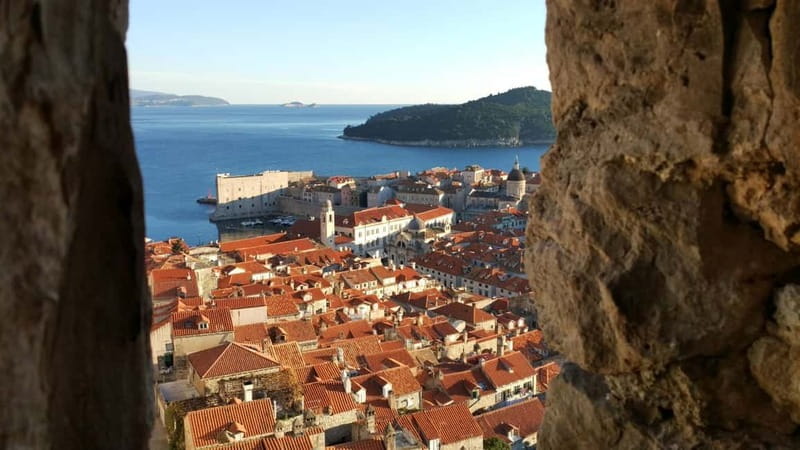
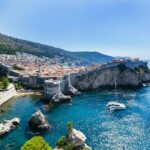
- Old Harbor panorama from the walls: the sea-and-port connection becomes obvious fast.
- Fort Revelin and the eastern defenses: you see why the harbor needed protection.
- Minčeta Fortress views plus details on Michelozzi: architecture and artillery in one stop.
- Stradun photo moment: you’ll get a different angle on the city’s main street.
- Lovrijenac wall thickness you can’t picture until you hear it: up to 12 meters in some sections.
- Small group energy with guides like Marko: humor, questions, and even quick learning checks.
More time up on the ramparts and inside the Old Town
- Dubrovnik: Old Town Walking Tour★ 4.8 · 5,174 reviews
- Dubrovnik Discovery Old Town Walking Tour★ 5.0 · 4,458 reviews
- Dubrovnik Old Town History Walking Tour★ 5.0 · 1,684 reviews
- Dubrovnik: City Walls Early Morning or Sunset Walking Tour★ 4.8 · 1,523 reviews
Meeting at Ploče Gate: start with the right bearings
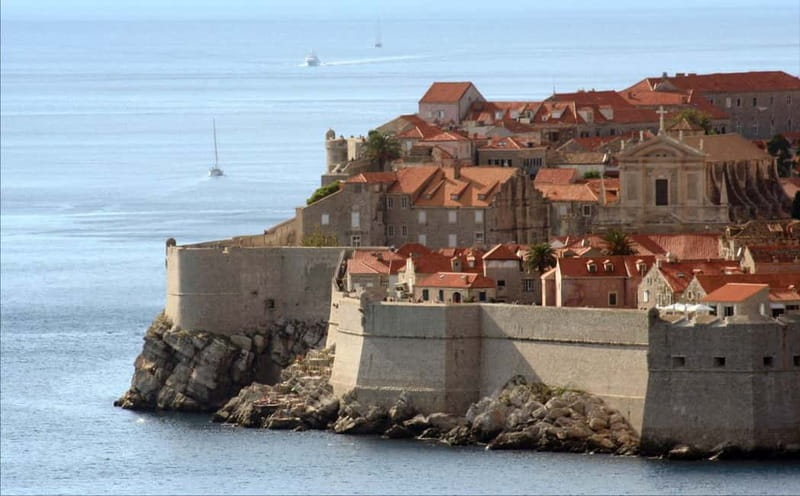
You’ll meet at a small square that overlooks the Old Harbour, just inside Ploče Gate. The guide waits in the corner of the square by a cannon, holding a red and white flag. This is a good start point because you’re facing the city’s edge right away—harbor first, walls second. In plain terms: you’ll understand what you’re looking at before you start climbing.
After a short meet-and-greet, the group heads to the walls and begins the ascent in a steady flow. With a group of eight, the pace stays human. You can ask quick questions as you go, instead of saving everything for the end.
Ascending the walls: why the views matter (and not just for photos)
The first stretch is where Dubrovnik flips from postcard to place. As you go up, the Old Harbor opens out below you, and the sea looks close enough to be part of the defense plan. Your guide explains how the harbor fueled the Dubrovnik Republic’s maritime strength—seafaring, trade, and the constant need to protect the approach.
This is also where your expectations should settle. You’re not doing a flat stroll. You’re walking a working defensive system that was meant for watchfulness. Even when the route feels scenic, remember you’re on infrastructure built for threats.
If you’re prone to getting winded, plan to slow down early. The worst strategy is trying to power through the first climb. Better: match the guide’s pace, pause when you need to, and save energy for the main viewpoints.
Fort Revelin on the eastern approach: defense you can picture
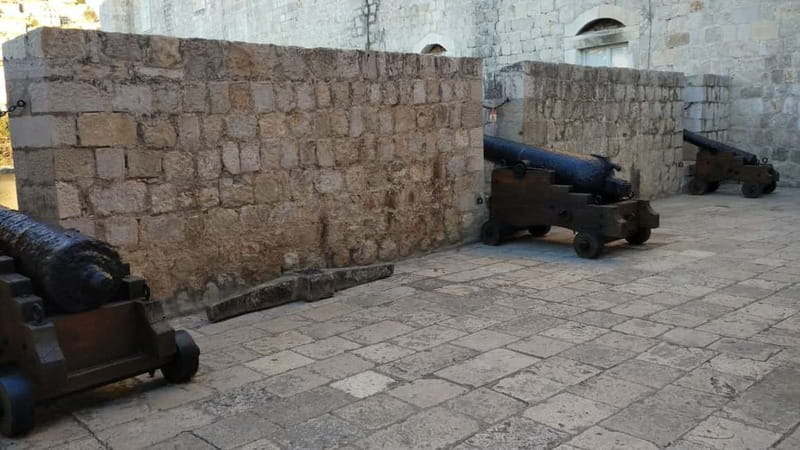
One of the key early stops is Fort Revelin, which guarded the eastern approach to the Old Town for centuries. It’s an ideal place for your guide to connect the geography to military logic. The walls weren’t random stonework; they were designed around vulnerable entry points and the reality of ships approaching from the water.
As you continue along the northern stretch, you’ll hear about medieval warfare and what it looked like at ground level: bows and arrows, stone boulders, and siege tactics meant to disrupt an enemy before they could gain leverage.
The practical benefit here is that the history becomes visual. When you know what to look for—line of sight, choke points, and the way towers and walls work together—you’ll get more out of the whole walk.
The tower stop and Ottoman diplomacy: power without always firing a shot
At a strategic tower, you’ll hear stories about the Dubrovnik Republic’s relationship with the Ottoman Empire. The big theme is not just conflict; it’s diplomacy. Your guide explains how negotiation and strategy often beat open violence, and that detail changes how you read the walls.
This is one of those moments where a guide really matters. If the storytelling is strong, the history stops being a list of dates and turns into choices. In the best examples from guides like Marko, the explanation stays clear and interactive—so you’re not just listening while climbing; you’re learning while moving.
A few more Dubrovnik trips to round out the shortlist
- Dubrovnik: Ancient City Walls & Wars Walking Tour
★ 5.0 · 1,270 reviews - Dubrovnik Combo: Old Town & Ancient City Walls
★ 5.0 · 1,019 reviews - Dubrovnik: City Walls, Old Town Walking Tour & Adriatic View
★ 4.9 · 982 reviews - Dubrovnik: Old Town & City Walls Guided Tours Combo
★ 4.8 · 697 reviews - Dubrovnik Cable Car Ride, Old Town Walking Tour plus City Walls
★ 4.5 · 685 reviews
Minčeta Fortress: big views plus architecture and cannons
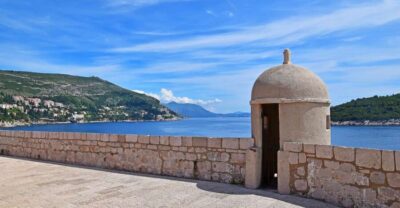
The tour’s standout viewpoint is Minčeta Fortress. You’ll reach it at a point where the city and sea spread out clearly, often with warm sunlight making the stone glow. This is also where you get the technical history that turns the fortifications into more than scenery.
Your guide shares the contribution of the Italian architect Michelozzi to Minčeta. You’ll also hear about the old gun foundry and the impressive set of cannons that once defended the walls. Even if artillery isn’t your usual interest, the way it’s explained makes sense here because you’re standing where it mattered.
If you’re a photo person, this is one of your best opportunities. If you’re not, it’s still the moment that explains how the walls handled both distance and danger—by watching, by aiming, and by controlling the sea approach.
Stradun photo angle: seeing the city’s main street from above
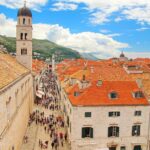
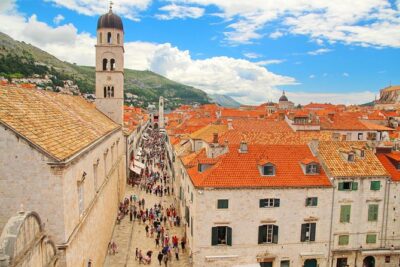
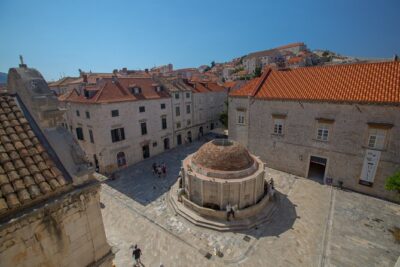
Midway through the walk, there’s a perfect photo stop: Stradun, Dubrovnik’s main street, viewed from a higher vantage point. From the walls, Stradun looks like a channel that the city uses to move people and supplies. It’s a useful reminder that defenses weren’t built to protect stone alone; they protected the flow of daily life inside.
This stop is also a good time to catch your breath. You’re not stuck for long, and the guide usually makes quick space for questions and regrouping. If you’re traveling with someone who cares more about views than details, this is a sweet compromise stop.
Western wall stretches: Forts Lovrijenac and Bokar near Pile Gate
As the route continues along the west, you’ll learn about Forts Lovrijenac and Bokar and how they protected the Pile Gate. The walls here feel more like a defensive machine than a scenic loop.
One of the most memorable facts you’ll hear is that some sections of Lovrijenac’s walls reach 12 meters thick. Hearing that number is one thing; standing near where it applies makes it feel real. It also helps explain why Dubrovnik could hold its ground and why the city invested so heavily in fortification.
This part of the walk is also where I’d stay alert if heights make you uneasy. The views are gorgeous, but there are exposed stretches and open drop-offs in places. It’s not a dealbreaker for most people—it’s just smart to pace yourself and keep your footing steady.
Oldest and youngest sections: Venice rivalry and shifting eras
On the southern stretches, your guide points out both the oldest and the youngest parts of the walls. This is a key lesson: the fortifications weren’t finished once and then left alone. They changed as threats changed, and as Dubrovnik’s political needs shifted.
You’ll also hear about ties with Venice and the rivalry between these maritime powers. That matters because Dubrovnik was a small city-state trying to survive in a world dominated by larger empires. When you see the walls as an evolving response—rather than a single monument—you get a more accurate picture of what the city was doing to stay independent.
The storytelling here tends to be where the best guides shine. Marko and Roco come up again and again for turning this kind of history into something you can follow without getting lost. Even when there’s a lot of detail, the pacing usually stays practical.
Fort St John and the Old Port finish: where the story lands
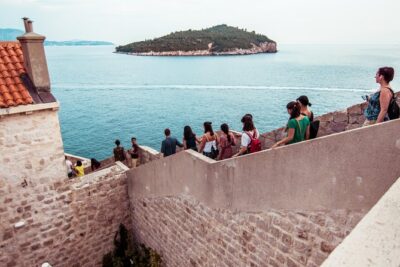
Later in the walk, you’ll pass by Fort St John and connect your last viewpoints back to the Old Port area. That closing loop matters because it completes the cause-and-effect chain: the harbor brings wealth and contact, and the walls and forts decide what that contact looks like under pressure.
As you head toward the end of the tour, the city tends to feel more coherent. You stop seeing random towers and starting thinking in systems—how one defense line supports the next, and how the harbor and gates shape movement.
This is also a good moment to take a final photo sweep, especially if your earlier shots focused only on the broad sea views. Finishing with the harbor in mind makes the whole walk feel less like sightseeing and more like understanding.
Price and value: paying for a guide when the walls ticket is extra
The tour price is $41 per person for about two hours with a professional licensed English-speaking guide. But there’s an important add-on you’ll need to budget: the city walls entrance ticket is not included.
- If you have a Dubrovnik Pass, entry can be free and you can usually skip the line.
- Without a pass, the single ticket price is 40 Euros (buyable at the entrance by cash or card).
- In January, February, November, and December, ticket costs 20 Euros. Student card (ISIC) and under-18s pay 15 Euros.
So is it good value? In my view, yes—if you’re planning to enter the walls anyway. The guide adds the part you can’t get from a self-guided walk: the links between specific towers, specific gates, and the political story behind them. If you’re on the fence about entrance tickets, do the math first: the wall ticket is the bigger chunk, and the tour price mainly pays for the interpretation and pacing.
Who this is best for (and who should skip)
This tour is best if you want your Dubrovnik history to have context and if you’re comfortable walking on uneven, stair-heavy terrain. It’s a smart fit for:
- adults who enjoy history explained in clear, story-driven chunks
- travelers who want the iconic wall views but also want meaning behind them
- groups who appreciate a small size, where questions are actually answered
It’s not a good match if:
- you can’t handle a steep route or 700+ stairs
- you fear heights (there are exposed sections)
- you need wheelchair access or have mobility impairments
- your child is under 12
A practical tip: if you’re bringing a friend who gets tired fast, encourage them to wear supportive shoes and expect breaks. This walk rewards steady pacing more than speed.
Should you book Dubrovnik City Walls with a local?
I’d book it if you want the “wow” views plus the why behind them. The small-group size helps, but what really makes this work is the guide. People single out Marko for humor and interaction, and Roco for clear, formative history that keeps you engaged on the climb. That kind of guiding turns walls from scenery into a story you can track from fort to tower to gate.
I’d skip it if stairs and heights are a problem. Two hours on the walls can be tougher than it sounds, and there’s no elevator option.
If you do book, plan to pair the tour with your walls ticket choice (Dubrovnik Pass if you have it). Getting that sorted early makes the experience smoother when you arrive.
FAQ
How long is the Dubrovnik city walls small-group tour?
It lasts about 2 hours.
How large is the group?
The tour is limited to a small group of up to eight participants per guide.
Where do we meet the guide?
You meet in a small square overlooking the Old Harbour, just inside Ploče Gate. Look for the guide in the corner of the square by the cannon holding a red and white flag.
Is the city walls entrance ticket included?
No. The city walls entrance ticket is not included in the tour price.
Do I need to speak Croatian?
No. The tour is led by a licensed English-speaking guide.
How hard is the walk?
It has more than 700 stairs, requires moderate fitness, and there is no elevator or escalator.
Is this tour suitable for children?
Children under 12 years old are not suitable.
Is there free cancellation?
Yes. You can cancel up to 24 hours in advance for a full refund.
More Tours in Dubrovnik




The Walls & Old Town, More Ways In

More Tour Reviews in Dubrovnik


Fresh on the Dubrovnik shortlist




City Walls & Old Town, compared.
 ★ 4.8Old Town Walking TourFrom $235,174 reviews
 ★ 5.0Dubrovnik Discovery Old Town Walking TourFrom $244,458 reviews
 ★ 5.0Dubrovnik Old Town History Walking TourFrom $241,684 reviews
 ★ 4.8City Walls Early Morning or Sunset Walking TourFrom $291,523 reviews
 ★ 5.0Ancient City Walls & Wars Walking TourFrom $301,270 reviews
 ★ 5.0Dubrovnik Combo: Old Town & Ancient City WallsFrom $521,019 reviews
 ★ 4.9City Walls, Old Town Walking Tour & Adriatic ViewFrom $27982 reviews
 ★ 4.9Blue Cave Tour with Panoramic Old Town ViewFrom $73884 reviews
Browse the lists this tour appears in