
Reviewed · TOURS
Small Group Tour; Balkans & Central Europe – Dubrovnik to Vienna
Two days in Albania feels like a world away. You get Komani Lake and Valbona Valley hiking with a local guide, plus meals and overnight stays that make it feel like more than a quick stop. I also like the small-group size of just 10 and the steady, professional leadership from Dubrovnik to Vienna, though the pace comes with long driving days and early mornings like the 7:00 pickup.
Over 10 days you connect UNESCO towns and Danube cities, shifting from Ottoman-era details to Austro-Hungarian grandeur without losing the everyday feel. You’ll have short guided blocks at major sights, then time on your own for coffee, snacks, and self-guided wandering. Just plan for the fact that lunch and dinner are on your own, not included.
In This Review
- Key highlights you’ll feel from day one
- Dubrovnik to the border: 7:00 pickup, then the road
- Mostar’s Old Bridge and Blagaj tekija: UNESCO plus a spring-fed setting
- Sarajevo on uneven streets: wartime scars, Ottoman vs. Austro-Hungarian, and the Latin Bridge
- The Albania highlight you’ll remember: Komani Lake and Valbona Valley hiking
- From Zvornik to Belgrade Fortress: rivers, fortress views, and Pobednik
- Sremski Karlovci: baroque streets, wine tastings, and the Four Lions legend
- Novi Sad and Petrovaradin Fortress: a Danube border city with two empires in view
- Subotica’s Austro-Hungarian details, then on to Budapest
- Budapest’s Danube icons: Basilica, Parliament views, Heroes’ Square, and Buda Castle
- Győr and Bratislava: a smaller stretch of Danube charm with castle views and coffee
- Price and logistics: what $3,773.83 buys you, and what it doesn’t
- What to pack and how to survive the pace
- So, should you book this Dubrovnik to Vienna small-group tour?
- FAQ
- Where does the tour start and where does it end?
- What time is pickup in Dubrovnik?
- How big is the group?
- Is breakfast included?
- What meals are included?
- What admission tickets are included?
- How much walking and fitness do I need?
- Is the tour refundable if I cancel?
- Is hotel pickup and drop-off included?
Key highlights you’ll feel from day one
- Two days in Albania around Komani Lake and Valbona Valley, with meals and overnight accommodations included
- Mostar’s Old Bridge plus Blagaj tekija for a UNESCO landmark and a cliffside river spring stop
- Small-group energy with a maximum of 10 people and a tour leader you can actually talk to
- Danube capital hits from Belgrade Fortress to Budapest’s major viewpoints to Bratislava Castle
- Selected admission tickets included, including Blagaj tekija, Buda Castle, and Bratislava Castle
Not set on this one yet? Set it beside a few other Dubrovnik trips first.
- Blue Cave Small-Group Boat Tour from Dubrovnik★ 5.0 · 9,360 reviews
- Full-Day Dubrovnik Elaphite Islands Cruise with Lunch and Drinks★ 5.0 · 8,823 reviews
- Dubrovnik: Epic Game of Thrones Tour + Lokrum & Saver Option★ 4.9 · 5,995 reviews
- Dubrovnik: Elaphiti Islands Full-Day Cruise with Lunch★ 5.0 · 5,938 reviews
Dubrovnik to the border: 7:00 pickup, then the road
Your day starts early. At 7:00 am, a driver picks you up from your Dubrovnik hotel and shuttles you to the border area, where you meet the tour leader. The small-group setup really matters here: with fewer people in the van, the pace feels more coordinated and questions don’t get lost.
The benefit is simple: you’re not wasting a day figuring out transport across countries. The tradeoff is also simple: you’re going to spend real time in transit. If you hate being on the move, bring something to make the ride easier—water, a layer for car AC, and a plan for snacks since lunch and dinner aren’t included.
Mostar’s Old Bridge and Blagaj tekija: UNESCO plus a spring-fed setting
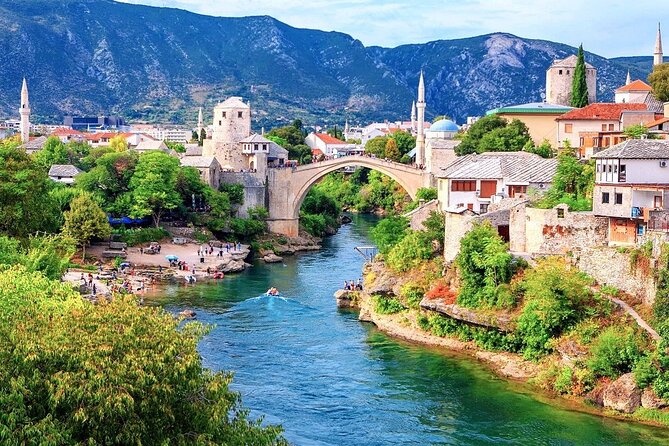
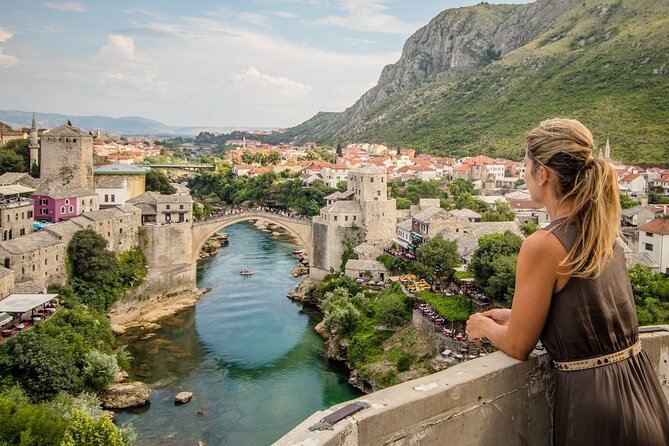
Mostar is where the route immediately earns its keep. You’ll cross into Bosnia & Herzegovina and head to the city, with Old Bridge (Stari Most)—a UNESCO landmark—on your list. It’s the kind of sight that makes your brain go quiet for a second, because it’s both famous and still visibly real in front of you.
Then you shift to the Old Bazaar area, with colorful lanes and lots of small reminders of the city’s layered past, including stones marked with Don’t Forget. After that, you go out to Blagaj tekija, a monastery-like site on a cliff above the river Buna, where the water in front of it gives the stop a calmer mood.
Practical note: these are tight time blocks (you get about an hour at each major stop), so comfortable shoes matter. You’ll want to move fast, not dawdle.
Sarajevo on uneven streets: wartime scars, Ottoman vs. Austro-Hungarian, and the Latin Bridge
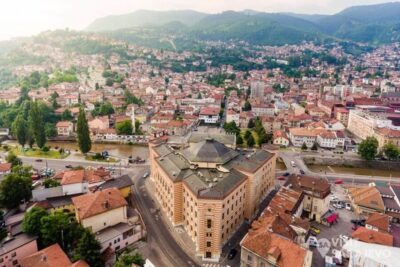
Sarajevo is the emotional pivot of the trip. The walking portion includes uneven terrain, and you’ll see reminders from the Yugoslav War—bullet holes and cannon marks are referenced as visible around town. That can feel heavy, but it’s also where the city’s multiple eras make the most sense.
You’ll also cover the Ottoman and Austria-Hungarian sides of Sarajevo: markets and bazaars, plus places of worship from different faiths. Then comes the Latin Bridge, tied to the story of how World War I was triggered in this area. The tour also leaves space for food time, since Sarajevo is known for traditional meat dishes and desserts.
If you’re the kind of person who likes to do one neighborhood at a time, use the free time well. Grab something local, sit where you can watch people move through the old streets, and let the city’s different layers settle.
The Albania highlight you’ll remember: Komani Lake and Valbona Valley hiking
This is the reason many people book the full route. You get a two-day hiking adventure around Komani Lake and Valbona Valley with a local guide, designed to mix physical activity with plenty of time to take in the Albanian Alps views. Meals and overnight accommodations are included for this segment, which is a big deal because it reduces decision fatigue.
A standout detail: the Komani Lake boat ride shows up as a highlight in past group experiences. If you love water-meets-mountains moments, you’ll likely understand why as soon as you’re there. Reviews also mention the lake’s green color and the strong sense of wonder in Valbona Valley—expect big sky, steep-sided views, and a “how is this still not on everyone’s feed?” feeling.
Fitness reality check: the tour asks for moderate physical fitness. You don’t need to be an athlete, but you should be comfortable with walking and uneven footing, especially over two days.
- Blue Cave Small-Group Boat Tour from Dubrovnik
★ 5.0 · 9,360 reviews - Full-Day Dubrovnik Elaphite Islands Cruise with Lunch and Drinks
★ 5.0 · 8,823 reviews - Dubrovnik: Epic Game of Thrones Tour + Lokrum & Saver Option
★ 4.9 · 5,995 reviews - Dubrovnik: Elaphiti Islands Full-Day Cruise with Lunch
★ 5.0 · 5,938 reviews - Dubrovnik: The Original Game of Thrones Tour & Lokrum Option
★ 4.8 · 5,064 reviews
From Zvornik to Belgrade Fortress: rivers, fortress views, and Pobednik
After Sarajevo, the route slows down just enough for a breath of nature. You stop in Zvornik along the Drina River, with free time to have lunch or just walk the streets. This is one of those pauses that keeps the trip from feeling like a nonstop museum marathon.
Then you roll into Belgrade and head straight to the Belgrade Fortress and Kalemegdan Park. The views from up there are described as breathtaking, thanks to the confluence of the Sava and Danube rivers. You’ll also visit the Pobednik monument (with history dating back to 1913) and then walk down Knez Mihailova toward Republic Square.
Belgrade works best if you let it. Don’t only chase the big photo spots. Use the walking time to notice how the city moves—shops, street life, and how people flow between river views and central streets.
Sremski Karlovci: baroque streets, wine tastings, and the Four Lions legend
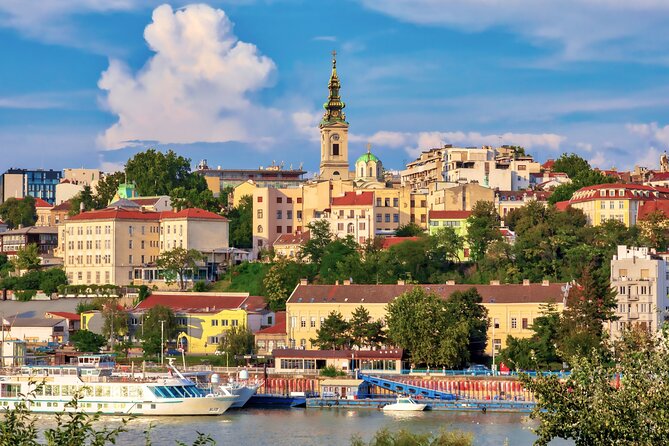
Today’s stop is about a different kind of pleasure: wine and old-town charm. You head to Sremski Karlovci, known for Serbian wine production and respected wine cellars. The center is described as Baroque and feels like a “museum town,” with streets and buildings carrying stories.
There’s also a fun legend tied to the Four Lions fountain in the city center: drink from it, and you’ll return and get married there. I wouldn’t plan a life decision around it, but I do like that it gives you an easy anchor for exploring—find the fountain, learn the story, then let the old streets do the rest.
You also get a few hours that include free time to taste regional wine specialties, with vineyard views referenced as part of the experience. If you don’t drink wine, you can still enjoy the setting, but you’ll miss one of the “this trip is doing more than sightseeing” moments.
Novi Sad and Petrovaradin Fortress: a Danube border city with two empires in view
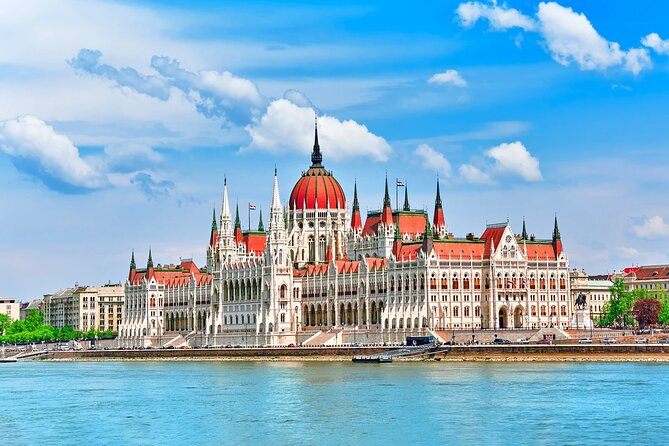
Novi Sad is framed as the cultural capital of northern Serbia, and the tour explains why: it’s on a historical border between the Austro-Hungarian and Ottoman worlds. That mixture shows up in the architecture and the feel of the streets.
Your walk includes the pedestrian areas near Zmaj Jovina and Dunavska, plus time to see Petrovaradin Fortress—nicknamed the Gibraltar on the Danube. It’s the kind of fortification stop where you’ll want a slower pace than you think, because your eyes keep finding new angles of the river and the city.
You’ll also have free time to enjoy the city on your own, and you spend the night in Novi Sad. That overnight matters. It means you’re not only “passing through with a checklist,” and you can actually experience the city after the guided segment is over.
Subotica’s Austro-Hungarian details, then on to Budapest
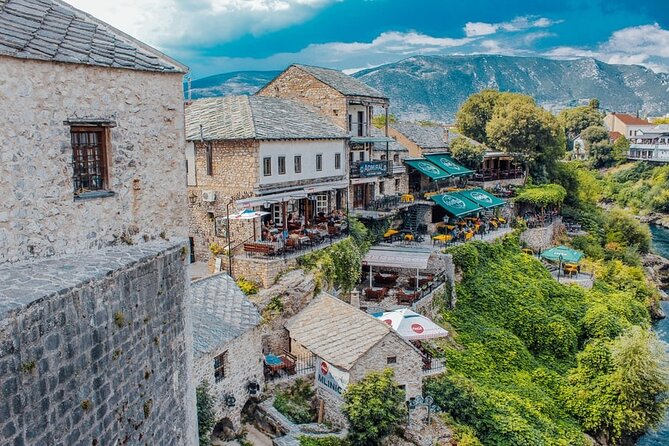
Subotica is a great palate cleanser before Budapest. The tour highlights ornate, colorful architecture linked to the city’s Austro-Hungarian influence, plus a relaxed feel and good food. Instead of a central cathedral dominating the core, the City Hall becomes the anchor, surrounded by a park, fountains, and a big square.
You visit key religious and historic sites, including the Cathedral of St. Teresa of Avila and the Synagogue. After that, there’s time to wander more freely, with coffee mentioned as a natural fit during your self-guided exploration.
Then you cross borders toward Budapest. At this stage, the practical takeaway is: use the last part of your day for something simple—walk, stretch, and get ready for Budapest’s big-city sights.
Budapest’s Danube icons: Basilica, Parliament views, Heroes’ Square, and Buda Castle
Budapest is a highlight you can’t really fake. You’ll pass major landmarks like Saint Stephen’s Basilica, the Opera, the Parliament building, Heroes’ Square, and Fisherman’s Bastion with city views. You also get the split-city concept—Buda and Pest—since Budapest runs across the Danube.
One important ticketed moment is Buda Castle, listed as a UNESCO site and included in admission. This is where Budapest stops feeling like postcard shots and starts feeling like a layered city with viewpoints you can physically stand in.
There’s also a free evening to explore on your own. Use that time wisely. If you try to do everything at night, you’ll end up tired and annoyed. Pick one area to walk slowly, find a coffee spot, and enjoy the “night Budapest” mood the tour sets up for you.
Győr and Bratislava: a smaller stretch of Danube charm with castle views and coffee
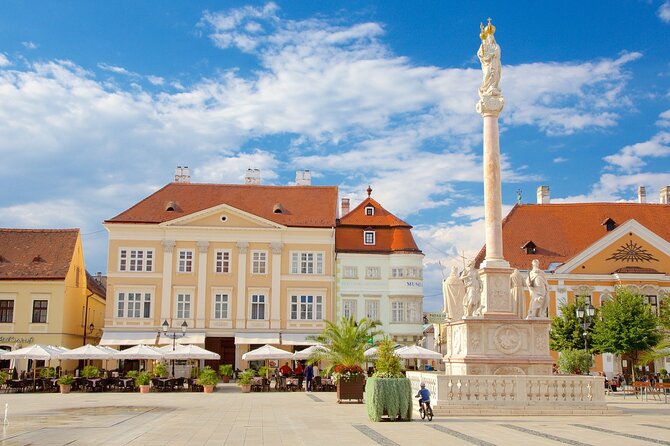
You continue west to Győr, described as the City of Rivers, with baroque architecture and good Hungarian food. You’ll visit the historic center and the Town Hall, including a 59-meter tower with a green top. Another stop is the Cathedral of the Virgin Mary, built in Roman style in the 11th century, plus a walk toward the Győr Synagogue, known for a large dome that inspired other synagogues across central Europe.
Then comes a fun, easy break: Baross Gábor Way, a pedestrian street full of cafés, shops, and restaurants, with free time to try Hungarian food and even the famous blueberry beer (mentioned specifically).
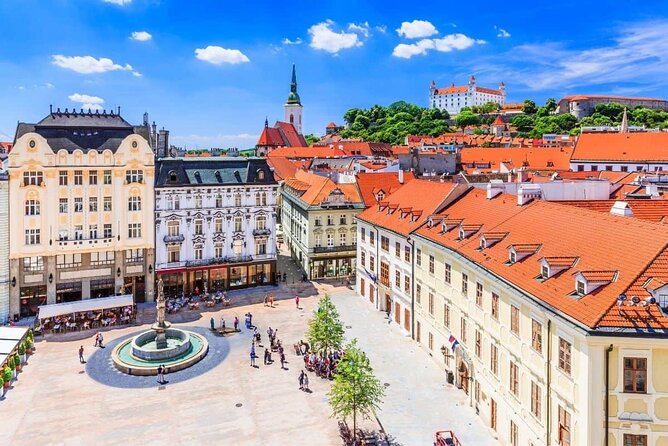
After that, you reach Bratislava. You start in the Old Town, visiting places like the medieval Old Town Hall area and learning about the city’s older layers. You also see Michael’s Gate, the only preserved gate from medieval fortifications, then walk up to Bratislava Castle (admission included) for hilltop views of the Danube.
End your day with café culture. The tour points out that coffee in traditional shops is a real part of Bratislava’s vibe, so plan time for it.
Price and logistics: what $3,773.83 buys you, and what it doesn’t
The price is high in plain numbers, but this route is doing a lot of work for you. What’s included is meaningful: 3-star hotel accommodation with breakfast, a professional tour leader, hotel pickup in Dubrovnik, and drop-off in Vienna. You also get entry tickets for the sites that are listed as included, plus international car insurance and travel-related taxes/road costs.
What’s not included is also clear: lunch, dinner, drinks, and snacks, plus personal shopping. That means the cost works best if you’re comfortable eating a mix of café meals and local spots on your own rather than expecting everything to be handled.
For value, I’d focus on this: you’re paying to remove the hassle of cross-border timing, multiple guided stops, and the big-country transport. If you want one-stop planning across Croatia, Bosnia, Serbia, Hungary, Slovakia, and that northern Albania hiking segment, the structure is exactly what you’re paying for.
What to pack and how to survive the pace
This tour asks for moderate physical fitness, plus walking on uneven terrain in Sarajevo and hiking during the Albania segment. Pack practical shoes. Bring a light rain layer if you’re hiking. Carry a small day bag for water and snacks, since not all meals are included.
Because free time is built into the schedule, you can slow down when you want. But don’t expect long, flexible tour wandering at every stop—many sights are time-boxed to short guided blocks. Use your free time to reset: coffee, a simple lunch, a quick stroll in the oldest streets.
Also, since the tour uses mobile tickets and includes pickup/drop-off, you’ll spend less time handling paperwork and more time focusing on what you came for: places you can’t easily piece together alone.
So, should you book this Dubrovnik to Vienna small-group tour?
Book it if you want a structured route that hits the major highlights—Mostar, Sarajevo, Belgrade, Budapest, Bratislava—while still giving real time for the Albania outdoors segment around Komani Lake and Valbona Valley. The small group (max 10) and the fact that the Albania hiking portion includes meals and overnight stays are strong signals that this isn’t just a rushed drive-by.
I’d think twice if you hate early mornings and don’t like being on the move. The schedule includes multiple countries in 10 days, and you’ll feel that travel rhythm even with the professional leadership.
FAQ
Where does the tour start and where does it end?
The tour starts in Dubrovnik, Croatia and ends with hotel drop-off in Vienna, Austria.
What time is pickup in Dubrovnik?
Pickup in Dubrovnik is at 7:00 am.
How big is the group?
The tour has a maximum of 10 travelers.
Is breakfast included?
Yes. Accommodation and breakfast are included for all overnights in 3-star hotels.
What meals are included?
Lunch, dinner, drinks, and snacks are not included. Meals are included for the Albania hiking adventure segment, along with overnight accommodations.
What admission tickets are included?
Admission tickets are listed as included for Blagaj tekija, Buda Castle, and Bratislava Castle.
How much walking and fitness do I need?
The tour advises a moderate physical fitness level. It also notes walking on uneven terrain during the Sarajevo portion and includes hiking during the Albania segment.
Is the tour refundable if I cancel?
No. This experience is described as non-refundable and cannot be changed for any reason.
Is hotel pickup and drop-off included?
Yes. Hotel pickup in Dubrovnik is included, and your guide will drop you off at your hotel in Vienna.
More Tours in Dubrovnik
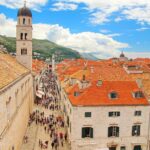
More Tour Reviews in Dubrovnik
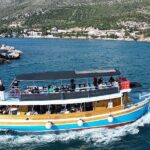
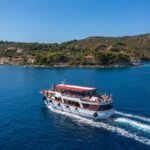
Fresh on the Dubrovnik shortlist

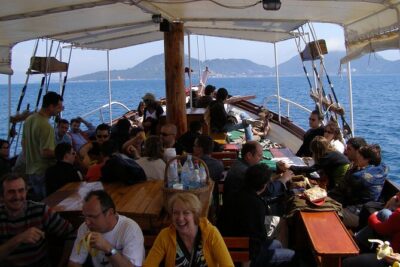

Tours, compared.
 ★ 5.0Blue Cave Small-Group Boat Tour from DubrovnikFrom $849,360 reviews
 ★ 4.9Epic Game of Thrones Tour + Lokrum & Saver OptionFrom $255,995 reviews
 ★ 4.8Old Town Walking TourFrom $235,174 reviews
 ★ 4.8The Original Game of Thrones Tour & Lokrum OptionFrom $265,064 reviews
 ★ 5.0Dubrovnik Game of Thrones Tour & Optional Lokrum Island VisitFrom $244,702 reviews
 ★ 5.0Dubrovnik Discovery Old Town Walking TourFrom $244,458 reviews
 ★ 4.6From Dubrovnik: Montenegro Boat Tour from Perast to KotorFrom $684,084 reviews
 ★ 5.0Mostar and Kravice Waterfalls Tour from Dubrovnik (Semi-Private)From $1343,125 reviews