
Reviewed · OLD TOWN WALKING TOURS
Private Walking Tour of Dubrovnik Hidden Gems and History
Dubrovnik makes more sense on foot. This private 2-hour walk pairs classic sights like Pile Gate with quieter stops like Onofrio’s Fountain, and it adds real context for how the city has survived and changed. The only downside to know upfront: some stops have optional entries, so you may pay a bit extra if you want the pharmacy and cathedral.
I like that it’s truly private. You’re not squeezed into a big group, and the guide can tailor the pace and answer questions as you go, including the political and war background that people often find hard to place on their own.
You finish near the Bell Tower, so you end with a strong sense of place, not just a random pile of photos. Just be ready for a fair amount of walking on old stone—choose comfortable shoes and plan on a morning that stays outdoors.
In This Review
- Key highlights you’ll actually feel
- Pile Gate: where Dubrovnik’s fortifications greet you
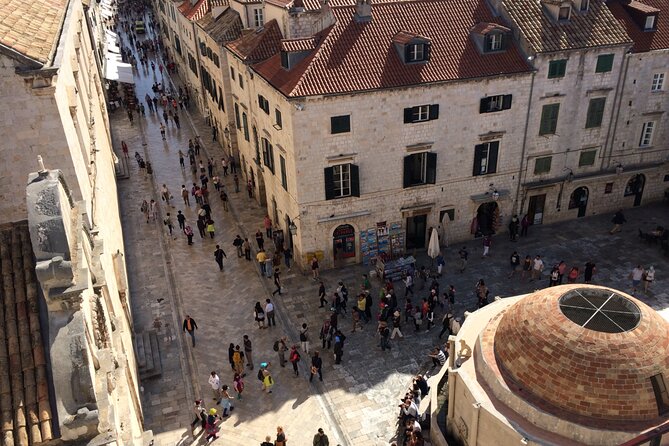
- Onofrio’s Large Fountain: the 12 km water story in stone masks
- Franciscan Monastery Museum: a cloister pause and the optional pharmacy ticket
- Stradun: your orientation line down Dubrovnik’s main spine
- Church of Saint Blaise: the patron saint as a city symbol
- Sponza Palace and the Republic mindset
- Rector’s Palace (just outside) and the Cathedral treasury moment
- Old Port to the Bell Tower finale: trade routes and hourly bells
- Value check: $228.05 per group for a private 2-hour walk
- Best for: who should book this walk
- What makes the guide experience feel personal
- Practical timing and meeting points (so you don’t waste morning energy)
- Should you book this Dubrovnik private walking tour?
- FAQ
- How long is the private walking tour?
- What is the price and how many people can be in a group?
- What languages are the guides offered in?
- What’s the meeting point for the tour?
- Where does the tour end?
- Are museum or monastery entrance fees included?
- Which stops have optional admissions?
- Is this tour private?
- Do I get a ticket for the tour?
- Can I cancel for a full refund?
Key highlights you’ll actually feel
- Pile Gate into Old Town fortifications: drawbridge, statues, and the “why this gate matters” story
- Onofrio’s 1438 water system: 16 masks and the 12 km spring supply tale
- Franciscan Monastery pharmacy (optional): a calm cloister moment and one of Europe’s oldest functioning pharmacies
- Stradun orientation: a wide limestone promenade with built-in city rhythm
- St. Blaise + Sponza + Rector’s Palace: patron saint symbolism and how the Republic ran its show
- Old Port to the Bell Tower finale: trade and naval power, then the hourly bell ritual
Dubrovnik on foot, a few more routes off the Stradun
- Dubrovnik: Old Town Walking Tour★ 4.8 · 5,174 reviews
- Dubrovnik Discovery Old Town Walking Tour★ 5.0 · 4,458 reviews
- Dubrovnik: Game of Thrones Walking Tour★ 5.0 · 1,732 reviews
- Dubrovnik Old Town History Walking Tour★ 5.0 · 1,684 reviews
Pile Gate: where Dubrovnik’s fortifications greet you
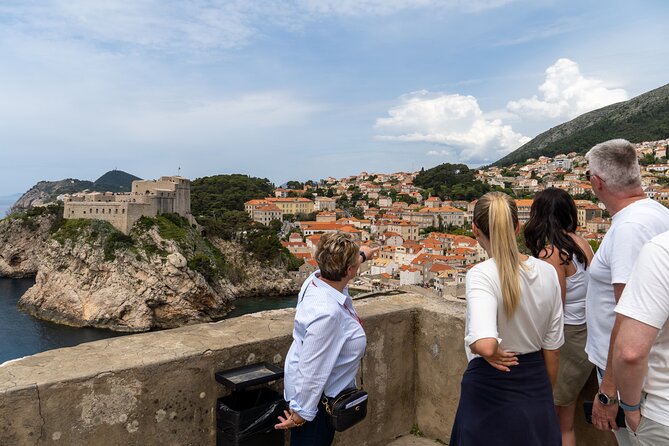
Most walking tours start with a landmark. This one starts with the landmark: Pile Gate. It’s the main entrance into Dubrovnik’s Old Town, built in the 15th century as part of the city’s medieval fortifications.
Look at the archway details and the bridge setup. You’ll also spot the statue of St. Blaise, Dubrovnik’s patron saint, placed to welcome visitors right where history begins to act like a doorway. Even if you’ve seen Dubrovnik postcard images, this is the first moment where the city feels engineered, not just pretty.
The practical upside: it’s a clean starting point. The practical consideration: because it’s such a central photo spot, it can be busy. Go in with one goal—learn what this gate was protecting—so the crowd doesn’t steal the show.
Onofrio’s Large Fountain: the 12 km water story in stone masks
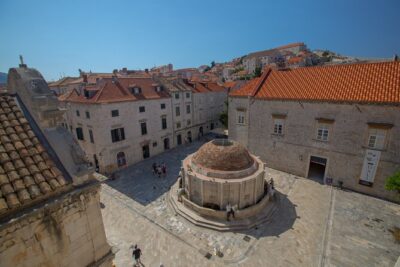
Onofrio’s Large Fountain is the kind of sight that usually gets a quick glance. With a guide, it becomes a mini lesson you can picture later.
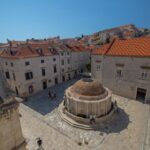
Built in 1438 by Italian architect Onofrio della Cava, it was part of the city’s water supply system—water brought from a spring 12 kilometers away. What makes it memorable is the design: a circular fountain lined with 16 carved stone masks, each with a spout that once served as part of that drinking water system.
This stop works because the story is human-scale. It’s not just dates and names. It’s how a small, practical system kept a whole community running. That’s the Dubrovnik angle that surprises people: the city’s strength wasn’t only walls and ships—it was also water.
You’ll have enough time to look closely and absorb the explanation, but don’t expect an extended visit. This is a focused “listen and look” stop.
Franciscan Monastery Museum: a cloister pause and the optional pharmacy ticket
After the bustle of the main streets, the Franciscan Monastery Museum offers a quieter gear shift. The monastery complex dates back to the 14th century, and it’s known for its peaceful cloister.
The standout detail is the pharmacy. Dubrovnik has one of the oldest still-functioning pharmacies in Europe, established in 1317. If you’re curious about how medicine, religion, and everyday life intersected, this is the part you’ll remember.
Here’s your decision point: the old pharmacy and monastery visit is optional, and entrance isn’t included. If you love interiors and slow time—this is worth it. If you’d rather spend your time outside in the open-air city streets, you can still enjoy the stop without paying for the museum entry.
Either way, it’s a good contrast stop. It breaks up the walking so your brain can catch up.
Stradun: your orientation line down Dubrovnik’s main spine
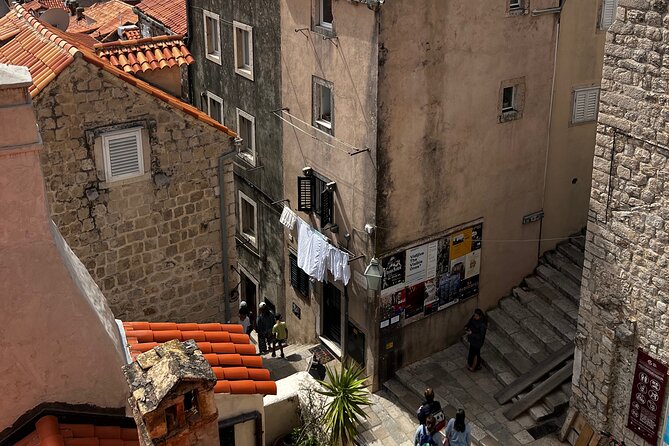
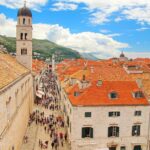
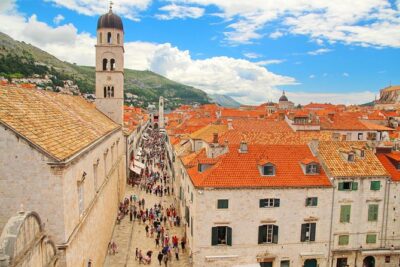
Then you hit Stradun, Dubrovnik’s main street. It’s a wide, limestone-paved promenade running straight through the heart of the Old Town, and it’s where the city’s social life shows up fast—shops, cafés, historic buildings, and a steady stream of visitors.
I like using Stradun as an orientation tool. Once you understand where you are on this main line, the rest of the Old Town layout starts clicking into place. With the guide’s stories, Stradun becomes more than a walk—it turns into a timeline moving under your feet.
The only consideration here is pacing. Stradun can feel lively and busy, so if you prefer quiet corners, keep your attention on the details the guide points out—facades, street rhythm, and what makes this promenade function like the Old Town’s living room.
Other days with a guide kept just to yourself
- Private Tour: Montenegro Day Trip from Dubrovnik
★ 4.5 · 495 reviews - Tour The Game of Thrones – Private Walking Tour
★ 5.0 · 464 reviews - Montenegro Private Full Day Tour from Dubrovnik
★ 5.0 · 376 reviews - PRIVATE TOUR: Highlights & Hidden Gems of Dubrovnik With Locals
★ 5.0 · 249 reviews - Dubrovnik: Old Town & City Walls Private Walking Tour
★ 5.0 · 206 reviews
Church of Saint Blaise: the patron saint as a city symbol
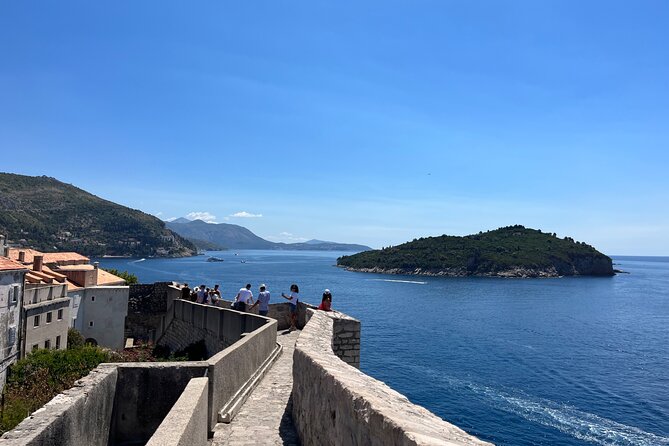
After Stradun, the Church of Saint Blaise brings the story back to Dubrovnik’s protective figure. The church dates to the early 18th century and is in Baroque style.
The big reason to stop is the treasured statue of Saint Blaise holding a model of medieval Dubrovnik. That gesture matters: it’s not generic devotion. It’s a visual symbol of the city’s identity and the idea of protection over the community.
This is one of those stops where a guide’s interpretation helps more than just looking at the building. When you learn how the patron saint story ties to the city’s survival mindset, it makes Dubrovnik feel less like a museum and more like a lived-in identity.
No museum entry needed here, so you can keep moving. Just take a moment to slow down and read what the statue is telling you.
Sponza Palace and the Republic mindset
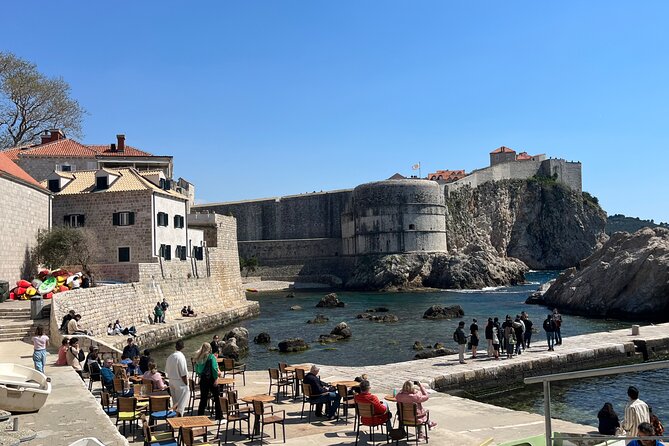
At the eastern end of Stradun is Sponza Palace, a 16th-century structure mixing Gothic and Renaissance touches. It was once a customs house and treasury—basically a place where commerce, rules, and wealth met.
Today it’s tied to Dubrovnik’s memory: it houses the city’s historical archives and also the memorial room for defenders. It’s also used for important cultural events, which means it’s not only a relic building. It still plays a role.
In a place like Dubrovnik, you’ll quickly learn that power was administrative as well as military. Sponza is the architecture clue for that. If you want a mental picture of how the Republic of Ragusa kept itself stable, this stop gives it to you.
And it’s practical: you get major context without needing another ticket line.
Rector’s Palace (just outside) and the Cathedral treasury moment
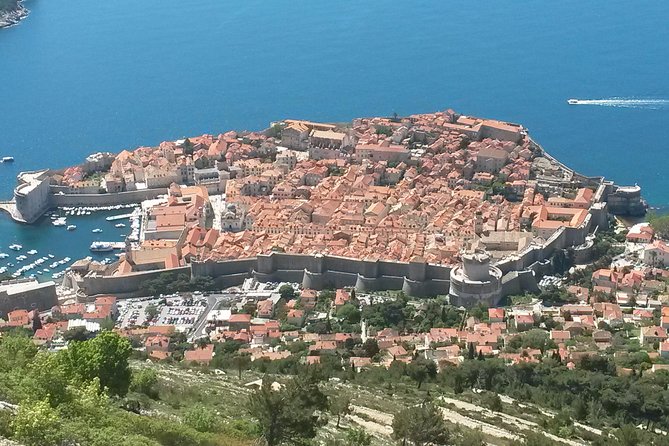
Right near Sponza is the Rector’s Palace, once the seat of the Rector who governed the Republic of Ragusa. You won’t go inside on this tour; you stop in front, which is perfect if your goal is understanding the building’s role without turning the day into a museum marathon.
Then you reach the Cathedral of the Assumption of the Virgin Mary (also called the Assumption Cathedral). After an earthquake, it was rebuilt in the 18th century with a grand Baroque design. The cathedral is known for its treasury, including relics associated with Saint Blaise, and a painting attributed to Titian.
The cathedral visit is optional, and entrance isn’t included. If you’re a fan of religious art and relic collections, you’ll likely want to add this. If you’re more interested in streets, views, and stories outside, you can pass and still get value from the explanation.
In either case, this portion sets up a big theme: Dubrovnik’s identity is stitched into religion, government, and how the city rebuilt itself after disaster.
Old Port to the Bell Tower finale: trade routes and hourly bells
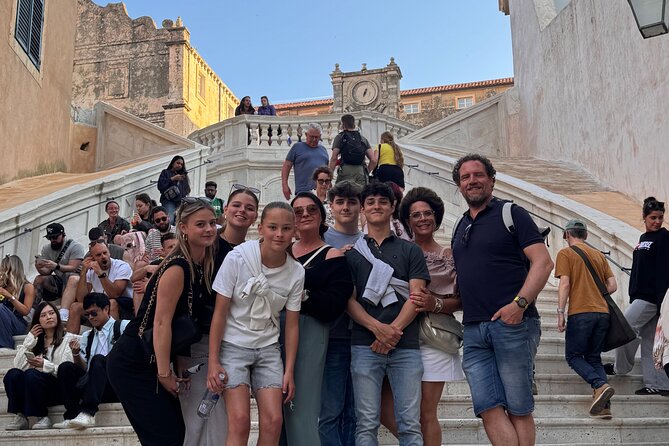
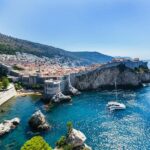
The walk takes you down to the Old Port, tucked beneath the city walls. In the Republic of Ragusa era, this was a vital hub for trade and naval power. Today it feels more like a working waterfront—boats, cafés, and departures for scenic excursions to nearby islands.
This is a nice emotional shift. You’ve spent the morning absorbing symbols of protection and governance. Now you see the practical reason those walls mattered: ships, goods, and movement.
Your final stop is the Bell Tower. It stands about 31 meters tall and was originally built in the 15th century. After earthquake damage, it was reconstructed in the 1920s. The tower features two bronze figures called the Green Men (also known as Maro and Baro) who strike the bell every hour.
Why this ending works: it’s a real-time ritual. When the story is explained, the bell mechanism becomes more than a photo moment. It turns into a sense of how Dubrovnik keeps time and marks the hours—even today.
Value check: $228.05 per group for a private 2-hour walk
Pricing is often where people get nervous, especially in Dubrovnik. Here’s the honest way to think about it.
You pay $228.05 per group, up to 6 people, for about 2 hours. That means the cost per person drops fast if you’re traveling with friends or family. Even if you’re just two, you’re paying for one big advantage: a guide who can adapt, answer questions, and move at a pace that fits your interests.
There’s also value in the structure. The tour covers major landmarks—Pile Gate, Stradun, Sponza, cathedral area, and the bell tower—while adding stops that are less likely to show up in a quick “top highlights” loop. The result is a route that gives you city orientation plus the stories that explain what you’re looking at.
One more point: this includes quality private guide services in Dutch (Dutch-NL), English, or French. If you want war and political context placed into the city’s physical landmarks, having a guide who can explain clearly matters.
Optional entrances (like the monastery pharmacy and cathedral) are extra, so decide in advance if you want those interiors. But even without paying for them, the walking route still covers a lot of “why” behind the “what.”
Best for: who should book this walk
This is a strong fit if:
- you want a private guide rather than a big-group schedule
- you like history explained in a way that connects to what you see on the street
- you care about the city’s war and political background and want it woven into the tour, not dumped as a lecture
- you want a morning plan that ends at a landmark with payoff
It may be less ideal if:
- you’re hoping for a tour full of ticketed museum time (optional entrances are limited)
- you want to stay in one spot for long periods, because the route is structured around a steady walking flow
What makes the guide experience feel personal
In the reviews tied to this tour, a recurring theme is how the guide brings Dubrovnik to life with stories and flexibility. One guide name you’ll see in feedback is Antje van Berkel-Crvik, praised for being passionate and knowledgeable, and for adapting to what the group cares about.
That kind of tailoring matters in Dubrovnik. The city can be “wow” on first glance, but questions pop up fast: Why this gate? How did the water system work? What does the patron saint symbolize? Where does the war fit into the physical city?
A guide who responds well to specific questions turns your time into an actual conversation. You also get practical pointers—restaurant and trip tips show up in the feedback—so you don’t leave with only facts. You leave with a mini plan for the rest of your stay.
Practical timing and meeting points (so you don’t waste morning energy)
The tour starts at 9:00 am from the Amerling Fountain, Ul. Svetog Đurđa, 20000, Dubrovnik. It ends near the Clock Tower of Dubrovnik in the Grad area, close to the Bell Tower.
Why the start time matters: you’ll be walking during the part of the day when streets are often easier to navigate than later peak hours. You also get daylight for photos before heat and crowds ramp up.
If you want an easy win, arrive a few minutes early and take a quick look around at street level before the guide starts talking. That small moment helps you connect the stories to the exact angles and details you’ll see later.
Should you book this Dubrovnik private walking tour?
Book it if you want a structured 2-hour walk with real context, not just a highlights shuffle. The stops cover Dubrovnik’s major symbols—fortifications at Pile Gate, water engineering at Onofrio’s Fountain, civic power at Sponza, and the patron saint story—then end with the bell ritual at the tower.
Skip or adjust expectations if you’re hoping for lots of included museum time. Optional entrances exist, and the tour includes only the walking + storytelling parts automatically.
If your goal is to understand Dubrovnik while you’re still there—especially with strong guidance and room to ask questions—this is a good-value private option.
FAQ
How long is the private walking tour?
It runs for about 2 hours.
What is the price and how many people can be in a group?
The price is $228.05 per group, and the group size can be up to 6.
What languages are the guides offered in?
Guides are available in Dutch-NL, English, or French.
What’s the meeting point for the tour?
The start point is Amerling Fountain, Ul. Svetog Đurđa, 20000 Dubrovnik.
Where does the tour end?
The tour ends near the Clock Tower of Dubrovnik, close to the Bell Tower.
Are museum or monastery entrance fees included?
No. Entrance fees for optional museums/monasteries are not included.
Which stops have optional admissions?
The Franciscan Monastery Museum and the Cathedral of the Assumption of the Virgin Mary have optional visits with admissions not included.
Is this tour private?
Yes. It’s a private tour/activity, so only your group participates.
Do I get a ticket for the tour?
Yes, you receive a mobile ticket.
Can I cancel for a full refund?
Yes, you can cancel for a full refund if you cancel at least 24 hours before the experience’s start time.
More Private Days in Dubrovnik

Keep Walking the Old Town


More Tour Reviews in Dubrovnik

Fresh on the Dubrovnik shortlist


Old Town Walking Tours, compared.
 ★ 4.8Old Town Walking TourFrom $235,174 reviews
 ★ 5.0Dubrovnik Discovery Old Town Walking TourFrom $244,458 reviews
 ★ 5.0Game of Thrones Walking TourFrom $301,732 reviews
 ★ 5.0Dubrovnik Old Town History Walking TourFrom $241,684 reviews
 ★ 4.8City Walls Early Morning or Sunset Walking TourFrom $291,523 reviews
 ★ 5.0Ancient City Walls & Wars Walking TourFrom $301,270 reviews
 ★ 4.9City Walls, Old Town Walking Tour & Adriatic ViewFrom $27982 reviews
★ 4.9Game of Thrones Walking TourFrom $29981 reviews
★ 4.9City Walls, Old Town Walking Tour & Adriatic ViewFrom $27982 reviews
★ 4.9Game of Thrones Walking TourFrom $29981 reviews
Browse the lists this tour appears in