
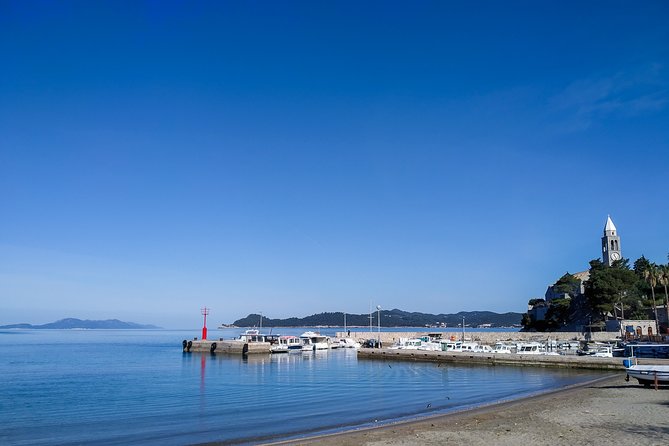
Reviewed · OLD TOWN WALKING TOURS
Private Lopud Walking Tour
Lopud turns history into a stroll. This private Lopud walking tour in Dubrovnik’s Elaphiti Islands is built for people who want stories tied to real stone, not just a quick photo stop. I like the way it mixes major sights with smaller details, like legends around Hotel Pracat and chapel architecture you can actually see as you walk. One thing to plan around: the Lopud Museum site has not been open to the public since the Homeland War, so you’ll learn from the square area more than from inside rooms.
My second favorite part is the balance: art, churches, and even a bit of “how to use a sun clock” practical knowledge. You’ll also get a look at Lopud’s social past through places like the ruins of the House of Zamanja Pavlina and the park locals call the Park Dordic Mayineri, a Garden of Love shaped across the 19th and 20th centuries. If you’re hoping for a long, slow beach day, keep expectations on the timing: the walk is about 1 to 2 hours, and the final stop is designed to let you choose what you do next.
You’ll be in good hands with Ružica, who many people call Rosy, an English-speaking licensed local guide. The tour is custom-made and organized around your group only, with a route that moves at a friendly pace. You get a mobile ticket, and you’ll end on or near Šunj beach, where you can swim, grab lunch, or taxi back if you want.
In This Review
- Key highlights you should care about
- Getting to Lopud from Dubrovnik: why this walk works as a day plan
- Meeting at Villa Vilina and setting the pace on Lopud’s promenade
- Hotel Pracat: a promenade legend built on real chapel history
- Lopud Museum square: closed since the Homeland War, still worth the context
- St. Hieronymus (St Jerome) chapel: a quick look at wealthy Lopud
- Chapel of the Crucified Redeemer: Miho Pracat’s legacy in active Catholic life
- House of Zamanja Pavlina ruins and Park Dordic Mayineri: power, inheritance, and a garden called Love
- Church of St Nicolas: Dominican art with sea-skill connections
- Grand Hotel story: how a big name shaped everyday island life
- Ending near Šunj beach: your choose-your-own-afternoon moment
- Price and value: what $33.72 buys you on Lopud
- How to get the most from Rosy’s style (and when her dog might join)
- Who should book this private Lopud walking tour
- Should you book it? My honest call
- FAQ
- How long is the Private Lopud Walking Tour?
- What time does the tour start?
- Where does the tour start and end?
- Is it a private tour and is it offered in English?
- Are entrance tickets included for the churches?
- Are food and drinks included?
- Are service animals allowed?
- What happens if the weather is poor or I cancel?
Key highlights you should care about
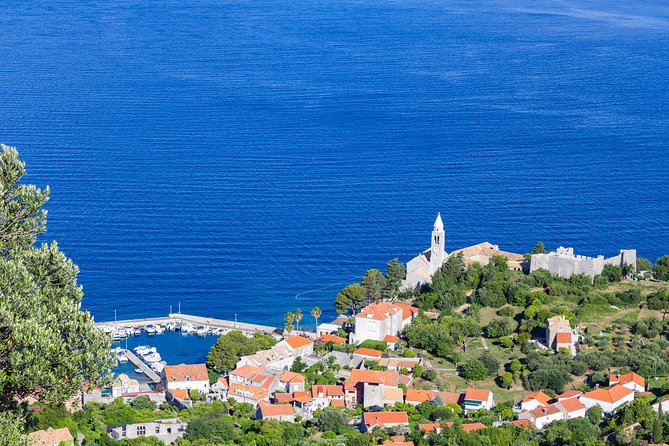
- Hotel Pracat sits over a 9th-century chapel: legends get anchored to something physical, not just a name.
- Museum square without museum access: you still get context and the local story beats, but don’t expect indoor viewing.
- Church stops with free admission marked on the plan: especially the Chapel of the Crucified Redeemer and Church of St Nicolas.
- St Nicolas connects art with navigation history: first books and sea skills tied to famous islanders.
- Grand Hotel explained in everyday-island terms: not just what it used to be, but why it mattered.
- Finish near Šunj beach: you can extend the day with swimming or food instead of racing back.
Dubrovnik on foot, a few more routes off the Stradun
- Dubrovnik: Old Town Walking Tour★ 4.8 · 5,174 reviews
- Dubrovnik Discovery Old Town Walking Tour★ 5.0 · 4,458 reviews
- Dubrovnik: Game of Thrones Walking Tour★ 5.0 · 1,732 reviews
- Dubrovnik Old Town History Walking Tour★ 5.0 · 1,684 reviews
Getting to Lopud from Dubrovnik: why this walk works as a day plan
Lopud is one of the Elaphiti Islands, a short ride from Dubrovnik that feels like a different pace of life once you’re there. The smart move with a tour like this is using it as your “orientation + highlights” block. You get enough ground covered to understand the island’s main landmarks and their stories, and then you’re free to slow down afterward.
This experience runs about 1 to 2 hours, starting at 9:00 am. That timing is practical because it lets you cover churches and promenade sights before the day gets hot or before you want to settle in at the beach. If you’re staying on Lopud (or you’re already positioned at the island side of your schedule), the walk also avoids stress. There’s no need to build a complicated itinerary around one-off stops.
If you’re coming from the mainland or another Elaphiti island, pickup can be arranged upon request. That matters for value because it can cut down the time you spend figuring out logistics on your own.
Meeting at Villa Vilina and setting the pace on Lopud’s promenade
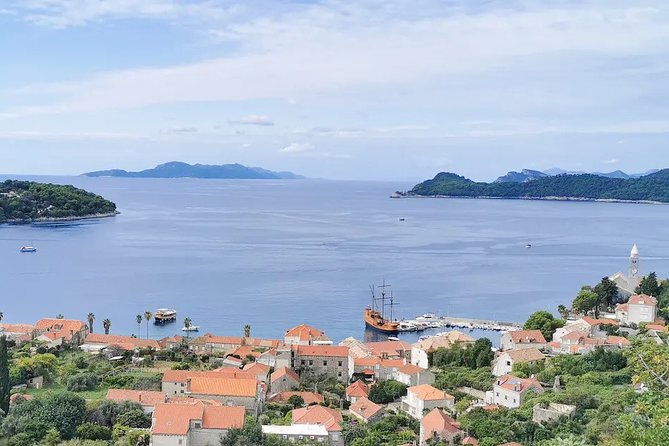
The walk starts at Villa Vilina, Obala Ivana Kuljevana 5, Lopud. From there, you move along the promenade in a way that suits people who want a guided rhythm rather than a scavenger hunt.
A private format helps here. Since it’s just your group, you can ask questions without the guide feeling like they have to keep the whole schedule tight. Rosy’s style is described as friendly and professional, and she’s open to questions, which is exactly what you want when you’re trying to connect legends, architecture, and island life into one story.
Also note the practical end-of-tour plan: you finish at the Lopud old port area and then the tour’s last stop is positioned near Šunj beach. So you’re not stuck back at the start with no easy off-ramp. You’ll know what to do when the walk ends—swim, lunch, or taxi back.
Hotel Pracat: a promenade legend built on real chapel history
The first stop is Hotel Pracat, an old building you reach quickly from the start. The detail I love here is the foundation: the hotel was built on top of a 9th-century chapel. That’s the kind of fact that changes how you look at a site. Suddenly, a plain-looking old structure becomes a layered timeline of faith and power on the island.
Rosy’s approach makes these layers feel like a story you can follow while walking. You’re not just hearing myths; you’re seeing where the legends attach. If you’re the kind of person who likes to understand how a place got the way it is, this opening sets the tone well.
Possible drawback? Since it’s a promenade walk and the time per stop is short, you’ll likely appreciate the site more than you’ll linger. If you love slow museum-style pacing, you’ll want to save extra time for wandering after the tour.
Lopud Museum square: closed since the Homeland War, still worth the context
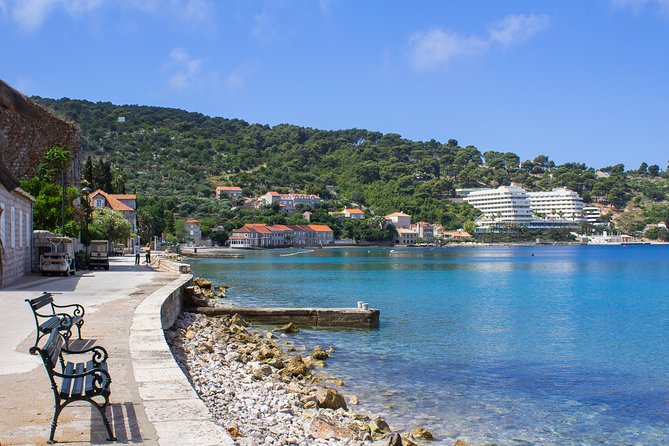
Next comes Lopud Museum area and Lopud square in front of the museum. Here’s the honest part to keep in mind: the museum has unfortunately been closed to the public since the Homeland War. That means you won’t get museum galleries and displays during this stop.
But the time isn’t wasted. You’ll still learn about the island’s past and you’ll get a lesson that’s both quirky and useful: how to use an old sun clock. If you’ve ever thought about how early Europeans tracked time before modern devices, this is a fun bridge between everyday life and historical reality.
This is also a stop where your guide’s personality matters. A story-focused guide can turn a “closed” site into an interesting moment rather than a letdown. Rosy’s reputation for answering questions and working with interests is a big reason this tour tends to land well.
More sailing days out to Lopud, Šipan and Koločep
- Full-Day Dubrovnik Elaphite Islands Cruise with Lunch and Drinks
★ 5.0 · 8,823 reviews - Dubrovnik: Elaphiti Islands Full-Day Cruise with Lunch
★ 5.0 · 5,938 reviews - Dubrovnik: Elaphite Island Cruise w/ Drinks & Optional Lunch
★ 4.7 · 4,517 reviews - Blue Cave, Green Cave & Lopud Beach small group Speed boat Tour
★ 5.0 · 2,572 reviews - Dubrovnik: 3 Islands Boat Tour with Lunch & drinks(FR, ES, EN)
★ 5.0 · 2,074 reviews
St. Hieronymus (St Jerome) chapel: a quick look at wealthy Lopud
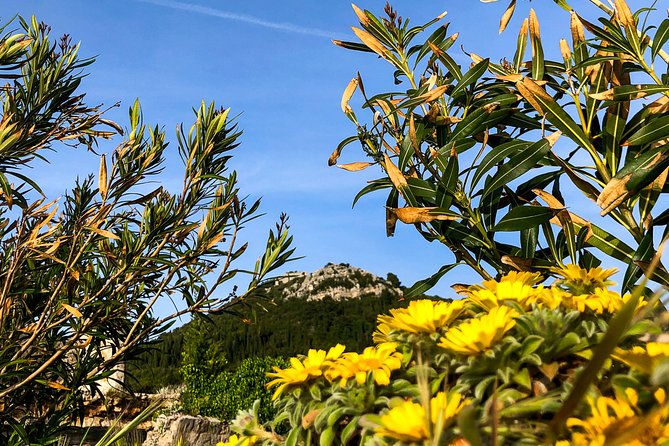
Then you get a short stop at St. Hieronymus (St Jerome) chapel, a 17th-century example of how wealthy Lopud inhabitants spent their money. The stop is brief, but the point is clear: this island’s religious buildings weren’t only places of prayer. They were also signals of status.
I like stops like this because they teach you to read the landscape. When you know what you’re looking for—age, style, why it was built—you start noticing details even when you’re not in a museum.
One practical note: chapel exteriors can be easier to appreciate even if interior access is limited. So even with short time slots, you’re not dependent on a long line or open doors.
Chapel of the Crucified Redeemer: Miho Pracat’s legacy in active Catholic life
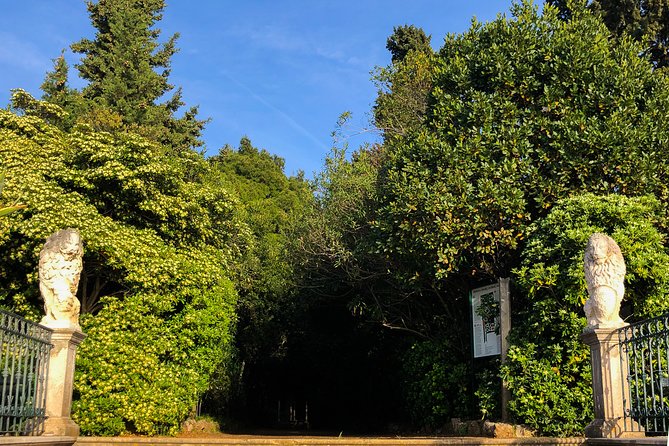
After the promenade, you visit the Chapel of the Crucified Redeemer. There are stories and legends tied to Miho Pracat, who built the church. What makes this stop meaningful is that it’s not just a historic site. The church still plays a role in the life of Catholics on Lopud.
You’ll also see this stop has free admission marked on the plan. That’s a small detail, but it contributes to value. When several key sites have no added entry fee, your money goes toward the guide and the route, not toward a pile of tickets.
The best way to enjoy this stop is to listen for what the guide emphasizes: the stories behind the builders and the way faith lives on in a small community. That’s when a chapel stops feeling like background decoration and starts feeling like the center of island identity.
House of Zamanja Pavlina ruins and Park Dordic Mayineri: power, inheritance, and a garden called Love
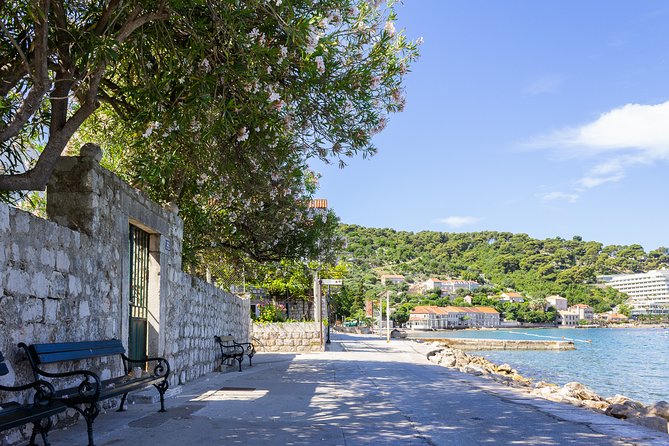
You’ll briefly stop at House of Zamanja Pavlina, with a focus on wealthy family life on Lopud—and why the house is now a ruin. The explanation centers on inheritance: the structure stands as it does today because of the vast number of inheritors. It’s a reminder that not every “grand past” survives intact. Families split, properties fragment, and buildings change with time.
Then you move to Park Dordic Mayineri, described as a park of love. The garden is tied to eclectic ideas across the 19th and 20th centuries. Even if you only get a few minutes, it’s a nice contrast to the religious and noble-history stops. You’re shifting from stone status symbols to an atmosphere designed for human emotion.
If you’re sensitive to heat or you prefer to avoid uneven ground, you’ll want comfortable footwear. Short garden stops can still involve uneven paths.
Church of St Nicolas: Dominican art with sea-skill connections
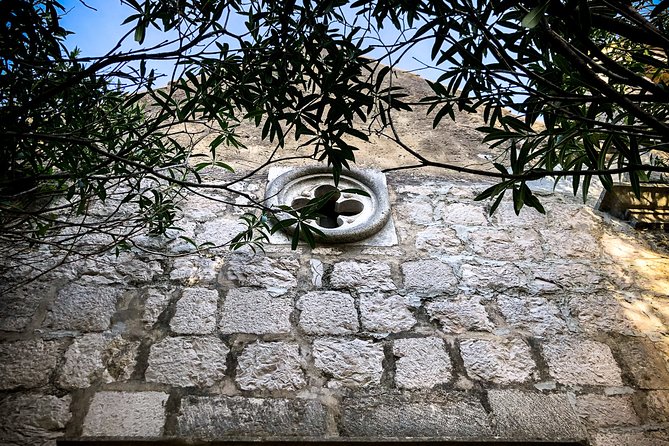
The tour’s next big highlight is the Church of St Nicolas, a 15th-century Dominican church. This stop is marked with free admission, and it’s one of those places where you can feel the overlap between art, education, and island life.
The standout story tied to this church is that it’s not only a piece of art. It’s also where the most famous islanders read the very first book and gained skills to navigate the sea. That detail makes the island’s maritime identity feel concrete. It’s not a vague “islanders were sailors” claim—it’s linked to a specific place and learning.
If you care about how communities pass down knowledge, this is a strong stop. It explains why education and religion often traveled together in coastal Europe.
Grand Hotel story: how a big name shaped everyday island life
Next is the Grand Hotel, where the guide unravels its astonishing story and its influence on the islanders’ everyday life. This is a different kind of historical layer. You’re moving from centuries-old chapels and noble families into a more modern era of tourism and work—how outside attention can change daily rhythms.
Even without going inside, this stop can give you a useful lens. You start seeing Lopud as not only a place frozen in time, but a place that adapted. That’s helpful if you want to understand why the island feels the way it does today.
A drawback to note: as with many walking tours, time per stop is limited. So you might leave wanting to read more or return later for deeper exploration. That’s not a flaw. It’s just the nature of a curated route.
Ending near Šunj beach: your choose-your-own-afternoon moment
The final part puts you near Šunj beach. The idea is simple: after the walking portion, you get options. According to your preferences, you can swim, take lunch at restaurants nearby, or grab a taxi back to the village.
This is smart design for value. A guided tour can otherwise feel like it ends right when your legs and attention need a break. Here, the plan hands you an easy transition from “learning” to “living.”
Weather matters, too. The experience requires good weather. If conditions are poor, your tour may be rescheduled or you may receive a full refund, so it’s worth checking forecasts the same day you plan to go.
Price and value: what $33.72 buys you on Lopud
At $33.72 per person, this is priced like an experience you book because you want direction and storytelling—not because you’re collecting museum stamps.
Here’s why it can be good value:
- It’s private, meaning it’s for your group only.
- You get an English-speaking licensed local guide.
- The tour is custom-made and covers main history, art, and botanical sites rather than just one narrow theme.
- Key church stops are marked free admission on the plan, which helps keep overall costs down.
The timing is also a quiet indicator of demand. On average, this is booked about 68 days in advance, which usually means people find it worth planning around rather than rolling the dice.
If you’re traveling as a couple or a small group, private guide time often ends up feeling like a smart use of money. And because the duration is short, you’re not sacrificing your whole day.
How to get the most from Rosy’s style (and when her dog might join)
From the guide style described for Rosy, I’d plan to do two things:
1) Ask questions as you go. This tour works best when you treat it like a conversation. Rosy is described as professional and friendly, with lots of stories and a willingness to answer broad questions.
2) Tell her what you care about. The tour is custom-made, so if you’re more into art, legends, or daily life on Lopud, you’ll get more of the angle you want.
One fun detail: Rosy’s dog, Chichita, may join on the walk. That’s not something to count on, but it’s part of why the atmosphere feels personal rather than robotic.
Also, aim to keep your day flexible around the beach ending. The tour’s best payoff often comes after you stop walking—when you use the time at Šunj beach the way you actually want to.
Who should book this private Lopud walking tour
I’d point you toward this experience if:
- you’re visiting Lopud for the first time and want a guided “see the main places and understand them” walk
- you like legends tied to real buildings, not only abstract facts
- you’re interested in church art, noble family stories, and a bit of botanical atmosphere
- you want a private English guide rather than a large group tour
I’d skip it or adjust expectations if:
- you want a full museum experience, because the Lopud Museum hasn’t been open to the public since the Homeland War
- you need a longer beach day as the centerpiece, since the walking portion is only 1 to 2 hours
Should you book it? My honest call
Yes, I think you should book this tour if you want Lopud to feel like a real place you understand, not just a stop where you trade time for photos. The combination of chapels with free entry, the story behind Hotel Pracat, and the sea-learning connection at St Nicolas gives you a strong mix for a short time.
The main caution is the museum closure. If you’re planning this as a museum-heavy outing, you’ll be disappointed. But if you’re open to a walking tour that turns architecture and local legends into meaning, this is a smart use of time on the island.
FAQ
How long is the Private Lopud Walking Tour?
It lasts about 1 to 2 hours.
What time does the tour start?
The start time is 9:00 am.
Where does the tour start and end?
It starts at Villa Vilina, Obala Ivana Kuljevana 5, Lopud. It ends at Lopud old Port (Unnamed Road, Lopud), with the last stop near Šunj beach.
Is it a private tour and is it offered in English?
Yes. It’s private (only your group participates) and it’s offered in English. You’ll receive a mobile ticket.
Are entrance tickets included for the churches?
The plan marks admission as free for stops including the Chapel of the Crucified Redeemer and the Church of St Nicolas. Other sites may vary.
Are food and drinks included?
No. Food and beverages are not included.
Are service animals allowed?
Yes, service animals are allowed.
What happens if the weather is poor or I cancel?
The tour requires good weather. If it’s canceled due to poor weather, you’ll be offered a different date or a full refund. You can cancel up to 24 hours in advance for a full refund.
The Elaphiti Islands, More Crossings


Keep Walking the Old Town


More Tour Reviews in Dubrovnik
Fresh on the Dubrovnik shortlist


Old Town Walking Tours, compared.
 ★ 4.8Old Town Walking TourFrom $235,174 reviews
 ★ 5.0Dubrovnik Discovery Old Town Walking TourFrom $244,458 reviews
 ★ 5.0Game of Thrones Walking TourFrom $301,732 reviews
 ★ 5.0Dubrovnik Old Town History Walking TourFrom $241,684 reviews
 ★ 4.8City Walls Early Morning or Sunset Walking TourFrom $291,523 reviews
 ★ 5.0Ancient City Walls & Wars Walking TourFrom $301,270 reviews
 ★ 4.9City Walls, Old Town Walking Tour & Adriatic ViewFrom $27982 reviews
★ 4.9Game of Thrones Walking TourFrom $29981 reviews
Browse the lists this tour appears in