
Dubrovnik teaches you fast—if you walk it right. This 2-hour private Spanish tour from Pile Gate is a smart way to connect the big UNESCO landmarks with the quieter corners locals actually use, including the Santa Maria area and Buza. I love how the guide keeps everything clear and human—and I love the payoff views over white rocks and blue sea toward Lokrum Island. One possible drawback: with only two hours, you’ll want to plan a little extra time after for lingering on your favorite spots.
The walk is anchored in the old city’s main spine, Stradun, then it branches into the meaningful side streets where Dubrovnik stops being a checklist and starts feeling like a place. The guides (Patricia or Ankica, depending on the schedule) are the real engine here: they answer questions, set a pace that fits you, and some people even noted the guide taking extra time and sharing practical recommendations.
In This Review
- Key things to know before you go
- Meeting at Pile Gate: orientation without wasting time
- Stradun and the city walls: seeing UNESCO where it actually lives
- Franciscan Monastery and Onofrio’s Fountains: the quiet grandeur
- Sponza Palace, Orlando’s Column, and power in stone
- St. Blaise, the Bell Tower, and the feeling of a lived-in center
- Santa Maria and Buza: where Dubrovnik feels most real
- Ulica od Puca: the practical side of old-town charm
- Guide quality in Spanish: Patricia and Ankica set the tone
- Price and group size: when $117 is actually a bargain
- What you’ll feel after two hours: a mental map you can use
- Should you book this private Spanish walking tour?
- FAQ
- How long is the Dubrovnik private walking tour?
- What language is the guide?
- Where do we meet for the tour?
- How many people are in the group?
- What’s included in the price?
- Is food or drinks included?
- What sights are featured during the walk?
Key things to know before you go
- Private group up to 3 with a Spanish-speaking guide, so you can ask questions as you walk
- Pile Gate to Stradun gives you the easiest orientation in Dubrovnik’s walled old town
- Franciscan Monastery and cloister are a major highlight, not a quick pass-through
- Santa Maria and Buza shift the tour from monuments to everyday Dubrovnik
- Ulica od Puca adds a local texture with traditional shops and small religious stops
- Lokrum Island views come at the end of a satisfying detour through Buza
Dubrovnik on foot, a few more routes off the Stradun
- Dubrovnik: Old Town Walking Tour★ 4.8 · 5,174 reviews
- Dubrovnik Discovery Old Town Walking Tour★ 5.0 · 4,458 reviews
- Dubrovnik: Game of Thrones Walking Tour★ 5.0 · 1,732 reviews
- Dubrovnik Old Town History Walking Tour★ 5.0 · 1,684 reviews
Meeting at Pile Gate: orientation without wasting time
You meet at the Armerling Water Fountain (Brsalje), just a short distance from Pile Gate, the historic entrance to the old town. This matters more than it sounds. Dubrovnik’s layout can feel simple on a map and tricky in real life, because the walls funnel you into a handful of main corridors. Starting at Pile Gate means you immediately get the logic of where you are and why Stradun is the center of gravity.
From that first step inside the old city, the guide can frame what you’re seeing. This tour is designed around orientation plus context: not just naming buildings, but helping you understand why they sit where they do, and how the city’s Renaissance-era design still guides the walk today.
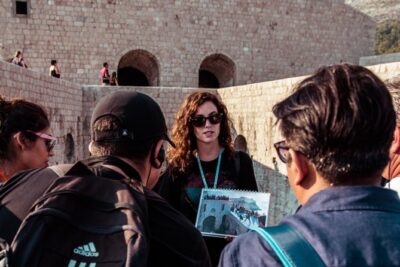
And since you’re on a private group, you’re not stuck with the awkward moment where everyone else is asking questions you can’t hear. You can ask your own. Based on guest experiences, the guides tend to be patient and responsive, including Patricia, who has been praised for answering questions thoroughly.
Stradun and the city walls: seeing UNESCO where it actually lives
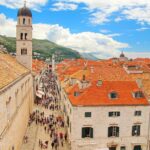
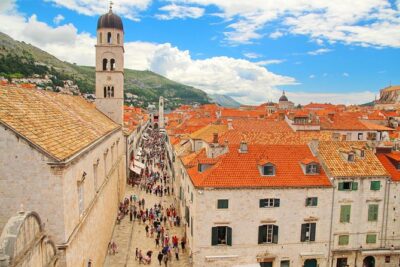
The heart of the route follows Stradun, Dubrovnik’s centuries-old main promenade. Walking Stradun with a guide is the difference between looking at pretty stone and understanding what that “pretty” represents. This old city is UNESCO World Heritage (listed since 1979), and Stradun is part of why the designation makes sense: it’s the spine that ties the monumental architecture to everyday movement.
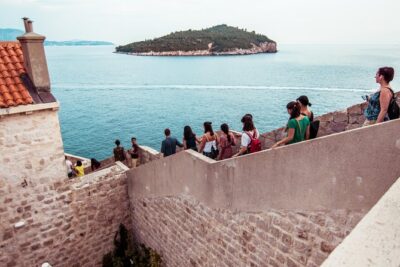
As you go, you’ll also get the big-picture sense of the city walls. The old city is surrounded by more than a mile of fortifications, with a tower at each corner. Even if your time on the walls is mostly about viewpoints and understanding the layout from street level, the guide helps you see the walls as a system, not a single photo spot.
Franciscan Monastery and Onofrio’s Fountains: the quiet grandeur
One of the stops I’d put near the top of your mental priority list is the Franciscan Monastery area, including its cloister. A cloister is a specific kind of calm: stone, symmetry, and a sense that the place was built for reflection long before tourism.
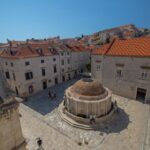
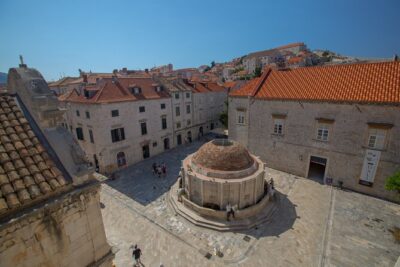
Along the way, you’ll also encounter Onofrio’s Fountains. In a city like Dubrovnik, fountains aren’t “just fountains.” They’re practical art—part of the urban fabric. With a guide speaking Spanish, you’ll get the story behind the visual details instead of simply noticing that something looks decorative.
If your goal is to understand Dubrovnik’s character in a short time window, these kinds of stops are ideal. They slow the walk just enough to let you absorb why the architecture and public spaces feel cohesive.
Sponza Palace, Orlando’s Column, and power in stone
Dubrovnik’s old town has a way of mixing religion, government, and commerce into the same visual neighborhood. That’s why the list of monuments here works: it takes you past key civic and cultural landmarks, so you start to feel how the city functioned.
You’ll see (among other highlights) Sponza Palace and Orlando’s Column, plus the Bell Tower, the Rector’s Palace, and the Cathedral area as the route continues through the historical core. Each one helps answer a question: who held authority here, what the city valued, and how public life was staged.
What I like about this part of the tour is that the guide can connect the dots while you’re still walking. You’re not flipping between guidebook pages later—you’re building a mental map on foot. Guests have highlighted that the explanations are detailed and easy to follow, which is especially valuable when you’re doing this in Spanish and want to actually catch the meaning, not just the vocabulary.
Dubrovnik on foot, a few more ways
- Dubrovnik: Old Town Walking Tour
★ 4.8 · 5,174 reviews - Dubrovnik Discovery Old Town Walking Tour
★ 5.0 · 4,458 reviews - Dubrovnik: Game of Thrones Walking Tour
★ 5.0 · 1,732 reviews - Dubrovnik Old Town History Walking Tour
★ 5.0 · 1,684 reviews - Dubrovnik: City Walls Early Morning or Sunset Walking Tour
★ 4.8 · 1,523 reviews
St. Blaise, the Bell Tower, and the feeling of a lived-in center
The Church of St. Blaise is another major highlight. It’s the kind of landmark that tells you Dubrovnik isn’t only about walls and viewpoints; it’s also about devotion and community. Combined with stops like the Bell Tower, you start to understand why the old city feels like a center of life rather than an open-air museum.
This is where the “private” part can matter a lot. If you’re the type who wants to linger a little longer at one site, you can often do that without disrupting a larger group. And if you want the guide to hit the key points efficiently, they can likely adjust, based on how guests described their guides’ pacing.
Santa Maria and Buza: where Dubrovnik feels most real
After exploring the main heritage zone, you head to Santa Maria, described as the oldest district in Dubrovnik. This is a smart shift. In the early part of the walk, the tour emphasizes headline monuments and the central promenade. In Santa Maria and Buza, the focus turns toward a more local feel.
Buza is highlighted as a hidden quarter frequented almost exclusively by locals. In other words, this isn’t just “more old buildings.” It’s the kind of neighborhood texture that helps Dubrovnik stop feeling staged.
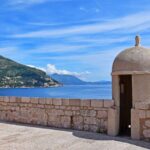
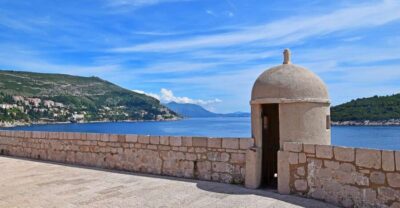
The tour’s mention of the door of St. Stjepan is also a key moment. When you open or view through that spot, you get a framed sightline over white rocks and blue sea toward Lokrum Island. That view is the kind of scene that makes Dubrovnik feel intimate even though it’s a UNESCO-famous city.
Ulica od Puca: the practical side of old-town charm
On the way back to Stradun, you’ll visit Ulica od Puca, a street known for traditional jewelry shops, an old barber shop, and small churches. This stop adds a different flavor than the big monumental squares. It’s about craft, everyday ritual, and small-scale commerce—things that still make a city feel active.
Even if you’re not shopping, this is helpful. It gives your walk balance. You’ll have already seen fortifications and civic architecture, and now you see how people have lived alongside it. If you’re trying to understand how Dubrovnik still runs, not just how it was built, this is a valuable detour.
Guide quality in Spanish: Patricia and Ankica set the tone
The experience runs in Spanish, and that changes how you should think about “value.” If you choose a Spanish guide who explains clearly, the tour becomes far more than a walk with a soundtrack. You’re learning patterns: why a cloister matters, how public buildings relate, and what a view says about the city’s geography.
In the feedback shared by guests, Patricia is the most frequently mentioned guide, and the praise is consistent: she’s described as friendly, empathetic, and very willing to answer questions. Several people also noted she went beyond the scheduled time to make the experience more complete, and that she offered suggestions for how to enjoy Dubrovnik later. Some guests even mentioned she took a few photos during the walk, which can help you get decent memories without worrying about your camera every few minutes.
Another name that comes up is Ankica, described as excellent by a guest who found the tour very well explained. That combination—clear explanations plus a human pace—tends to be exactly what you want in a short, high-density historic city like Dubrovnik.
Price and group size: when $117 is actually a bargain
The price is $117 per group for up to 3 people, and it’s a private walking tour for 2 hours. On the surface, that could look “high” compared to big group tours. But here’s the practical math and the practical reason.
If you’re traveling as a couple or a small group, splitting $117 makes it competitive fast. More importantly, you’re not just paying for someone to walk beside you. You’re paying for:
- a guide who speaks Spanish (so you actually absorb the story),
- the flexibility of a private pace,
- and a route that hits major sites plus the Santa Maria/Buza shift in the same outing.
This is especially good value if Dubrovnik is a one- or two-day stop for you and you don’t want to spend that limited time wandering without context. You also get tourist brochures and maps included, which is useful because you can continue your self-guided walk with better direction afterward.
What’s not included is transfers, food, beverages, or souvenirs. So budget for your own day planning around that. But in exchange, the tour keeps its focus: walk, explanations, and key stops that help you understand the city quickly.
What you’ll feel after two hours: a mental map you can use
By the end of the walk, you’re not just leaving with photos. You should feel more confident about how Dubrovnik fits together: Pile Gate into Stradun, the civic-religious core with buildings that explain the city’s Renaissance identity, and then the older district shift into Santa Maria and Buza for a more local perspective.
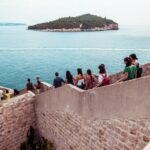
The Lokrum Island view from St. Stjepan is one of the reasons this tour works. It’s not only a pretty postcard angle; it also reinforces Dubrovnik’s geography. You see how close the sea is to the city’s older neighborhoods, and why locals enjoy certain viewpoints and routes.
Should you book this private Spanish walking tour?
Book it if you want your time in Dubrovnik to feel guided, not random. This works best for small groups who value Spanish interpretation and like their history explained in a way that’s easy to follow while you walk.
Skip or reconsider if you’re the type who prefers entirely self-guided exploring and you already have a strong plan for what you want to see next. With only 2 hours, you won’t cover everything, so you’ll still need time afterward for your personal interests.
If you’re deciding between a big-group tour and a private one, I’d lean private here for one reason: Dubrovnik is dense with important sights. Having a guide who can respond to questions and adjust the pace makes that density feel manageable.
FAQ
How long is the Dubrovnik private walking tour?
It lasts 2 hours.
What language is the guide?
The tour guide speaks Spanish.
Where do we meet for the tour?
The meeting point is Armerling Water Fountain (Brsalje), meters from Pile Gate and the entrance to the old town of Dubrovnik.
How many people are in the group?
This is a private group for up to 3 people.
What’s included in the price?
A private walking tour with a guide, plus tourist brochures and maps.
Is food or drinks included?
No. Food and beverages are not included.
What sights are featured during the walk?
You’ll walk down Stradun, see the city walls and major old-town monuments, explore Santa Maria (including Buza), and enjoy views over the white rocks and blue sea toward Lokrum Island, along with stops such as the Franciscan Monastery and key landmark buildings.
More Tours in Dubrovnik

Keep Walking the Old Town

More Tour Reviews in Dubrovnik
Fresh on the Dubrovnik shortlist



Old Town Walking Tours, compared.
 ★ 4.8Old Town Walking TourFrom $235,174 reviews
 ★ 5.0Dubrovnik Discovery Old Town Walking TourFrom $244,458 reviews
 ★ 5.0Game of Thrones Walking TourFrom $301,732 reviews
 ★ 5.0Dubrovnik Old Town History Walking TourFrom $241,684 reviews
 ★ 4.8City Walls Early Morning or Sunset Walking TourFrom $291,523 reviews
 ★ 5.0Ancient City Walls & Wars Walking TourFrom $301,270 reviews
 ★ 4.9City Walls, Old Town Walking Tour & Adriatic ViewFrom $27982 reviews
★ 4.9Game of Thrones Walking TourFrom $29981 reviews
★ 4.9City Walls, Old Town Walking Tour & Adriatic ViewFrom $27982 reviews
★ 4.9Game of Thrones Walking TourFrom $29981 reviews
Browse the lists this tour appears in